RV habitation tanks: fresh water, gray water and black water

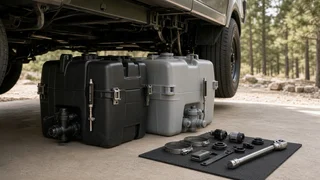
Most self-contained RVs carry three separate holding tanks. The fresh water tank stores clean water for drinking, cooking and washing. The gray water tank collects used water from sinks and the shower. The black water tank collects waste from the toilet. Together they let a motorhome or travel trailer operate away from hookups for a limited time, and each tank has its own role, plumbing and care routine. That three-tank layout is the common arrangement, not a universal one. Tank sizes, the number of tanks and their locations vary by manufacturer, model, floor plan and model year. Some compact campers and camper vans omit a gray or black tank, combine functions or use a cassette or composting toilet instead of a fixed black tank. The owner's manual or the manufacturer's specification sheet for your exact unit is the reliable source for its capacities and layout. No specific capacities, prices or model data are given here because none were confirmed for this article.
How the three tanks differ
Tank | What it holds | Where the water comes from | How it leaves; Fresh water | Clean, potable water | Filled through an exterior fill inlet, or bypassed when connected to a pressurized campground supply | Delivered to taps, shower and toilet by a 12-volt water pump; Gray water | Used water from sinks and shower | Drains from fixtures | Emptied at a dump station or sewer connection through its own valve; Black water | Toilet waste and toilet paper | Toilet drain | Emptied at a dump station or sewer connection through its own valve
Fresh water tank
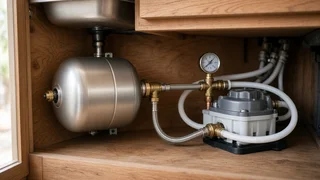
The fresh tank supplies the RV when it is not connected to a pressurized water source, often called a city water connection. With the tank filled, the onboard water pump pressurizes the system so taps and the shower work normally. When the RV is on city water, the pump is usually switched off and the tank is bypassed.
Because it holds drinking water, the fresh tank should be filled with a hose rated for potable water. It also needs periodic sanitizing, typically with a diluted household bleach solution followed by thorough flushing. Follow the concentration and contact time in your RV or tank manufacturer's guidance. Water is heavy, so a full fresh tank adds noticeably to vehicle weight. Some owners travel with it partly filled and top up near their destination, staying within the vehicle's rated weight limits.
Gray water tank
Gray water is wastewater from the kitchen sink, bathroom sink and shower. It contains soap, food particles and grease, so it can develop odors and buildup even though it carries no toilet waste. In many RVs the gray tank fills faster than the black tank, especially with frequent showers, so it is often the tank that limits time off-grid.
Rules on discharging gray water vary by state, locality and campground. Many places prohibit releasing it onto the ground. The safe default is to empty it only at a designated dump station or sewer connection unless local rules clearly allow otherwise.
Black water tank
The black tank receives everything flushed down the RV toilet. Most RV toilets use only a small amount of water per flush, so solids can settle and build up if too little water goes in. Common practice is to add some water to the empty tank after dumping, use toilet paper sold as RV- or septic-safe because it breaks down more readily, and use a tank treatment to help control odor and break down waste.
When connected to a full-time sewer hookup, many owners keep the black valve closed and open it only when the tank is reasonably full. Leaving it open lets liquid drain away while solids stay behind and harden, which can cause clogs and a buildup that is hard to clear.
Emptying the tanks: the usual order
Wear disposable gloves and connect the sewer hose securely to the RV outlet and the dump station inlet. Open the black tank valve first and let it drain completely, then close it. Open the gray tank valve next; the relatively cleaner gray water helps flush the hose. If the RV has a built-in black tank flush, or you use a separate tank rinser, rinse the black tank, using a hose reserved only for this purpose and never your drinking water hose. Close all valves, disconnect, rinse the sewer hose and store it away from fresh water equipment.
Tank monitors and common issues
Most RVs show tank levels on a monitor panel. Many conventional systems use probes inside the tank, and residue on those probes often makes them read fuller than the tank really is. External or sensor-based monitoring systems are used in some RVs to reduce this problem. Treat the monitor as a guide, not an exact measurement, and learn how your own tanks behave in use.
Other recurring concerns include odors from a dry or poorly sealing toilet, sticking dump valves and freezing in cold weather. Tanks and lines that are not heated or enclosed can freeze and crack. Before freezing temperatures, the fresh water system should be drained and winterized according to the manufacturer's procedure, and the holding tanks emptied. Whether a particular RV has heated or enclosed tanks depends on the model and trim, so check its specifications.
What this overview cannot tell you
No verified data were available on tank capacities, typical time between dumps, product recommendations or costs for specific RVs. Those figures depend heavily on the vehicle, the number of occupants and how carefully water is used. For any of them, rely on the documentation for your exact model and year rather than general estimates.