Replace a Brake Proportioning Valve
The Short Answer
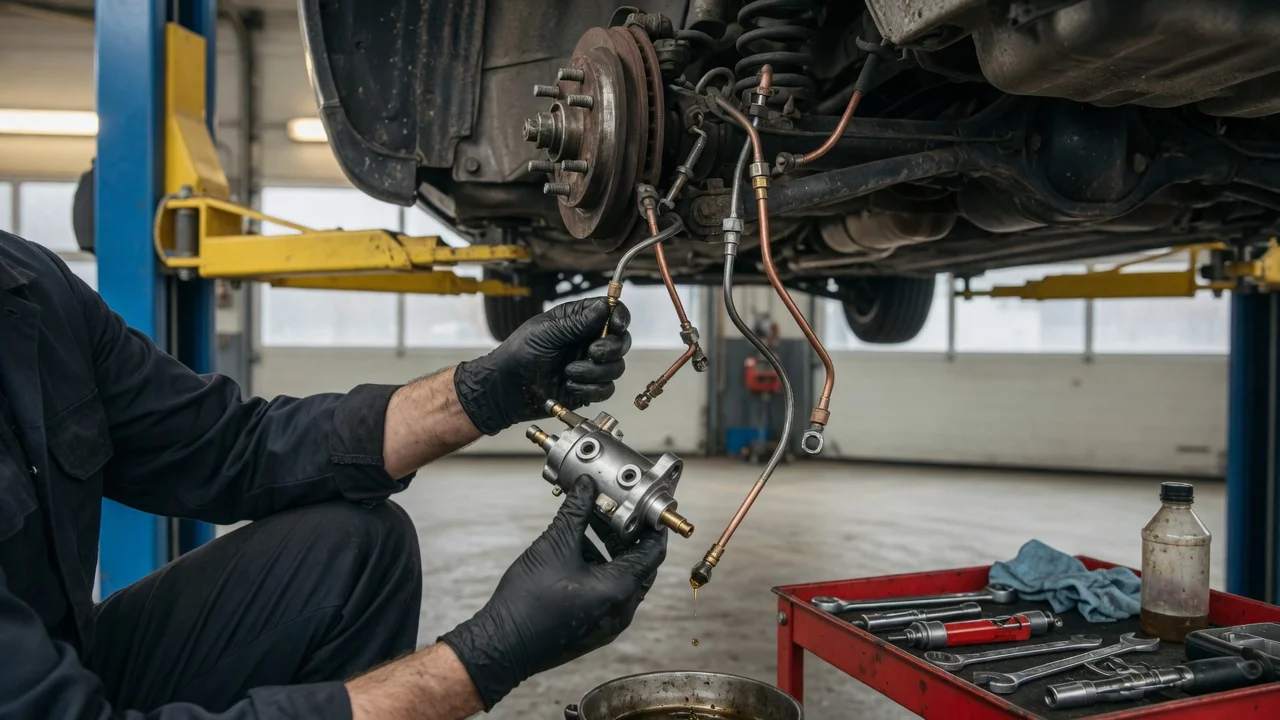
Replacing a brake proportioning valve means removing a hydraulic valve, installing a matching part, and then fully bleeding the brake system. The valve limits brake pressure to the rear wheels so they do not lock before the fronts. The mechanical work is usually simple: disconnect the brake lines, unbolt the valve, install the new one, reconnect the lines, and bleed. Two things make the job harder than it looks. First, the replacement must match your vehicle exactly. Second, bleeding must be done correctly afterward, because a poorly bled system or the wrong valve can leave you with weak or unstable braking.
Not every vehicle has a separate valve to replace. Whether yours does depends on the model year, the braking system, and whether the vehicle has anti-lock brakes. Check that before buying parts.
Confirm Which Type of Valve Your Vehicle Uses
How you replace the valve, and whether you can at all, depends on how your vehicle balances front and rear braking:
Standalone proportioning valve: a small inline valve, usually near the master cylinder or along the frame rail, that is replaced as a single part. Combination valve: a single housing that may contain the proportioning valve, a metering valve for the front brakes, and a pressure differential switch that turns on the brake warning light. On many older vehicles these functions cannot be serviced separately, so the whole unit is replaced. Load-sensing proportioning valve: common on some pickups, vans, and other vehicles whose rear load varies a lot. It is mounted near the rear axle and connected to the suspension by a linkage. After replacement it usually must be adjusted to the manufacturer's specification. Integrated into the master cylinder: on some vehicles the proportioning function is built into the master cylinder or its outlet fittings, so the repair means replacing that assembly or fitting. Electronic brake force distribution (EBD): many vehicles with anti-lock brakes balance front and rear pressure through the ABS control unit and have no separate mechanical valve. On these vehicles, a front-to-rear balance problem points to the ABS system, not a standalone valve.
The service information for your specific vehicle is the reliable way to tell which setup you have. Appearance alone can mislead, because junction blocks and distribution fittings can look like valves.
Signs That Point to the Valve, and the Limits of Those Signs
A faulty proportioning valve is most often suspected in three situations:
The rear wheels lock early during moderate or hard braking. The rear brakes seem to do very little. The brake warning light stays on after the system has been bled and the fluid level is correct, on vehicles with a combination valve.
Each of these symptoms can also come from other causes, including air in the lines, contaminated or seized rear brake components, worn rear shoes or pads, a failing master cylinder, or a fault in an ABS or EBD system. Rule these out before replacing the valve. Otherwise you may spend money on the valve and still have the original problem.
General Replacement Procedure
The steps below are a general outline, not a substitute for the procedure for your specific vehicle. Fastener torque values, bleeding sequence, and any special tools vary by model and were not available for this guide.
Get the correct replacement part, matched to your vehicle's year, model, and brake configuration. Proportioning valves are calibrated for a specific vehicle, so a part that merely fits the lines may not balance the brakes correctly. Park on level ground, secure the vehicle, and wear eye protection. Brake fluid damages paint and irritates skin and eyes. Mark or photograph each brake line's position. The ports are not interchangeable, and reversing two lines can send pressure to the wrong axle. Loosen the line fittings with a flare-nut wrench, which grips more of the fitting than an open-end wrench and is less likely to round it off. Penetrating oil can help on corroded fittings. Cap or plug the open lines to limit fluid loss and keep dirt out. Unbolt the old valve from its bracket, along with any wiring connector for a warning-light switch. Install the new valve and start each line fitting by hand to avoid cross-threading, then tighten to the specified torque. Reconnect any electrical connector and, on load-sensing designs, reattach and adjust the linkage according to the manufacturer's procedure. Refill the master cylinder with the brake fluid type specified for the vehicle and bleed the entire system in the order the manufacturer specifies.
Bleeding Details That Commonly Cause Problems
On many vehicles with a combination valve, the metering section must be held open during pressure bleeding, often with a special clip or tool. If it is not, fluid may not flow fully to the front brakes. Some pressure differential switches also need to re-center after bleeding before the warning light turns off. Requirements differ between valve designs, so follow the procedure for your vehicle. On vehicles with ABS, the hydraulic unit may need a scan-tool bleeding routine if air has reached it.
Checking the Work
Before driving, check the following:
The brake pedal feels firm and stays consistent with repeated presses while the engine is running. The fittings do not leak. The brake warning light is off, on vehicles that have one.
Then test at low speed in a safe, open area and confirm that the vehicle stops straight and that the rear wheels do not lock early. If the pedal is soft, the warning light stays on, or braking feels unbalanced, do not drive the vehicle normally until the cause is found.
Should You Do It Yourself?
This is an editorial judgment rather than a documented rule. Replacing a standalone or combination valve is generally within reach of someone comfortable with brake line work and a full system bleed. Several situations are better suited to a shop with the right equipment:
Load-sensing valves that need precise adjustment. Vehicles that need a scan tool to bleed the ABS unit. Vehicles with badly corroded brake lines that may break when you loosen them.
Brakes are safety-critical. If you are unsure about any step, have a qualified technician do or inspect the work.
What This Guide Does Not Cover
No vehicle-specific specifications were available for this guide. It does not include torque values, part numbers, valve locations for particular models, load-sensing adjustment measurements, labor time estimates, or parts prices. Get these from the service information for your exact vehicle before starting.