Rear Brake Proportioning Valves Explained
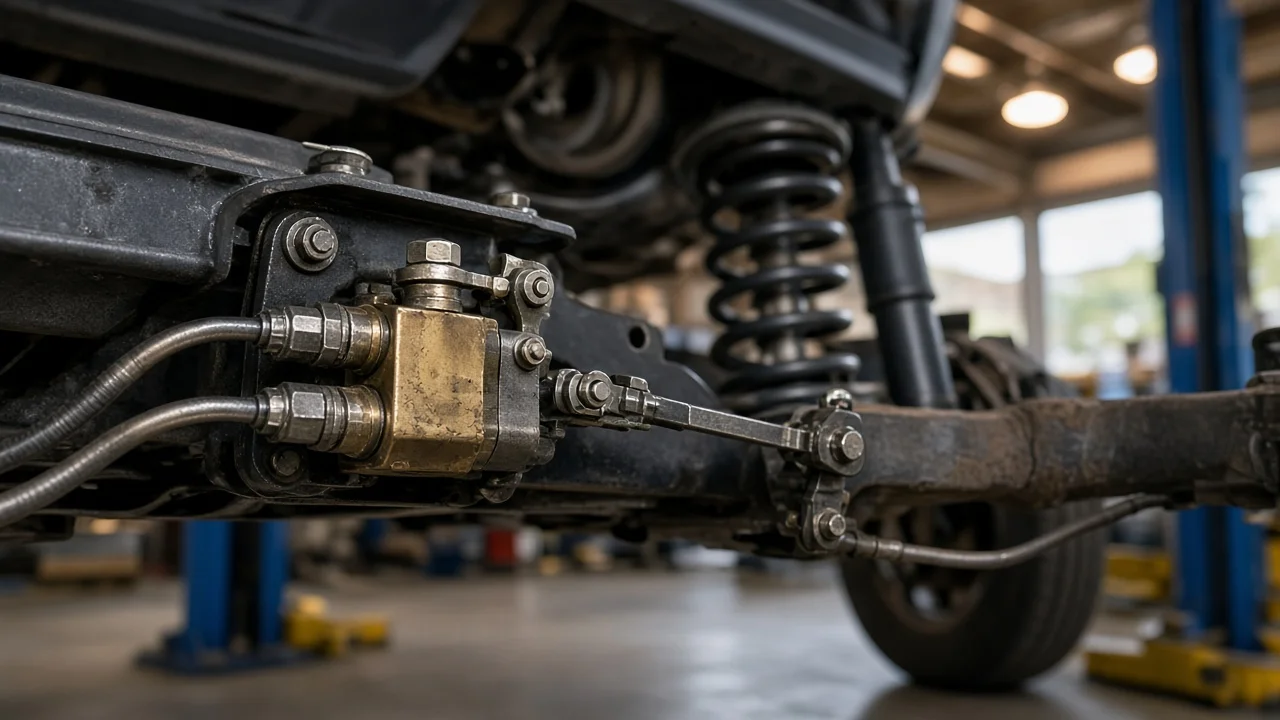
When you press the brake pedal, weight shifts toward the front of the vehicle and the rear tires lose some of their grip. A rear brake proportioning valve keeps the rear brakes from doing more work than those tires can handle. This guide explains what the valve does, how it works, which designs exist, which symptoms point to it, and where an owner's inspection should stop and a professional's should begin.
What a Rear Brake Proportioning Valve Does
A proportioning valve is a hydraulic control that reduces brake pressure to the rear wheels once line pressure rises past a set point. Under light braking, the front and rear circuits receive about the same pressure. Under harder stops, the valve still lets rear pressure rise, but more slowly than front pressure. The goal is to keep the rear wheels from locking before the fronts. Locked rear wheels can make a vehicle swing sideways and become difficult to control.
Not every vehicle has a separate valve. Many older cars and trucks use a standalone valve or a combination valve near the master cylinder. Many modern vehicles with anti-lock brakes manage front-to-rear balance electronically through the ABS module, a function usually called electronic brakeforce distribution. These vehicles may have no mechanical proportioning valve at all. Whether your vehicle has one, and where it is, depends on its design, so the service information for your exact model is the reliable reference.
How the Valve Works
A typical fixed proportioning valve contains a spring-loaded piston with a different surface area on each side. Below the valve's split point, often called the knee point, fluid passes through freely, so the rear calipers or wheel cylinders receive full master cylinder pressure. Once pressure exceeds the split point, it pushes the piston against its spring and partly closes the passage. From then on, rear pressure rises by only a fraction of any further increase in front pressure. The manufacturer sets the split point and reduction ratio to match the vehicle's weight distribution, brake sizes and tire grip.
The design exists because of weight transfer. During a stop, load moves forward onto the front axle. The front tires can then accept more braking force and the rear tires can accept less. This is also why front brakes typically use larger rotors and calipers. The valve has no effect on the friction material itself. It only controls how hydraulic pressure is shared, so the rear brake pads or shoes contribute without overpowering the available rear traction.
Valve Types and Conditions That Change the Answer
Fixed valves have a single preset split point and are common on older passenger cars. They are often packaged inside a combination valve with two other parts. A metering valve briefly delays front disc pressure on vehicles with rear drums. A pressure differential switch turns on the brake warning light if one hydraulic circuit loses pressure. Vehicles with a diagonally split system may have two proportioning valves, sometimes threaded directly into the master cylinder outlet ports.
Load-sensing or height-sensing valves are common on pickups, vans and some wagons. They are mounted on the frame and linked to the rear axle. When the vehicle is loaded and the body sits lower, the valve allows more rear pressure. When the vehicle is empty, it allows less. Adjustable valves, usually aftermarket, let the rear pressure be tuned by hand and are mainly found on modified, converted or competition vehicles. Lift or lowering kits, heavy towing, different tire sizes or swapping drums for discs can all change brake balance. For this reason, vehicle fitment matters whenever a brake component is replaced or modified.
Symptoms That Point Toward the Valve
If the valve no longer limits rear pressure, the rear wheels can lock early. This is most likely on wet or slippery roads or when the vehicle is lightly loaded. You might notice the rear end stepping out or skidding during firm stops, or the ABS activating more often than expected. A valve that restricts too much causes the opposite problem, as does a load-sensing valve with a seized or disconnected linkage. The rear brakes contribute little, stopping distances grow, and the front brakes run hotter and wear faster.
These symptoms overlap with many other faults. Possible causes include contaminated or glazed friction material, a sticking caliper, seized wheel cylinders, out-of-adjustment rear drums, worn rotors, mismatched tires and air in the brake fluid. A brake warning light that stays on after bleeding may come from a pressure differential switch that has not recentered, not from the proportioning section. The valve is usually one of the last parts to condemn, after the simpler causes have been ruled out.
What the Owner Can Do
Start with checks that need no special tools. Confirm the brake fluid level and condition. Look along the lines and around the valve body for wetness or crusted residue that suggests a leak. On trucks and vans with a load-sensing valve, inspect the linkage between the valve and the axle. It should be intact, attached at both ends and free of heavy corrosion. Also note whether the problem appeared after a suspension change, new tires, towing or recent brake work, because that history narrows the cause considerably.
Inspect the rest of the system as well. Compare the front and rear brake pads and rotors against the wear limits in your vehicle's service information. Uneven wear between the left and right sides points more toward a caliper or slide problem than toward the valve. On many vehicles the front pads normally wear faster than the rears. Some vehicles with electronic brake balance or stability control, however, wear their rear pads relatively quickly by design. Compare your wear against what is expected for your model, not against a general rule. Do not try to reproduce rear lockup on public roads to test a theory.
If a valve or its linkage needs replacement or adjustment, use the part specified for your vehicle and follow the manufacturer's procedure. Load-sensing valves often have to be set with the vehicle at a specified ride height or load. Some combination valves need the metering stem held open during pressure bleeding. Only someone who can verify the result safely should set an adjustable aftermarket valve.
Limitations and When to Get Professional Help
This explanation covers general principles. Split points, reduction ratios and adjustment procedures vary widely by make, model, year and equipment, and so does whether a separate valve exists at all. None of these values should be guessed. A confident diagnosis of brake balance usually requires pressure gauges at the front and rear brakes. On vehicles with electronic distribution, it requires a scan tool that can read ABS data.
Stop driving the vehicle and have a qualified brake technician inspect it if you notice any of the following: the rear wheels lock unexpectedly, the vehicle pulls or spins during braking, the brake warning light is on, the pedal feels low or soft, or fluid is leaking. Braking faults can worsen without warning. A correct repair depends on vehicle-specific service information and proper testing, not on symptoms alone.