What Is a Brake Proportioning Valve and How Does It Work?
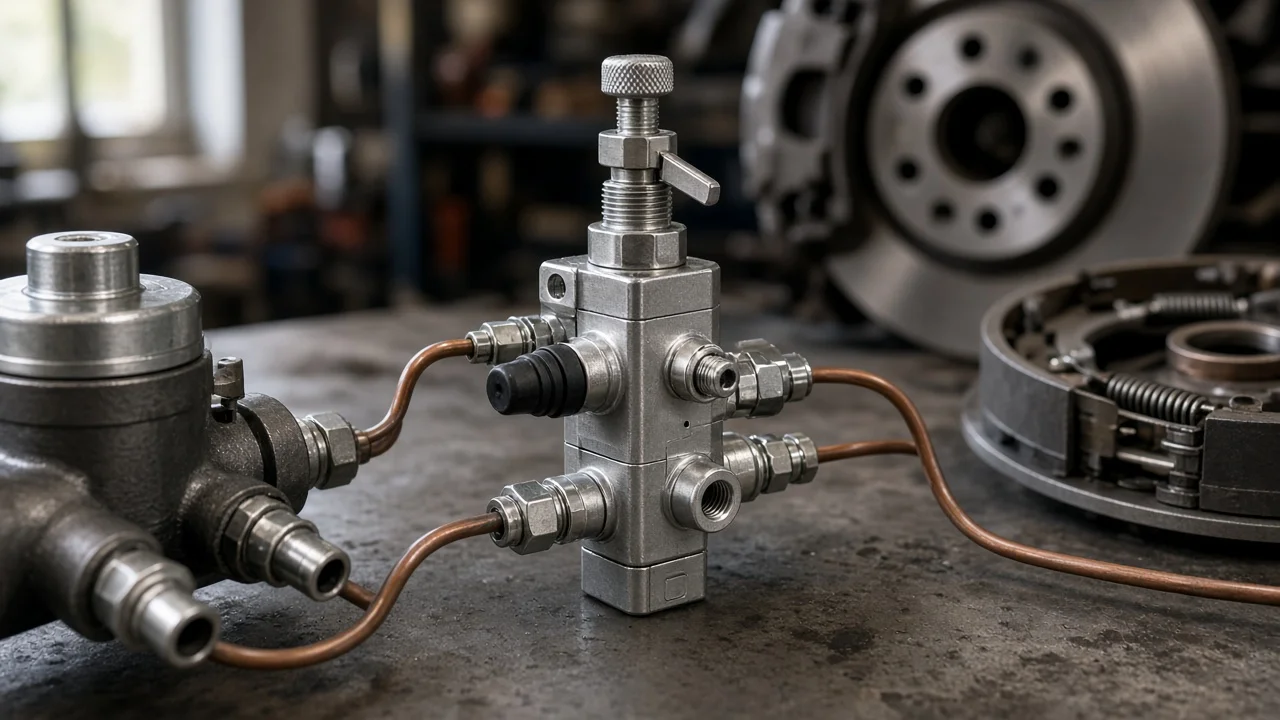
A brake proportioning valve is a small hydraulic component that keeps the rear brakes from locking before the front brakes during a hard stop. It sits in the brake lines between the master cylinder and the rear wheels. On many older vehicles it is part of a larger combination valve. This guide explains what the valve does, how it works inside, how designs differ between vehicles, and what an owner can reasonably check.
What a brake proportioning valve does
The proportioning valve limits how much brake fluid pressure reaches the rear brakes once braking passes a certain point. When you brake, the vehicle's weight shifts forward. This loads the front tires and unloads the rear ones. Rear tires with less grip need less braking force to lock up, and a locked rear axle can make the vehicle slide sideways or spin. During light braking, the valve lets the front and rear circuits build pressure equally. During harder stops, it slows the rate at which rear pressure rises. The result is balanced braking, with the front wheels doing most of the work as the designers intended. One qualification matters: many modern vehicles with anti-lock brakes no longer use a mechanical proportioning valve. They reach the same goal electronically. Whether your car has one depends on its age, brake system design and vehicle fitment.
How a brake proportioning valve works
Inside the valve body is a spring-loaded piston, sometimes called a plunger. The piston has surfaces of different sizes exposed to the inlet and outlet sides. At low pressure the spring holds the piston open, so fluid flows straight through and rear pressure matches front pressure. As pedal force increases, inlet pressure eventually overcomes the spring and pushes the piston toward a seat. This threshold is called the split point or knee point. The manufacturer sets its value for each vehicle.
Above the split point, the piston moves between open and closed, metering fluid so that rear pressure keeps rising, but more slowly than front pressure. Because the piston areas differ, each further increase in master cylinder pressure produces only part of that increase at the rear outlet. The valve does not cut off the rear brakes. It changes the slope of the pressure curve. When you release the pedal, pressure drops, the spring reopens the passage, and fluid returns to the master cylinder normally. Each proportioning valve is calibrated for a specific combination of parts and weight. That includes the brake pads or shoes, the caliper and wheel cylinder sizes, the rotor and drum dimensions, and the vehicle's weight. For that reason it is not a universal part.
Reading a proportioning valve diagram
A typical brake proportioning valve diagram shows the master cylinder at one end, with two outlet lines feeding the front and rear circuits. The valve is installed in the line to the rear brakes. Cutaway drawings show the piston, spring, seal and seat described above. Many GM brake proportioning valve diagrams, like those for other makes of the same era, show a combination valve instead. That single block usually contains three functions. A metering valve briefly holds back pressure to the front disc brakes until the rear drum shoes overcome their return springs. A pressure differential switch turns on the dash warning light if one circuit loses pressure. The proportioning section manages the rear brakes. Not every combination valve has all three sections, and the layout varies by model. Match any diagram to your exact vehicle before using it for line routing or parts identification.
What changes the answer for your vehicle
Brake system layout is the biggest factor. Older rear-wheel-drive cars and trucks with front disc and rear drum brakes commonly use a single proportioning valve in the rear circuit. Some vehicles use a diagonally split system, where each circuit serves one front wheel and the opposite rear wheel. These may use two valves, sometimes threaded directly into the master cylinder outlet ports. Some cars with four-wheel disc brakes still use a mechanical proportioning valve, while others rely on the ABS control unit.
Load also matters. Pickups and vans can carry heavy cargo over the rear axle, which changes how much braking the rear tires can handle. Many of these vehicles use a load-sensing or height-sensing proportioning valve. It is mounted on the frame and connected to the rear axle by a lever or linkage. As the rear of the vehicle squats under load, the linkage moves and the valve allows more rear pressure. When the vehicle is empty, it allows less. Adjusting that linkage requires the manufacturer's procedure and ride-height specification.
On most vehicles with modern ABS, electronic brakeforce distribution does this job. Wheel speed sensors detect when the rear wheels begin to slow faster than the fronts, and the ABS modulator holds or reduces rear pressure. Adjustable aftermarket proportioning valves also exist for modified vehicles and brake conversions, where the factory valve no longer suits the new components.
What the owner can check
Start with observation. One sign of out-of-balance braking is the rear wheels locking or the back end stepping out during firm stops. This is most likely on wet roads or in a truck with an empty bed. The opposite problem is weak rear braking. It may show up as front brake pads and rotors wearing much faster than usual while the rear friction material barely wears. These clues are not proof of a bad valve. Contaminated linings, a seized caliper, misadjusted drum brakes or a sticking wheel cylinder can produce similar results. Note when the symptom happens, whether the vehicle was loaded, and whether the brake warning light came on.
With the vehicle parked safely, check the brake fluid level and condition in the reservoir. Look around the valve, lines and fittings for wetness or corrosion. On a truck with a load-sensing valve, inspect the linkage to the axle for bent, seized, broken or disconnected parts, and do not adjust or disconnect it without the service specification. When replacing pads, shoes or rotors, use parts that meet the vehicle's specification and respect the published wear limits. Mismatched friction material can upset the balance the valve was designed around. If you bleed the brakes yourself, check the service information first. Some combination valves need the metering stem held or a tool installed during pressure bleeding, and some older warning switches need to be recentered afterward.
Limits and next step
A faulty proportioning valve can only be confirmed with proper testing. This usually means connecting pressure gauges to the front and rear circuits and comparing the readings with the manufacturer's specifications. Deliberately locking the brakes on public roads to test balance is dangerous and is not a valid diagnostic method. Split points, valve types and bleeding procedures vary widely. Rely on the vehicle-specific service manual rather than general figures or a diagram for a different model. A replacement valve must match the vehicle exactly. A part meant for another vehicle can leave the rear brakes too strong or too weak.
Stop driving and arrange professional service if the brake warning light stays on, the pedal feels low or spongy, the vehicle pulls or spins under braking, or you find a fluid leak. These symptoms point to a braking fault that needs a qualified technician, whether or not the proportioning valve is the cause.