Air Brake Proportioning Valves Explained
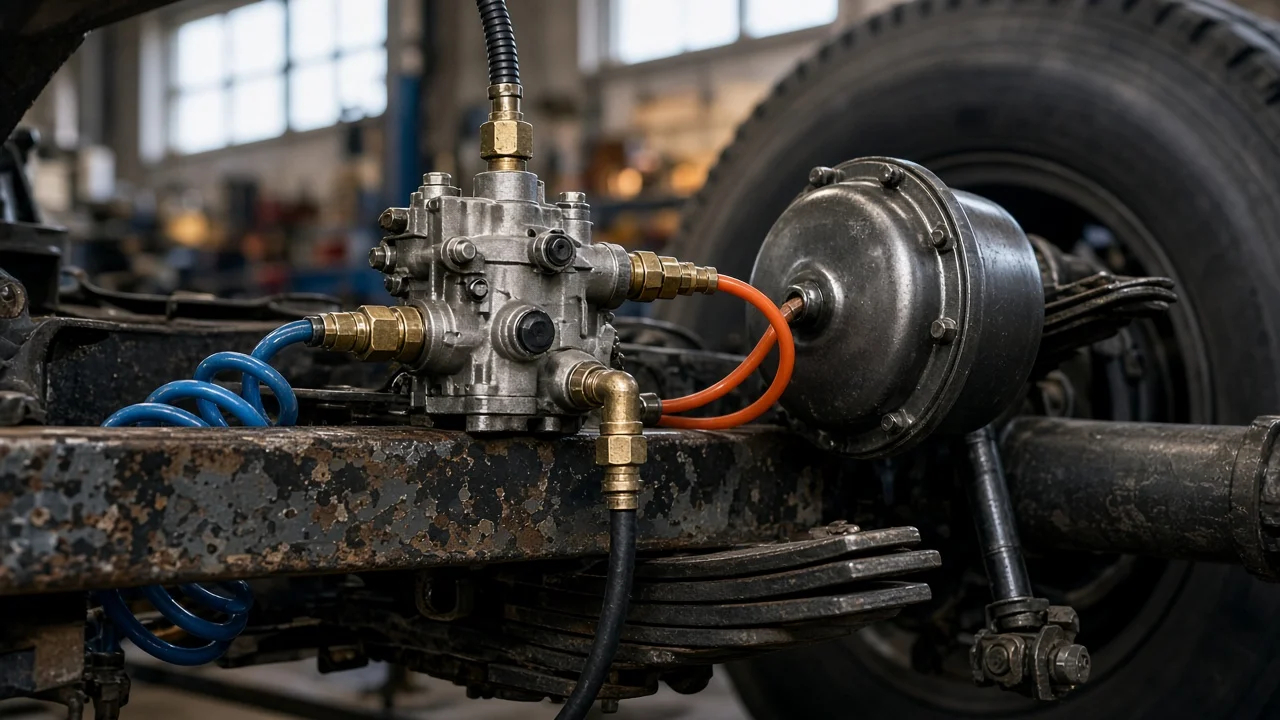
An air brake proportioning valve decides how much of the braking pressure the driver requests actually reaches a particular axle. On heavy trucks, tractors and some trailers, that balance matters because axle loads change dramatically between empty and loaded runs. Too much pressure on a lightly loaded axle locks wheels and flat-spots tires. Too little pressure wastes stopping power. This guide explains what these valves do, how common designs work, what affects their behavior and what an owner can reasonably check.
The Short Answer
A proportioning valve in an air brake system reduces the service brake air pressure sent to selected brake chambers when the axle carrying them does not need full pressure. Its job is to match braking force to the load on that axle so the wheels slow the vehicle without locking up. The most familiar example is the bobtail proportioning valve on a tractor, which lowers drive axle pressure when no trailer is attached. Load-sensing valves on trucks and trailers do a similar job based on how heavily an axle is loaded. Not every air-braked vehicle has one, the amount of reduction varies by design, and on many modern vehicles antilock braking works alongside the valve or takes over part of its role.
Air brakes do not use brake fluid. The proportioning is done with compressed air, and the valve sits between the control signal from the foot valve and the chambers it feeds. That makes it different from the hydraulic proportioning valve on a passenger car or light pickup, even though the goal of balancing braking between axles is the same.
How an Air Brake Proportioning Valve Works
When the driver presses the foot valve, a control signal travels to relay valves near the axles, which then send reservoir air to the brake chambers. A proportioning valve modifies that path. Inside, a piston or diaphragm arrangement compares the incoming signal with a second input, such as trailer supply pressure or a load signal. It then delivers either full pressure or a reduced fraction of it, depending on that second condition. Many designs combine the proportioning function with a relay valve in one housing, so the same unit also speeds up application and release at the axle.
In a bobtail valve, the second input is the trailer supply line. With a trailer coupled and its supply charged, the valve passes normal pressure to the drive axle brakes. With the supply line exhausted, as when the tractor runs alone, it reduces drive axle output because the lightly loaded rear axle would lock easily. A load-sensing valve instead reads axle load, either through a linkage that tracks the distance between axle and frame or through the air pressure in the suspension air springs. More load allows more brake pressure, and less load produces a reduced output. On air disc brakes, that pressure ultimately clamps the brake pads against the brake rotors through the caliper. On drum brakes, it pushes the lining against the drum through the slack adjuster.
What Changes How the Valve Behaves
Vehicle configuration is the biggest factor. A tractor that routinely pulls a trailer has very different axle loads from a straight truck with a dump body, and a spread-axle trailer behaves differently again. The valve type, its ratio and its setting are chosen for a specific application, so vehicle fitment matters. A valve that is correct on one chassis can be wrong on another even if the ports line up. Suspension type also matters, because a linkage-type sensor on mechanical springs and a pressure-referenced valve on air suspension respond to load through different signals.
Operating conditions change the result too. Low system pressure, a leaking control line, a partly charged trailer supply or a sticking piston can all distort the output. Linkage valves are sensitive to ride height, so a damaged arm, modified suspension or worn bushings can make the valve read the axle as empty when it is loaded, or the reverse. Brake hardware condition interacts with all of this. Unevenly worn friction material, out-of-adjustment brakes or contaminated linings change how much braking a given pressure produces, which can look like a proportioning fault when the valve itself is fine. When antilock braking is present and working, it modulates pressure at individual wheels and may mask a valve problem until the system logs a fault.
What the Owner Can Do
Start with observation. Signs worth noting include drive axle wheels skidding during light stops while bobtailing, flat-spotted tires on one axle, uneven wear between axles, the vehicle pulling or the trailer pushing during braking, brakes that release slowly on one axle, or a constant air leak from a valve exhaust port. Record when the symptom occurs: loaded or empty, with or without a trailer, cold or after long descents. That detail helps a technician narrow the cause faster.
During normal daily inspection, confirm that air pressure builds properly, that low-pressure warnings work and that you cannot hear air escaping with the brakes applied. A soapy water solution brushed on fittings and valve bodies can reveal small leaks. Look at load-sensing linkages for bent, loose or disconnected parts, and compare lining or pad thickness against the wear limits in the vehicle's service information. Do not change linkage settings, swap valves between vehicles or plug an exhaust port to stop a leak, because the correct setup depends on manufacturer data for that axle and suspension.
Limitations and When to Get Professional Help
This explanation covers common designs, not every valve on the market. Output ratios, setting procedures and test pressures differ by manufacturer and application, and some vehicles have no separate proportioning valve at all. Confirming that a valve delivers the correct pressure usually requires gauges at specific ports and the vehicle maker's procedures, which is why diagnosis belongs with a qualified heavy vehicle brake technician.
Treat braking symptoms seriously. If wheels lock unexpectedly, the vehicle pulls hard, air pressure drops faster than normal or a brake warning comes on, stop using the vehicle as soon as it is safe and have the system inspected before returning it to service. A faulty proportioning valve can leave one axle doing too much work or too little, and that imbalance tends to show up first in a hard stop. The practical next step is to write down your observations, identify the exact vehicle and valve details, and book a professional inspection.