Replace a 1969 Camaro brake booster and master cylinder
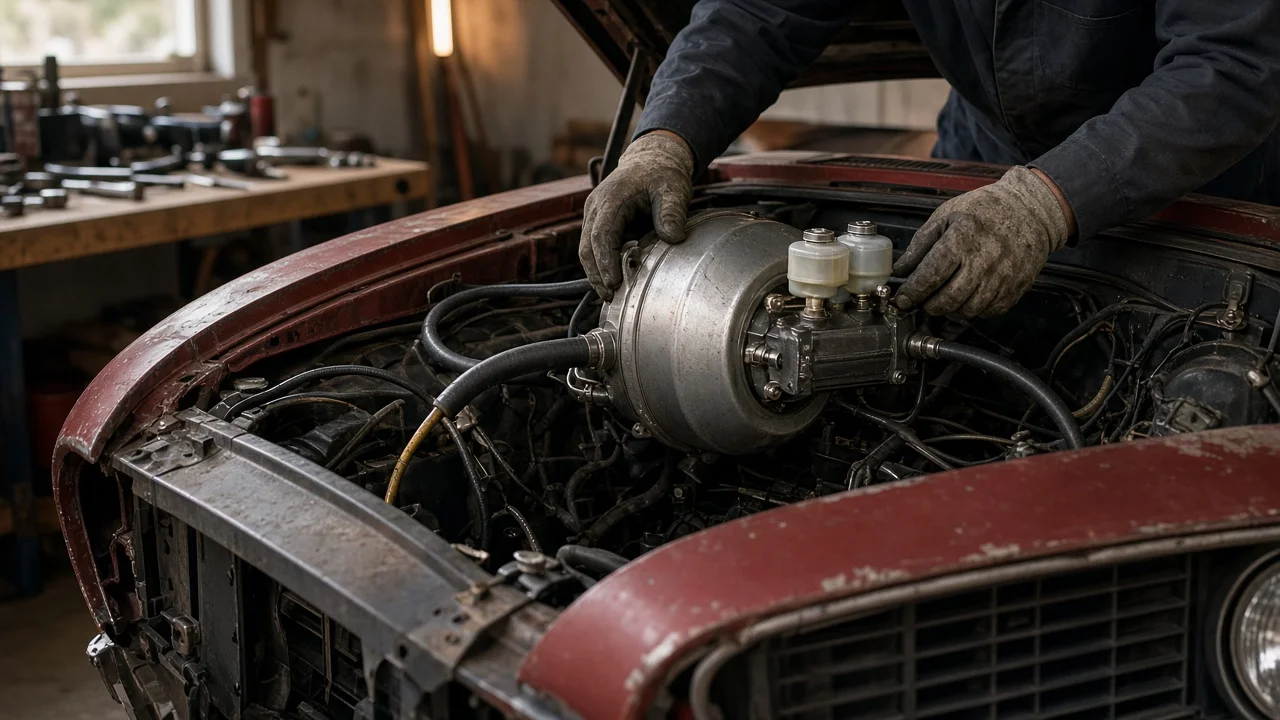
Replacing the brake booster and master cylinder on a 1969 Camaro changes how pedal effort becomes hydraulic pressure at the wheels. A failed booster usually makes the pedal feel hard without improving stopping distance, while a leaking master cylinder can create a sinking pedal or uneven braking. These components work together between the firewall and the brake lines, so evaluating them as a pair helps prevent repeat repairs. The job also raises practical questions about line fittings, pushrod adjustment, and whether the existing drum or disc brake setup remains compatible with the replacement parts.
Essential answer
The essential answer is that this replacement cannot be treated as a single generic bolt-on operation. The work includes removing the old master cylinder, separating it from the vacuum booster, checking the firewall mounting, and then installing parts that match the car's brake system and pedal geometry. On a 1969 Camaro, the master cylinder may have been equipped with a drum brake residual valve or a disc brake proportioning valve, so preserving the correct hydraulic balance is just as important as having the right bolt pattern. The booster multiplies the driver's leg force using engine vacuum, and a replacement must hold vacuum without binding the pushrod.
The scope also extends to the interface between the pedal and the new master cylinder. A pushrod that is too long can apply the brakes lightly even when the pedal is released; one that is too short creates excess travel and a low engagement point. The original single or dual circuit master cylinder layout affects which replacement style is appropriate. Because the subject is more about the system than one failed part, the direct answer is to inspect both units together, confirm the line sizes and flare types, and ensure the booster's clevis and pedal rod relationship matches the factory geometry before bleeding the system.