Repair scratches on car glass
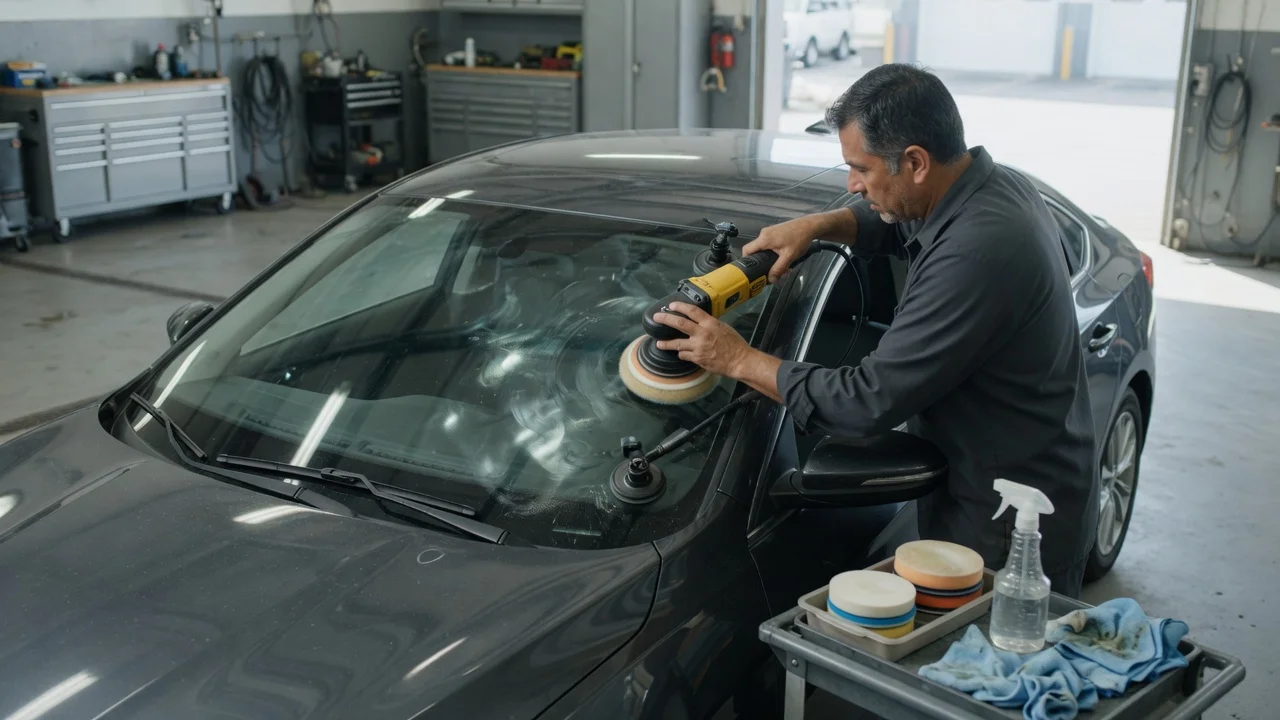
Can a scratched windshield or side window be repaired?
Light surface scratches in automotive glass can often be polished out with a dedicated glass polishing kit, but deep scratches that catch a fingernail usually cannot be made safe or invisible. The key condition is depth: if the scratch is only in the surface layer, polishing may improve it; if the scratch is deep enough to catch a fingernail or distort vision, replacement of the glass is the more reliable repair.
What to check before attempting a glass scratch repair
Run a clean fingernail across the scratch at a right angle. If it does not catch, the scratch is likely a shallow surface mark and may respond to polishing. If it catches, the scratch has penetrated beyond the top surface and polishing could create a visible lensing effect or weaken the glass.
Also check where the scratch is located. Scratches directly in the driver’s line of sight are more safety-sensitive than marks near the edges. Any scratch that creates glare, distortion or a visible streak at night should stop continued polishing attempts and move toward professional evaluation or glass replacement.
Windshield glass scratch repair kits
DIY kits for glass scratch repair typically include a polishing compound made with cerium oxide, a hard felt or foam buffing pad, and a drill attachment or hand pad. The cerium oxide is more abrasive than ordinary car polish and is intended to remove a very thin layer of glass until the scratch is leveled. Some kits, such as products in the GP21005 range, are marketed as glass and windshield polishing DIY kits for light scratches and water spots.
Working temperature matters. Polishing glass generates heat, so the glass should be cool and shaded before starting. Keep the pad moving and avoid concentrating on one small area for too long, because uneven heat can stress the glass.
What can be polished safely
Polishing is most appropriate for light wiper marks, fine scratches from ice scrapers, hard water etching and minor scuffs that do not catch a fingernail. It is not a reliable fix for cracks, chips with radiating lines, deep gouges or damage that has already spread. Those defects affect structural integrity and generally require glass replacement rather than surface polishing.
Glass scratch remover options at general and automotive retailers
Automotive and general hardware retailers commonly stock glass scratch remover products under various names. Canadian Tire, Screwfix and similar stores may carry glass polishing kits or individual cerium oxide compounds in the automotive or abrasives sections. Availability varies by store and region, so check local stock rather than assuming a specific kit will be present.
When to stop and choose replacement
Stop polishing if the scratch becomes wider, if the glass develops a cloudy or wavy appearance in the treated area, or if the scratch is in the driver’s primary viewing zone and still distorts vision after the first careful attempt. A windshield is a structural part of the vehicle, and excessive polishing can reduce optical clarity even when the scratch appears less visible.
Deep scratches that catch a fingernail, scratches near the edge of the glass, and any scratch accompanied by a chip or crack should be treated as glass damage requiring professional inspection. In those cases, replacement is usually the appropriate next step rather than continued polishing.