Chrome Bumper Bar Repairs: Options, Checks and When to Re-Chrome
Most chrome bumper bar repairs fall into one of three categories. Light surface problems such as haze, water spots and very fine rust bloom can often be fixed at home with cleaning and polishing. Dents, bends and moderate pitting usually call for straightening, and often re-plating, by a specialist. Bumpers with peeling plating, deep rust or torn metal are usually cheaper to replace than to restore, unless the part is rare or original to a classic vehicle. Before choosing a method, find out what the bumper is made of, because a chrome-plated steel bar and a chrome-finished plastic cover are repaired in very different ways.
First, Identify the Substrate Material
The substrate is the base material under the shiny finish. It decides which repair methods are possible.
Chrome-plated steel: common on older passenger cars and on many pickup truck rear bumpers. A magnet sticks firmly, and the bar feels heavy and rigid. These can be straightened, stripped and re-plated. Chrome-plated aluminum: found on some vehicles and aftermarket parts. A magnet does not stick, but the part feels like metal rather than plastic. It can be re-plated, but only by shops that handle aluminum, which requires different preparation from steel. Chrome-plated or chrome-effect plastic: common on modern trim strips, grille surrounds and some bumper covers. It is light, flexes slightly, and a magnet does not stick. Ordinary plating shops generally cannot re-chrome it in the same way as metal, and dents or cracks usually mean replacement. Painted or wrapped chrome-look finishes: silver paint or film made to imitate chrome. Repairs follow paint or wrap procedures, not plating procedures.
If you are unsure, check the back side. Bare or painted steel and visible welds point to a metal bumper. Molded ribs, clips and plastic tabs point to a plastic cover over a separate reinforcement bar.
Assess the Damage: What You See and What It Means
Chrome plating is a thin decorative layer. On steel parts it usually sits over nickel, and often copper, plating. How far the damage goes through these layers decides whether a repair is cosmetic or structural.
Observation | What it usually indicates | Typical repair path; Cloudy haze, water spots, light brown film that wipes or polishes off | Surface contamination or very early corrosion on intact plating | Clean, polish with a chrome-safe product, then protect; Tiny rust dots that leave small pits after polishing | Moisture has reached the base metal through pinholes in the plating | Polish and seal for appearance; re-chroming if the pits are widespread; Blistering, flaking or peeling chrome | Corrosion spreading under the plating, or poor original adhesion | Strip and re-plate, or replace; Dents, creases or a bowed bar | Impact damage to the substrate | Straighten by a specialist; usually re-plate afterward because metal work disturbs the finish; Rust holes or rust coming through from the back | Base metal loss | Metal repair before plating, or replacement; Cracks or splits in a plastic chrome part | Substrate failure | Replace in most cases; Uneven gaps or a bumper sitting lower on one side | Bent brackets, mounts or frame horns, not just the bar | Inspect mounts and panel alignment before cosmetic work
When to Stop and Get It Inspected
A bumper is part of the vehicle's impact-management system, not just trim. Have the vehicle inspected before treating the job as cosmetic, and avoid driving it until the issue is resolved, if you notice any of the following:
The bumper is loose, hanging or moves when pushed by hand. Mounting brackets, energy absorbers or the frame rails behind the bumper are bent, cracked or rusted through. A torn or sharp metal edge sticks out where it could injure someone or catch on another vehicle. Parking sensors, cameras, a trailer hitch or lighting attached to the bumper no longer work or sit out of position after the damage. The damage came from a collision that may also have affected the frame, suspension or other parts that are not visible.
If the bumper carries a hitch receiver or is used for towing, have its mounting checked by a qualified shop before towing again. Cosmetic re-plating does not restore a bracket or mount that has been weakened.
Repair Methods Compared
Cleaning and Polishing
For haze and light surface rust on intact plating, wash the bumper and dry it thoroughly. Then use a polish labeled as safe for chrome, applied with a soft cloth. Some owners use very fine steel wool or aluminum foil with water or polish on stubborn rust spots. Work gently. Chrome plating is thin, and aggressive abrasives can cut through it to the nickel or base metal, which leaves a dull, yellowish or rough patch. Polishing improves appearance, but it cannot fill pits or reattach flaking plating.
Sealing Small Pits
On a daily driver where perfection is not the goal, a polished bumper with scattered small pits can be sealed with a chrome-safe wax or a clear protective coating. This slows further corrosion and reduces how visible the pits are. It is a holding measure, not a restoration, and the pits will remain visible up close.
Dent Removal and Straightening
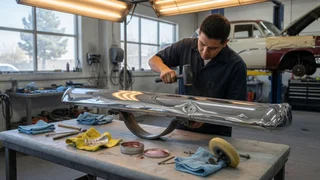
Metal bumpers can often be straightened by shops that specialize in bumper repair or by plating shops with their own metal-finishing departments. Minor dings are sometimes worked out without disturbing the chrome, but this depends on where the dent is and how sharp it is. More often, hammering, heating, filling low spots with solder or welding, and grinding damage the existing plating. The bar then needs to be re-chromed. Body filler is not used under chrome, because plating only adheres to a conductive, properly prepared metal surface.
Re-Chroming
Re-chroming is a professional process. It generally involves chemically stripping the old plating, repairing and straightening the metal, grinding and polishing it smooth, and then plating it in stages, commonly copper, then nickel, then chrome, with polishing between layers. The final appearance depends heavily on the polishing and surface preparation done before plating. Plating magnifies imperfections rather than hiding them. Stripping can also reveal rust or thin metal that was not visible beforehand, so expect the shop's assessment to change once the old finish is removed.
Plating uses hazardous chemicals and is tightly regulated, so it is not a practical DIY job. Home brush-plating and electroplating kits exist, but they are generally suited to small parts and touch-ups. They do not produce a durable finish on a full bumper bar.
Replacement
For common vehicles, especially pickups and plastic chrome covers, new aftermarket or exchange bumpers are widely available, and replacement is often the faster and more economical route. Quality varies among aftermarket parts in plating thickness, fit and bracket design, so check fitment for your exact model year, cab and bed configuration, and trim before buying. For classic or rare vehicles where an original bumper matters, re-chroming the original part is often preferred even when it costs more.
Chrome-Look Paint or Wrap
Some owners give up on chrome and paint the bumper body color, black or silver, or cover it with chrome-effect film. Coating compatibility is the key issue here. Paint does not adhere reliably to smooth chrome. The surface must be thoroughly scuffed and degreased, and it usually needs a primer designed for slick metal, such as a self-etching or adhesion-promoting primer. Rust spots must be treated first, or corrosion will lift the new finish. Spray-on chrome-effect paints rarely match the reflectivity of real plating.
Choosing the Right Approach
Intact plating with surface haze or light spotting: polish and protect. Scattered small pits on a work vehicle: polish, seal and accept minor imperfections, or replace if appearance matters. Dents, peeling or widespread pitting on a steel bar you want to keep: professional straightening and re-chroming. Common truck or modern vehicle with heavy damage: compare the cost of a replacement bumper with re-plating, and include brackets if they are bent. Cracked or dented plastic chrome part: replacement. Any loose mounting, bent brackets or collision damage: inspect the structure first, then decide on the finish.
Refitting and Panel Alignment
Whether the bumper is repaired or replaced, fit it with its brackets loosely tightened at first. Adjust it so the gaps to the body, tailgate, fenders or grille are even and it sits level side to side, then tighten the fasteners. Replace rusted or seized bolts rather than reusing damaged hardware. Use any spacers or isolators that separate the bumper from the brackets, because they can help reduce rattles and metal-to-metal corrosion. If the bumper still will not line up, the brackets or mounting points are probably bent and need correcting.
Corrosion Protection After Repair
Chrome lasts longest when moisture and road salt are kept away from the plating and from the metal behind it.
Wash the bumper regularly, especially after driving on salted roads, and rinse the back side and brackets where salt collects. Dry the bumper after washing to prevent water spotting. Apply a chrome-safe wax or sealant periodically to the front face. Protect the unplated back side of a steel bumper with paint, undercoating or a rust-inhibiting spray. Avoid harsh acidic wheel cleaners and abrasive pads on chrome. Treat small rust spots as soon as they appear, before they spread under the plating.
Key Takeaway
The right chrome bumper repair depends on the substrate and the depth of the damage. Surface problems on intact plating are a polishing job. Dents and corrosion that has broken through the plating usually need professional straightening and re-chroming. Plastic chrome parts and heavily rusted common bumpers are generally replaced. Whatever the finish, confirm that the bumper and its mounts are structurally sound and correctly aligned before treating the repair as purely cosmetic.