Repairing the Climate Control System on a 1992 Honda Prelude
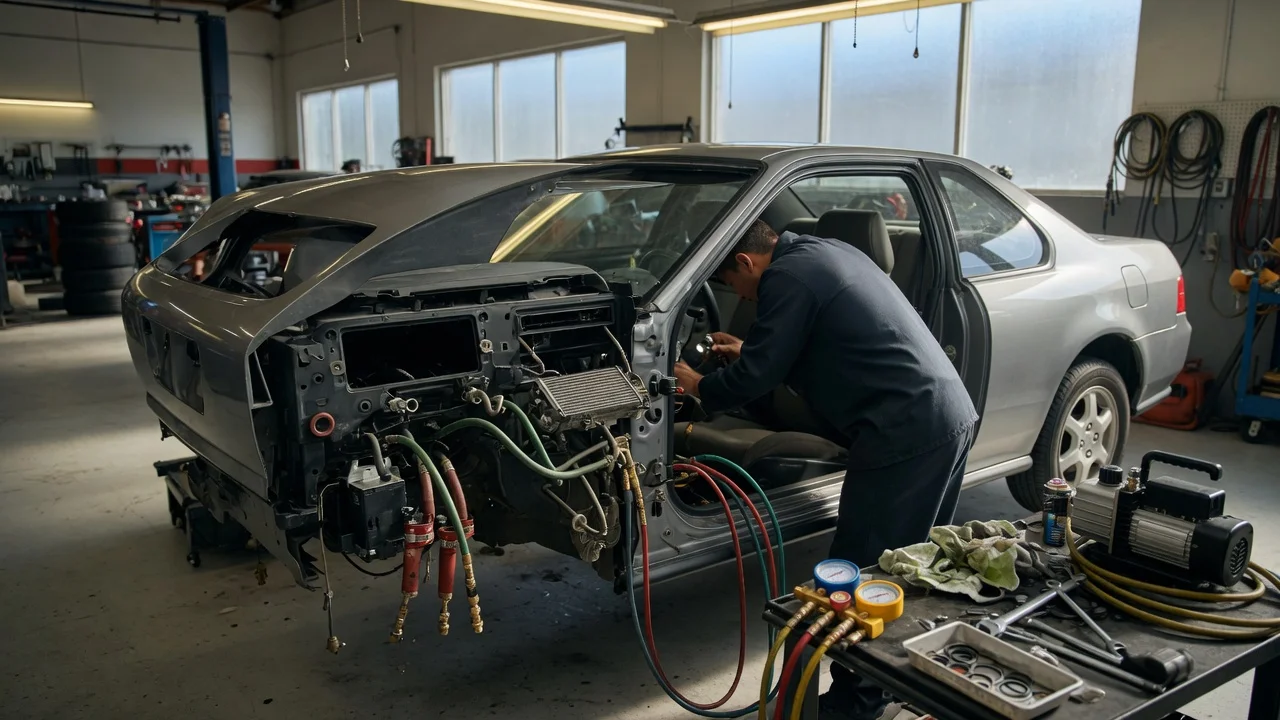
Direct Answer and Scope
The essential repair approach for a 1992 Honda Prelude climate control system is to isolate whether the fault is in the air delivery path, the temperature blend mechanism, or the electrical control side. On this generation, most failures involve a faulty blower motor resistor, a cracked vacuum line to the heater control valve, or a broken plastic blend door cable. Before replacing any component, verify that the control panel is receiving power and that all fuses for the heater circuit are intact, since a failed illumination or mode button can mimic a deeper mechanical problem.
Symptom Diagnosis and Observable Checks
If the blower only works on the highest speed, the blower motor resistor is the most plausible cause. Locate the resistor near the blower motor housing under the passenger side of the dashboard, disconnect the electrical connector, and inspect the coiled resistance wires for a visible break or corrosion. A continuous circuit through the resistor with a multimeter indicates the resistor is functional, while an open reading confirms replacement is needed.
If the temperature does not change from hot to cold, check the cable-operated blend door behind the center console. Move the temperature slider from full cold to full hot while watching the blend door lever on the heater box. A slider that moves but the lever does not indicates a broken or detached cable end. A lever that moves but produces no temperature change points to a stuck heater control valve or low coolant level, not a control panel fault.
If air only blows from the defrost vents regardless of the mode selected, inspect the small black vacuum lines running from the intake manifold to the vacuum reservoir and control head. A hissing sound under the dash or a cracked, brittle line at the firewall connector indicates a vacuum leak. Mode selection on this system defaults to defrost when vacuum is lost, which is a safety feature rather than a mode actuator failure.
When to Stop and Seek Professional Diagnosis
Stop using the climate control and seek professional diagnosis if you smell electrical burning, see smoke from the control panel, or find a melted connector at the blower motor resistor. These conditions indicate excessive current draw or a short that could damage the wiring harness. A diagnostic trouble code from the climate control self-test, if the panel has one, is evidence to investigate rather than proof of a failed part, since a weak battery or poor ground can trigger spurious codes.