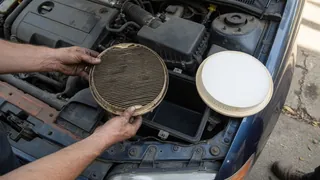
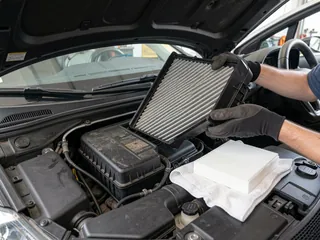
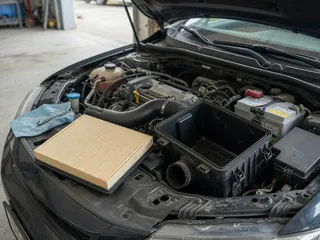
Recognize bad engine air filter symptoms
A restricted air filter prevents the engine from breathing the volume of air it expects, and the symptoms tend to build gradually as dust, pollen and road debris pack into the paper media. You may notice softer acceleration, slightly reduced fuel economy, a rough idle or a faint musty odor from the vents before a warning light appears. Because the filter is the engine’s first line of defense, understanding how its condition changes airflow, fuel metering and intake sound helps you separate a normal maintenance issue from a deeper engine control problem.
Direct answer
The most common clues of a dirty engine air filter are reduced throttle response and a subtle drop in highway fuel economy. Airflow becomes turbulent after the filter media, so the mass airflow sensor may read density inaccurately and the powertrain control module may trim fuel delivery slightly rich or lean. At part throttle the effect often feels like a lazy pedal, while steady cruise can show more frequent downshifts on hills because the engine is producing less torque from each combustion event.
Idle quality may also change before the filter looks obviously black. Without sufficient air, the idle air control path and throttle body compensate until their correction limit is reached, creating a small surge or a gentle stumble at stoplights. Black smoke, a strong fuel smell or a flashing check-engine light are not typical of a slightly clogged filter alone; they point toward fuel pressure, ignition or sensor faults. A filter is a wear item to inspect during routine service rather than a guaranteed repair for every driveability complaint.
Identification and location
The housing is commonly a black plastic box located near the top or side of the engine bay, often near a fender or behind the grille area on front-wheel-drive vehicles. It connects to the intake duct with a large flexible hose and is secured by metal clips, spring latches or screws. The filter inside is a flat panel, a round cylindrical element or a conical shape depending on engine configuration, and the housing usually has a fresh-air inlet duct leading from behind the headlamp or inner fender.
When opening the box, note how the lid seats against the rubber gasket and whether any debris has collected in the clean-side section downstream of the paper. Wiring, breather hoses or a mass airflow sensor may be attached to the outlet duct, so exact connector placement should be confirmed against documentation for the vehicle before removal. A cabin filter is a separate pleated panel behind the glovebox or cowl and affects HVAC airflow, not engine breathing, which is a common lookalike during diagnosis.
Interpreting symptoms and test results
Visual inspection is the fastest discriminating check. Hold the filter toward a bright light or look through the pleats from the clean side; a usable element generally allows some light through evenly, while heavy gray or brown coating, leaves, oil or visible tears support replacement. A slightly dusty surface is not automatically failure, because the outer layer is designed to trap fine particles. Service history matters here: a filter that was clean 5,000 miles ago may still be fine in normal on-road use but fail quickly after gravel roads or construction zones.
A filter restriction gauge or scan tool data can help when visual results are unclear. If the air filter housing has a vacuum indicator, a high reading under load means the media is resisting flow. Manifold absolute pressure, calculated load, fuel trims and mass airflow grams per second can also be compared against typical values for the engine, but diagnostic codes and manufacturer specifications require vehicle-specific confirmation because different control strategies use different thresholds. None of these readings alone proves a filter has failed; they narrow the search between intake restriction, sensor drift and vacuum leaks, leaving the filter as one supported cause among several.