Rear Parking Brake Cables: Fitment and Selection
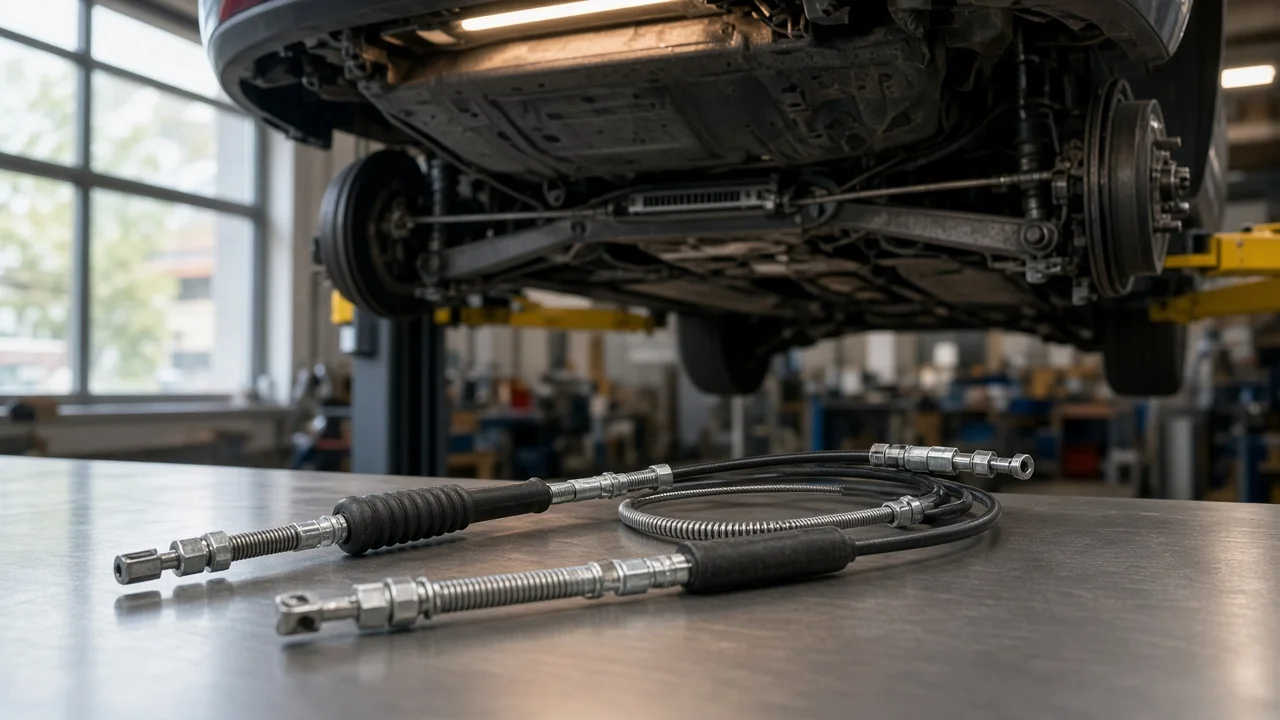
A rear parking brake cable looks like a simple part, but it is easy to order the wrong one. Cables differ by side, length, end fittings and the brake hardware at each wheel, and many vehicles use different cables depending on drivetrain or body length. This guide explains how to match a replacement to your vehicle, which features matter and what a new cable cannot fix. Throughout the job, follow your vehicle's service information for routing, adjustment and wear limits.
Define the job the product must do
Before comparing parts, work out why the cable needs replacing. Common reasons include a frayed or seized inner cable, a torn boot that lets water into the conduit, a parking brake that will not hold on a grade, a lever or pedal that travels too far, and a brake that stays partly applied after release. Each problem calls for something slightly different. A seized cable needs a replacement that moves freely and resists corrosion. A stretched or kinked cable mainly needs the correct length and routing. Damage from road debris may justify a cable with better conduit protection.
Also confirm that your system actually uses rear cables. Many newer vehicles have an electronic parking brake with motors mounted on the rear calipers and no cables to the wheels. Some electronic systems still use a central actuator that pulls conventional cables. Then note your practical constraints: whether you are doing the work yourself or ordering parts for a shop, how much time you have, and whether rust has locked brackets and fasteners in place. Where roads are salted, it often makes more sense to replace both rear cables at the same visit, sometimes along with the front or intermediate cable, than to deal with one failure at a time.
Check compatibility
Fitment starts with year, make, model and engine, but rear cables are often divided further. Cable length and routing can change with drivetrain (two-wheel drive versus four-wheel or all-wheel drive), wheelbase, cab style and bed length on pickups, and body style on vans and wagons. The rear brake design matters just as much. Drum brakes, discs with a small drum-in-hat parking brake inside the rotor, and rear calipers with a built-in parking brake lever all use different cable ends. If a listing asks for a VIN or a production date split, provide it. The most reliable cross-reference is the original part number, taken from the old cable or a dealer parts catalog.
Next, match the physical connections. Check which side the cable is for, because left and right rear cables are often different lengths. Compare three points: the fitting at the wheel end (barrel end, ball end or eyelet), the conduit end that clips or bolts into the backing plate or caliper bracket, and the front end that connects to the equalizer or intermediate cable. Look at the number and position of mounting brackets and grommets along the conduit. A cable with the right length but a missing bracket can rub on the exhaust, suspension or fuel lines. If possible, lay the old cable beside the new one before installation and compare length, fittings and bracket spacing.
Features that affect the choice
The features that matter most are the ones that affect how freely the cable moves and how long it resists water and rust. A lined conduit, usually with a plastic liner between the inner strand and the outer housing, reduces friction and helps the cable return fully when released. Coated or galvanized inner strands and sealed rubber boots at the ends keep moisture out, and moisture is the main cause of seizing. Pre-installed brackets, clips and grommets that match the original layout save time and reduce the temptation to improvise the routing.
Be cautious with marketing labels. Terms such as heavy-duty, premium or OE quality do not tell you what is different about the construction. Useful evidence is concrete: fitment stated by part number interchange, a description of the conduit liner and strand coating, photos of the actual end fittings and brackets, and a clear list of included hardware. Packaging also varies. Some cables are sold individually by side, others as a pair, and a few kits include the front cable or equalizer. A cable listed for exact vehicle fitment with matching hardware is usually a better choice than one with a broad universal claim. Universal cables may require cutting, crimping or homemade brackets, which is a poor approach for a safety part.
Limitations and ownership costs
A new cable only transmits force. It cannot compensate for worn or faulty brake hardware at the wheel. The parking brake may still hold poorly after a cable replacement in several cases: the rear brake pads, shoes or drum surfaces are worn past their wear limits, the friction material is contaminated with oil or brake fluid, or the self-adjuster or caliper parking mechanism is seized. When the wheel is apart, inspect the friction material, brake rotors or drums, hardware springs and the caliper actuating lever, and compare your measurements with the vehicle's specifications. Do not drive a vehicle that will not hold on a slope, drags with the brake released or shows a brake warning light until the cause is found. If you are unsure, take it for professional service.
Setup is part of the cost. Most systems need adjustment after installation, using an adjuster nut near the equalizer, the shoe star wheel or a specific procedure in the service information. Skipping adjustment leads to excessive lever travel or a dragging brake. Some vehicles require removing heat shields, exhaust components, or a rear caliper or rotor for access, and rusted retainers may break and need replacing. Replacing a cable alone does not normally open the hydraulic system. However, if a caliper hose or line is disconnected, the brakes must be bled and topped up with the specified brake fluid. Ongoing maintenance is modest: using the parking brake regularly helps keep the mechanism moving, and the boots should be checked for tears during routine service.
Build a practical shortlist
Narrow your options with a short checklist. First, confirm your parking brake type and that your vehicle uses rear cables. Second, match year, make, model, drivetrain, body or bed length and rear brake design, then cross-check the original part number. Third, confirm the side and compare length, wheel-end fitting, conduit end and front connection against the old cable. Fourth, check that brackets, grommets and clips are included and match the original layout.
Then compare the remaining candidates on construction details you can verify: conduit liner, strand coating, end seals and boot design. Decide whether you need one side, a pair or a full set including the front cable and equalizer, based on the condition of the parts you are not replacing. Finally, budget for inspection and adjustment, plus any brake pads, shoes, hardware or caliper work the job turns up. A cable that fits exactly, mounts like the original and passes a hold check after correct adjustment, as described in the service information, will serve better than a cheaper part that needs modification.