Parking Brake Cable Repair Kits: Compatibility and Selection
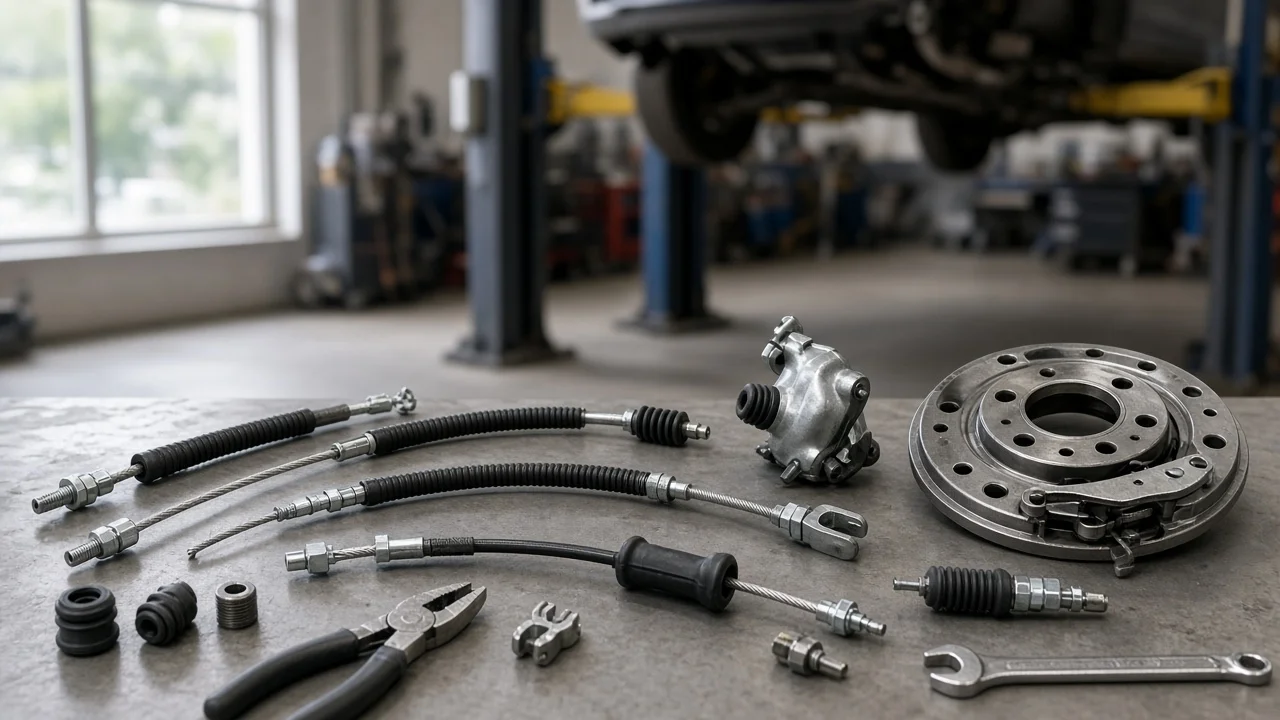
A parking brake cable repair kit can fix a broken end fitting, a frayed section or a worn adjuster without replacing every cable in the system. It only works if the kit matches how your vehicle's parking brake is built. This guide explains how to define the job, confirm compatibility, judge kit features and shortlist options. Treat the parking brake as a safety system. If the vehicle will not hold, rolls when parked or the lever travel feels wrong, stop relying on it and have it inspected.
Define the job the product must do
Start with the actual failure rather than the part. Each of these needs different hardware: a snapped inner cable at one end, a cable seized inside its sheath, a cracked or swollen conduit that lets water in, a stretched cable that has run out of adjustment, a broken equalizer or adjuster, or a missing return spring. Confirm the cable is really at fault before buying anything. The rear brakes themselves can also stop a parking brake from holding. Shoes or pads may be worn past their wear limits, the friction material may be contaminated with oil or grease, a self-adjuster may be seized, or a caliper parking mechanism may no longer move. Replacing a cable will not cure any of those.
Next, identify how your parking brake is built. On many vehicles, a hand lever or foot pedal pulls cables to drum brake shoes. The drum may be a conventional rear drum or a small drum-in-hat inside the rear disc rotor. On other vehicles, the cable pulls a lever on the rear caliper. Most electronic parking brakes use motors mounted on the calipers and have no cables to repair, though some designs use a central actuator that pulls conventional cables. Finally, be honest about your constraints: whether you want a lasting repair or a short-term fix, what tools and lifting equipment you have, and how much corrosion is under the vehicle. If the conduit is rusted along most of its length, a complete replacement cable is usually more practical than a repair kit.
Check compatibility
Vehicle fitment for parking brake cables is narrower than many owners expect. Year, make and model are only the starting point. Drivetrain, body style, wheelbase or bed length, and rear brake type can all change cable length and end design. A single vehicle may also use a front cable, an intermediate cable and separate left and right rear cables. Use a VIN-based parts lookup or the manufacturer's service information to confirm which section you need. Then check that the listing names the same position and brake type as your vehicle.
Then compare the physical interfaces. The inner cable end must match the part it hooks into. That may be a ball or barrel end that seats in a shoe lever or caliper lever pocket, an eyelet, or a threaded end for an adjuster. The conduit ends must match their mounts, whether that is a spring retainer that snaps into a backing plate hole, a clip, or a bolt-on bracket. Overall cable length, exposed inner cable length, routing brackets and grommets also matter. A cable that is too short will not reach the equalizer, and one that is too long can rub, sag or touch exhaust parts. Some universal kits use cut-to-length cable and add-on ends. For these, confirm the inner cable diameter and check that the supplied end will seat fully in your lever. The word universal is not a fitment confirmation.
Features that affect the choice
The main trade-off is between a vehicle-specific cable assembly and a repair kit built from adaptable parts. A complete cable comes with factory-style swaged ends, the correct conduit fittings and the right length, so installation is mostly routing and adjustment. A repair kit with set-screw or crimp-on ends costs less and can help when the correct cable is unavailable. Its strength, however, depends on matching the cable diameter, cutting cleanly, and tightening or crimping exactly as the instructions specify. Some manufacturers call for replacing the whole cable assembly rather than splicing or re-ending it. Check your service information before choosing a kit for a permanent repair.
Corrosion resistance and smooth operation affect service life the most. Look for a lined conduit, a coated or corrosion-resistant inner cable, sealing boots at the conduit ends, and plated or stainless hardware. Follow the kit or service instructions on lubrication, because some lined cables are not meant to be oiled. Useful evidence in a listing includes stated dimensions, materials, a full list of included hardware, part-number cross-references, and fitment notes that mention rear brake type. Labels such as heavy duty, premium or OE quality tell you little on their own unless they come with those specifics.
Limitations and ownership costs
A cable kit only restores the link between the lever and the rear brakes. It cannot make up for worn shoes or brake pads, glazed or contaminated linings, a seized self-adjuster, a damaged drum surface inside the brake rotors, or a corroded caliper lever mechanism. On rear calipers with an integrated parking brake, a seized mechanism usually means a replacement or rebuilt caliper. That job opens the hydraulic system, so the brakes must then be bled with the brake fluid specified for the vehicle. Electronic systems may also need a scan tool to retract the actuators before rear brake service.
Budget for more than the kit. Getting to the cables can mean removing wheels, drums or rotors, heat shields and sometimes exhaust hangers. Old fasteners and conduit retainers are often seized, so plan for penetrating oil, replacement clips, and possibly new return springs or shoe hardware. After installation, adjust the system in the order the service procedure gives. On many drum and drum-in-hat designs, that means setting shoe clearance before cable tension. Then check lever or pedal travel, confirm the rear wheels turn freely with the brake released, and do a hold test on a safe incline. If water got into one sheath, the other cables went through the same conditions and should be inspected. Using the parking brake regularly also helps keep cables from seizing.
Build a practical shortlist
Before comparing prices, write down the exact vehicle details, the cable position you need, and whether the rear brakes are drum, drum-in-hat or caliper-actuated. For each candidate, check that the inner end and conduit fittings match your old cable and that the overall and exposed lengths are listed and correct. Make sure the hardware you need, such as retainers, clips, grommets or brackets, is included or available separately. For universal kits, note the cable diameter. For all options, note the conduit lining and sealing, the hardware materials, and whether clear installation and adjustment instructions are supplied. Keep a vehicle-specific complete cable on the list as a baseline. The price gap is sometimes smaller than the extra labor and risk of re-ending a cable.
Bring the old cable, or clear photos of both ends, when you compare parts. Do not rely on a parking brake you cannot trust while you shop. Have a professional inspect the rear brakes before relying on the vehicle in any of these cases: it still will not hold after the repair, a rear wheel drags, a warning lamp or electronic parking brake fault appears, or you cannot work out why the system failed.