Racing sequential gearbox
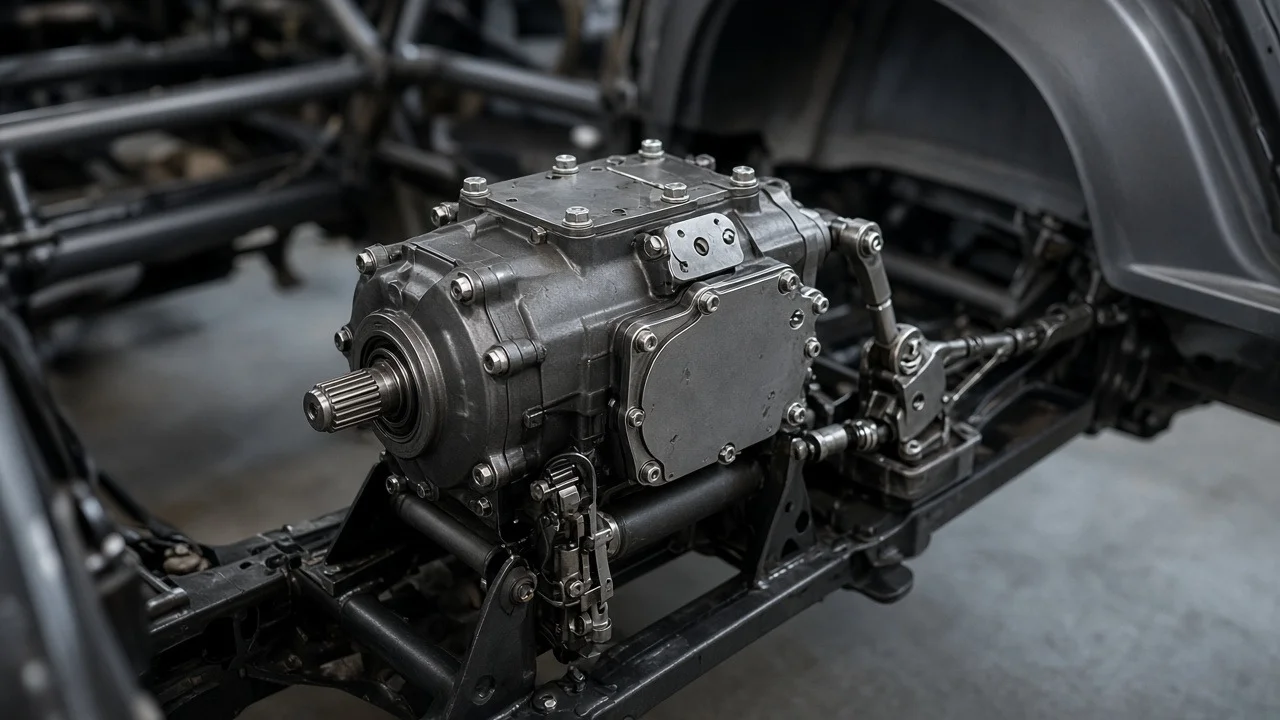
A racing sequential gearbox changes how a driver selects ratios, replacing the familiar H-pattern with a lever or paddle path that moves forward or backward one gear at a time. This design is common in motorsport because it produces rapid, repeatable shifts under load. Understanding its operation helps clarify why the transmission type behaves differently from a conventional manual and what that means for shift behavior, fitment, and competitive use.
Essential answer
A sequential racing gearbox is a transmission type that permits gear changes only in a fixed order, typically by pulling or pushing a shift mechanism one step per ratio. Unlike an H-pattern manual, the driver cannot jump from second directly to fourth. The selector drum inside the gearbox translates each lever movement into a rotating motion that engages the next gear dog ring, making the shift path linear and predictable. This design supports fast gear changes and reduces the risk of selecting the wrong gear during hard acceleration or braking.
Shift behavior differs from a conventional manual because the mechanism enforces the sequence rather than relying on the driver’s hand position. Pulling back generally selects a higher gear while pushing forward selects a lower gear, though the exact orientation depends on the vehicle installation. The internal dog engagement allows quick, positive shifts without a full synchronizer pause in many competition setups. Before considering fitment or repair options, service history and fluid specification help determine whether a particular unit is suitable for a given vehicle or competition class.