Private car sales
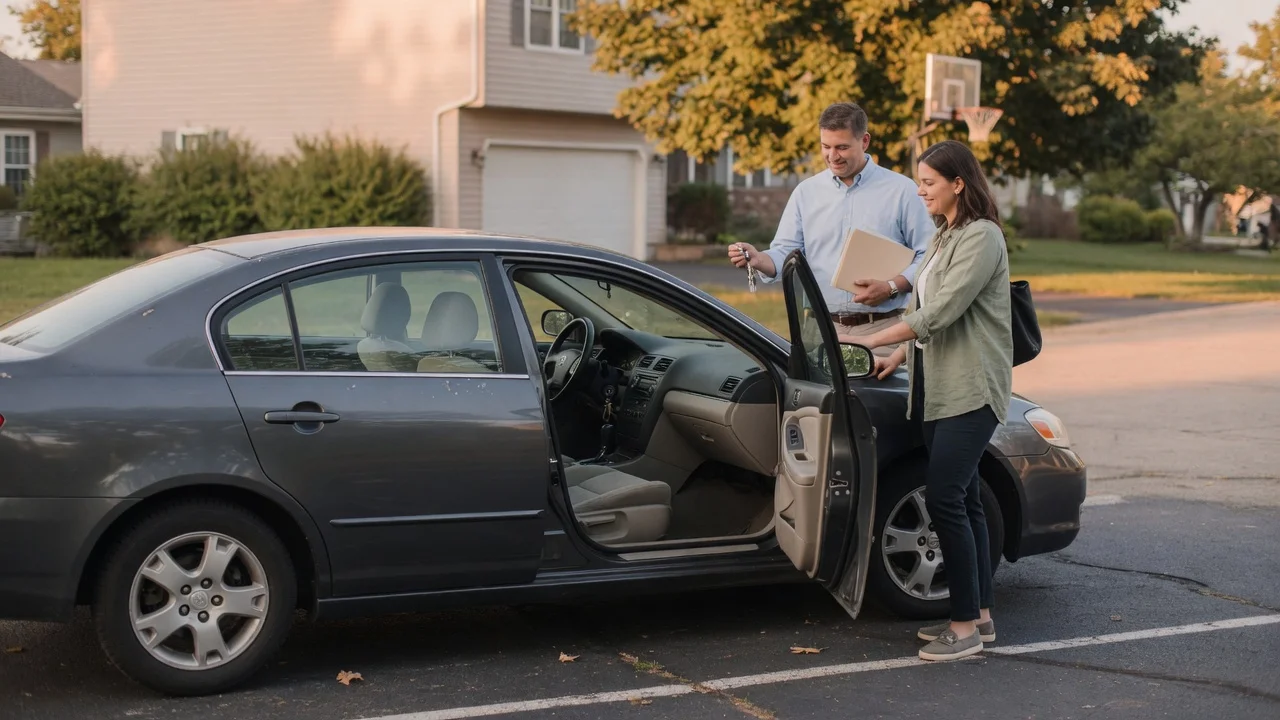
What a private car sale is
A private car sale is a used-vehicle transaction between two non-dealer parties, usually a current owner and a private buyer. The car changes hands without a licensed motor dealer acting as the seller. That is the essential distinction from a dealership purchase: the sale is typically treated as a private-party transfer of a used good, often sold as seen, with fewer of the statutory consumer remedies that can apply when a licensed dealer sells the same vehicle.
The subject covers the whole transfer: agreeing a price, inspecting the car, confirming identity and title, paying, completing registration or tax paperwork, and handing over the vehicle and keys. It does not, by itself, include manufacturer new-car retail, dealer trade-ins, auction-house sales to the trade, or hire-purchase from a finance company, though a private sale can still involve outstanding finance that must be settled before clean title can pass.
The answer changes with location and with who is selling. Title, tax, odometer, cooling-off and “as is” rules differ by country and often by state or province. A one-off sale by a genuine private owner is treated differently in many markets from repeated sales by someone acting as an unlicensed dealer. Electric, hybrid, imported and recently written-off vehicles add extra identity and history checks. Nothing below should be read as a single nationwide legal procedure.
How a private sale differs from a dealer sale
In a dealer sale, the seller is usually a licensed trader. Depending on the market, that can bring implied quality standards, a duty to describe the car accurately, access to in-house finance, part-exchange, and a warranty or used-car guarantee. In a private sale, the seller is ordinarily another motorist. Price is often lower because there is no dealer margin, preparation package or retail warranty baked in. The buyer takes more of the inspection, history and paperwork burden.
Private listings appear on classified sites, social marketplaces, noticeboards and through personal networks. The advertised price is a starting point. Condition, service history, remaining warranty, outstanding finance, local demand for that model year and trim, and how quickly either party needs to complete the deal all affect the final figure. There is no universal “correct” discount from a dealer retail price; published valuation guides, if used, are estimates, not a legal value.
What the buyer should establish before paying
The buyer’s first job is to confirm that the person selling the car is entitled to sell it and that the car is the one described. That means matching the vehicle identification number (VIN) on the car to the registration document and to any history report, checking that the seller’s name matches the registered keeper or title holder, and asking whether finance, a lien or a loan is still attached. A car can look clean and still be subject to a lender’s interest until that debt is paid and released.
Confirm the VIN, registration plate and engine or battery identifiers against the title or registration document. Ask for service records, invoices and, where relevant, cambelt, clutch, battery or software-update history. Run a history check for recorded finance, theft, write-off category, mileage discrepancies and previous keepers, treating the report as a search of known databases, not a guarantee. Inspect in daylight, on a level surface, and take a trial drive that includes slow manoeuvres, open-road speed and a cold start if possible. Have an independent mechanic inspect the car if you are not confident judging structure, corrosion, accident repair or hybrid or electric high-voltage systems. Do not pay a deposit, “shipping fee” or remote holding charge to a seller you have not met, especially if the car is not available to view.
A pre-purchase inspection is an editorial recommendation for most private purchases of any material value, not a documented legal requirement. The inspector can report on visible and testable condition only. Hidden crash repair, intermittent faults and future failures can still appear after sale. Private sellers in many jurisdictions are not required to provide a warranty; they are typically required not to misrepresent facts they state, such as mileage, accident history or whether the car has a current test certificate.
What the seller should prepare
A seller who wants a clean, faster sale should gather the title or registration document, spare keys, service book or digital service record, recent invoices, and any remaining manufacturer or extended warranty paperwork. Photograph the car in honest light, disclose known faults in the listing, and be ready to show the VIN and identity documents at viewing. Overstating condition, hiding accident damage, or winding back a mileage display can turn a civil dispute into a fraud allegation; the safe course is accurate description.
Price the car against similar private listings for the same generation, powertrain, mileage band and trim in your market, then adjust for options, tyres, outstanding advisory items and how soon you need the funds. If a loan is still secured on the vehicle, contact the lender before advertising a completion date so you know the settlement figure and how the title will be released. Do not hand over the car, or sign a transfer, until you have cleared funds and a written bill of sale.
Paperwork, title and tax
Ownership does not pass on a handshake. In most markets the parties complete a bill of sale that records the date, sale price, vehicle identifiers, and the names and addresses of buyer and seller, then notify the registration authority so the seller is no longer recorded as keeper and the buyer can tax and insure the car. Some places also require a smog, safety or roadworthiness certificate before transfer. Exact forms, deadlines and who files them are jurisdiction-specific; check the motor-vehicle agency that issued the current registration.
Insurance usually has to be in the buyer’s name before the car is driven away. A seller’s policy typically does not cover a new owner. Number plates, transit permits and temporary insurance products also vary by country. Import paperwork, salvage titles and rebuilt write-offs often need extra declarations. If any of those apply, the history report and the title brand should say so; if they do not, treat that as a gap and pause the sale until it is resolved.
Payment and handover
Cash, bank transfer and cashier’s cheques are the usual methods. Each has a fraud risk. Bank transfers can be reversed or sent from a compromised account; cheques can bounce after the car has left; large cash deals create security and counterfeit risk. A measured approach is to complete the transfer at a bank branch, wait for the payment to show as cleared and irreversible, then exchange keys, documents and the signed bill of sale together. Never release the car against a promised later payment.
Escrow services and “buyer’s agents” who contact you unsolicited after a listing are a common fraud pattern in private-vehicle classifieds. There is no supplied evidence here that any particular platform’s payment tool is safe in every case. If a remote buyer will not view the car, insists on overpaying, or asks you to refund a difference, treat the deal as unsafe and stop.
Risks that remain after a completed sale
Even a well-run private sale leaves residual risk. Mechanical faults can appear after the buyer drives away. A title problem or unpaid lien can surface later. In many markets the private buyer has limited or no cooling-off right and limited recourse if the car is simply disappointing rather than mis-described. The seller can remain liable for fines, congestion charges or unpaid tax if the keeper record is not updated promptly. Both parties should keep copies of the bill of sale, identity checks, payment confirmation and photographs of the odometer and VIN at handover.
This article does not report a tested sample of private sales, a typical discount versus dealer retail, or a failure rate for private-party cars. Those figures vary by model, age, market and listing channel, and no measurements were supplied for this brief. Where a number would require a local statute, a fee schedule or a valuation index, the gap is left open rather than filled with an unverified figure.
Practical next step
Decide whether you are buying or selling, then work in this order: confirm identity and title, inspect the car (or have it inspected), agree a price in writing, arrange cleared payment, complete the transfer forms required in your registration district, and only then exchange the vehicle. If finance, a salvage brand, an import, or a mismatch between VIN and paperwork appears at any point, stop until that issue is documented and cleared. For the legal filing sequence and any sales-tax or road-tax duty, use the motor-vehicle authority that covers the car’s current registration, because those rules are the qualification that most often changes the procedure.