Power Mirrors Not Working? Common Causes and What to Check First
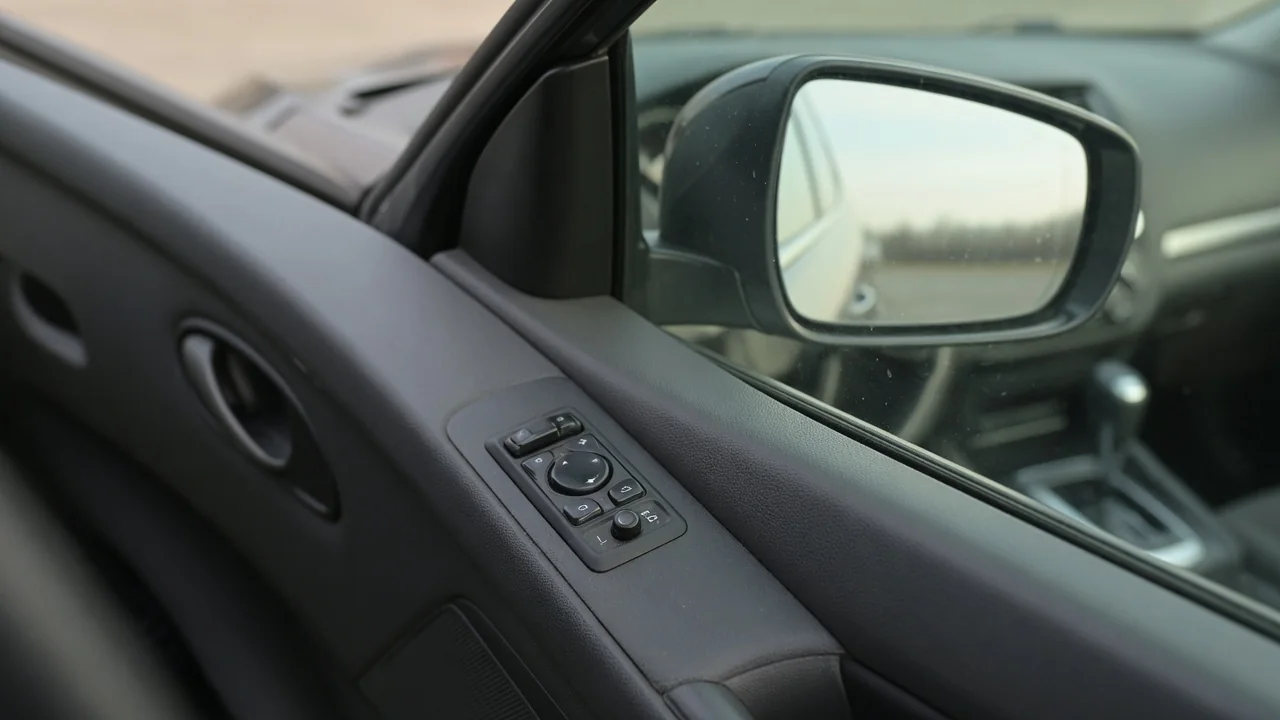
Power mirrors not working can be a minor annoyance or a real visibility problem, and the cause ranges from a blown fuse to damaged door jamb wiring. Whether one mirror is dead, both power mirrors are not working, or the glass only moves one way, the pattern of the failure points toward the likely culprit. Here is how to read those clues and what to check first.
How a Power Mirror System Works and What the Symptoms Tell You
A power mirror system is a simple circuit with a few key parts. A mirror fuse protects the circuit, and the power mirror switch on the door or console combines a mirror selector switch, which chooses left or right, with a direction pad. From there, a wiring harness passes through the door to small motors behind the glass, usually called the mirror glass actuator. On some vehicles the switch does not power the motors directly; instead it sends a request to a body or door control module, which then drives the mirror.
The symptom narrows the search. No movement from either mirror suggests something shared, one dead mirror points to that side, and a single dead direction hints at a switch contact, wire, or motor for that axis. A faint hum or click with no glass movement means power is arriving but the mechanism is slipping or jammed, while movement that comes and goes suggests a loose connection. Memory seats, power folding mirrors, heated mirrors, and mirror-mounted turn signals change the wiring, so check the owner's manual or service information before drawing conclusions.
When Both Power Mirrors Stop Working at the Same Time
When both mirrors quit together, two side mirror motors failing at the same moment is unlikely. Look instead at what they share: the fuse, the control switch, the switch's power or ground connection, or a module. The owner's manual or the diagram on the fuse box cover identifies the correct fuse, which may also serve other accessories. A blown fuse replaced with one of the same rating may restore operation, but a fuse that keeps blowing signals a short circuit that needs professional testing rather than repeated replacement.
The switch itself is a reasonable suspect because it is handled constantly. Warning signs include positions that do nothing, a selector that feels loose or sticky, or mirrors that respond only when the pad is pressed at an odd angle. It also helps to think about what changed recently. Aftermarket accessories, a door panel that was removed for other work, water getting inside the door, or a recently disconnected battery can all be relevant on some vehicles, though none of them proves the cause by itself.
One Mirror or One Direction Not Moving
If one mirror works normally and the other does nothing, the shared parts are probably fine, and attention shifts to the dead side: its motor, its connector, or the wiring running through the door hinge area. Those wires flex every time the door moves, so notice whether the mirror works with the door open but not closed, or the reverse. That pattern suggests a damaged wire in the door jamb. A mirror that moves one way but not the other often points to a single axis, since many designs use separate motors for each.
Not every stuck mirror is an electrical fault. Cold weather and ice can freeze the glass in place, packed dirt can bind the adjuster, and an old impact from a garage door frame or a passing vehicle may have cracked the mounting behind the glass. Rule these out first by inspecting the housing and letting a frozen mirror thaw naturally. Resist the urge to push the glass into position with any force, because that can crack the glass or strip the adjuster, turning a small problem into a mirror replacement.
Model Searches: F-250, Hummer H2, and Pontiac G6
Owners of a Ford F-250, a Hummer H2, or a Pontiac G6 with power mirrors not working can follow the same troubleshooting logic described here, because the underlying circuit ideas are shared. What differs is the detail. Fuse locations, switch design, and wiring layout depend on model year and trim, so general advice only goes so far. The reliable route is the owner's manual or official service information for the exact year and configuration, which shows the right fuse and the correct wiring paths.
Equipment matters as well. Heavy-duty trucks fitted with towing or extendable mirrors, and vehicles with features such as power folding, heating, or integrated signals, may have additional circuits and connectors to check, and the equipment varies by build. None of this means a particular model has a built-in weakness. Owners who suspect a pattern, perhaps after reading similar complaints, should ask a dealer or use the official recall lookup with their vehicle identification number instead of assuming a known defect applies to their vehicle.
Safe Checks You Can Do at Home
Several checks carry little risk. Select the left mirror and try all four directions, then repeat for the right, noting exactly which combinations fail. That simple grid tests the switch across its positions without removing anything: if the same direction fails on both sides, the switch or a shared wire is more suspect, while a failure limited to one mirror points away from the switch. With the ignition off, inspect the mirror fuse, and look over the mirror housing and the rubber door jamb boot for visible damage.
Beyond that, the work gets more involved. Removing a door panel, probing connectors, or repairing wiring calls for the right tools and service information, and side airbag components, window hardware, and lock mechanisms may sit close by. Never bypass a fuse, jump wires to make a mirror move, or install a higher-rated fuse to stop it from blowing. The fuse is sized to protect the wiring, and defeating it can overheat the circuit, damage the harness, and create a real fire risk.
When to Get Professional Electrical Testing
Some signs mean it is time for a technician: fuses that keep blowing, a burning smell, melted connectors, faults that come and go, or several door features such as windows, locks, and mirrors failing together. A shop can measure voltage and ground at the switch and at the motor, read live data from a module, and trace the harness through the hinge to find a break. Those tests show where power stops, which is far more reliable than replacing parts on a hunch.
On some vehicles a scan tool will show body or door module codes. A code is evidence to interpret, not proof that a part has failed, and many are manufacturer-specific, so the meaning must be confirmed against that maker's service information before any repair. Until the fix is made, set each mirror gently by hand if the design allows, or take extra care with shoulder checks when changing lanes. Poorly aimed mirrors enlarge blind spots, which makes this a safety matter, not just an inconvenience.