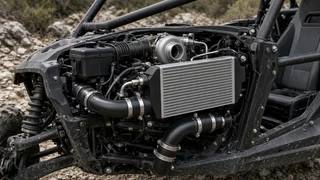
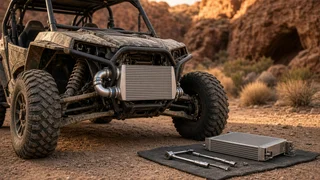
Polaris RZR turbo intercooler and relocation kit
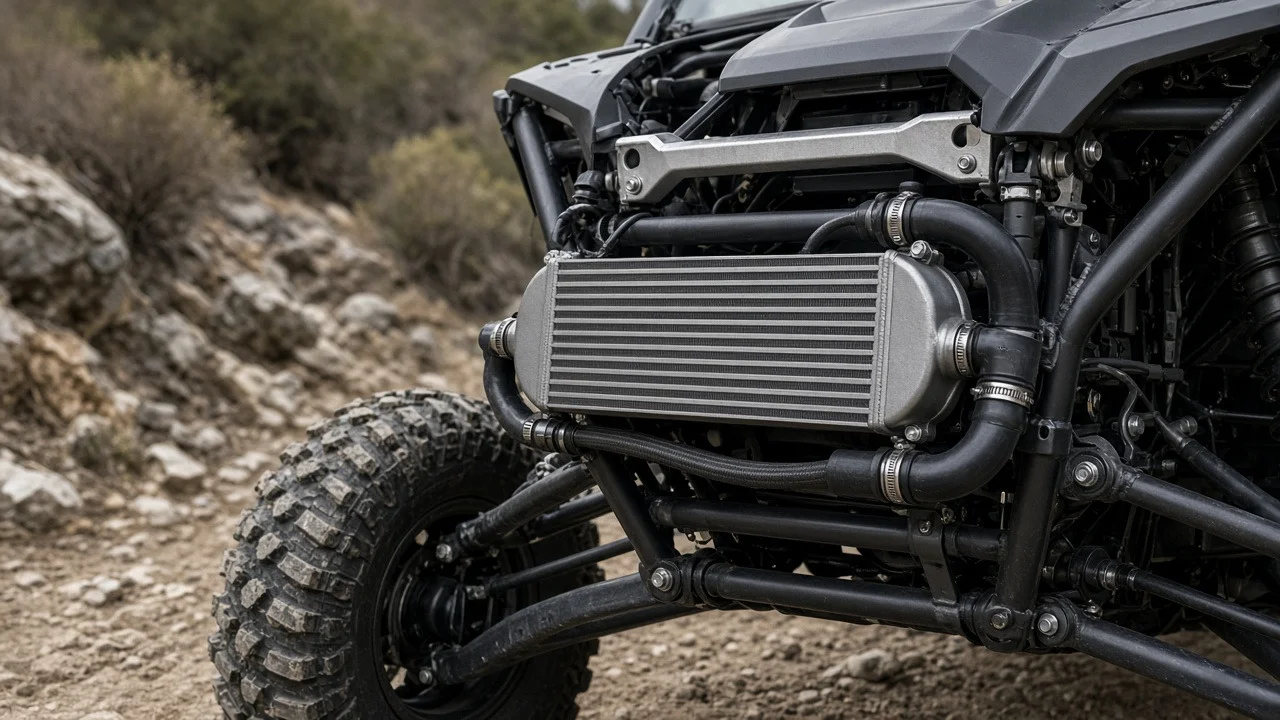
When a Polaris RZR turbo runs hard in sand, mud, or desert heat, the air leaving the compressor outlet becomes hot enough to reduce power and invite detonation. A more efficient Polaris RZR turbo intercooler lowers that charge-air temperature, but packaging limits how much core area fits in the stock position. A Polaris RZR turbo intercooler relocation kit moves the heat exchanger into cleaner airflow, often reducing pressure loss and heat soak. The right choice depends on boost pressure, hose connection routing, and how the machine is actually driven.
The direct answer
For most owners, the practical answer is to pair a larger high-flow intercooler with a relocation mount only when the stock location is blocked by a winch, bumper, or radiator heat. The relocation kit changes plumbing and air volume, so it works best when combined with a core matched to the turbo's airflow rather than simply moving an undersized unit. If the existing intercooler is already effective, a relocation by itself may add hose length without a meaningful drop in charge-air temperature.
The decision also depends on operating conditions. A machine used at low speed with little natural airflow often benefits more from a relocation position that escapes radiator heat than from a modest core upgrade in the factory spot. Conversely, a high-speed desert car already sees strong frontal airflow, making a more direct pipe path and lower pressure loss the priority. Oil contamination inside the intake tract should be corrected before changing intercooler placement because oily fins reduce heat transfer regardless of location.