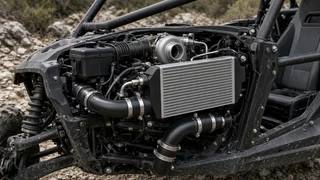
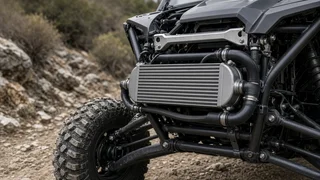
RZR Turbo Intercooler Failure
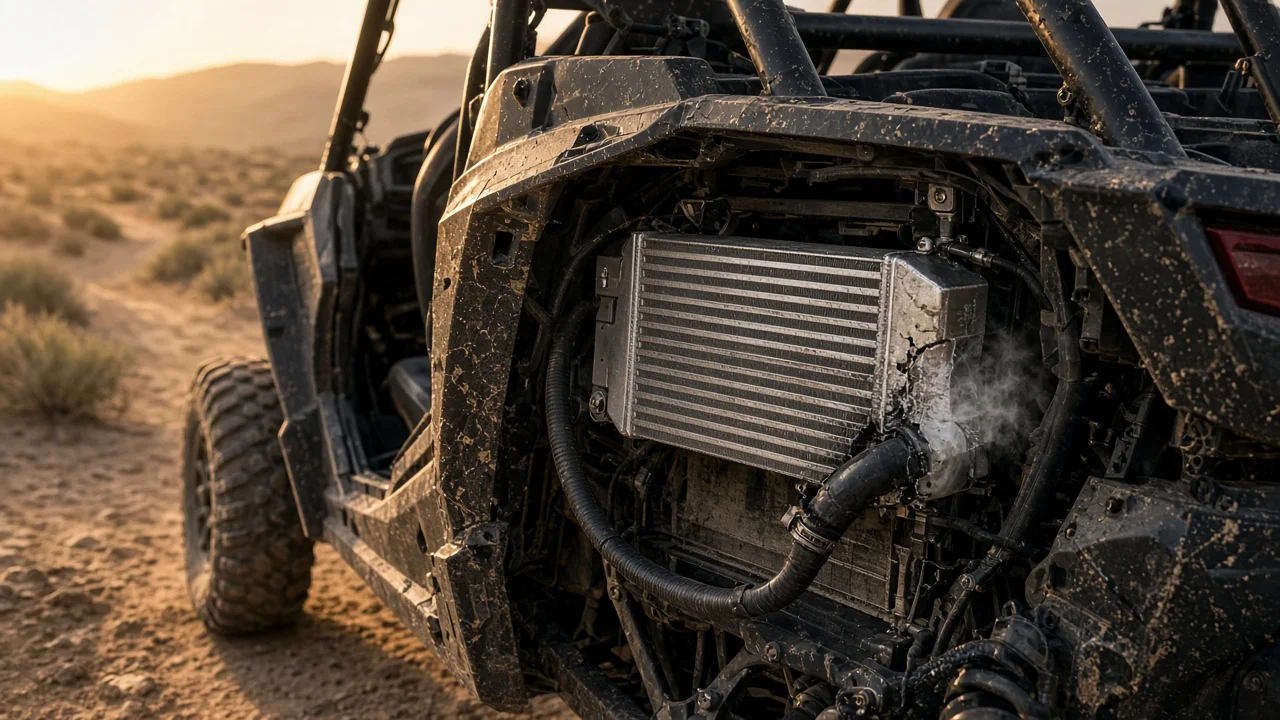
A Polaris RZR turbo intercooler failure typically appears as reduced boost pressure, higher charge-air temperature, or a visible leak between the compressor outlet and throttle body. Because these machines run hard in dust, mud, and heat, the intercooler and its hose connections face more stress than in a street vehicle. Understanding how the cooler preserves power helps you separate an actual intercooler failure from a loose clamp, damaged coupling, or pressure loss elsewhere in the intake tract.
Essential answer
The intercooler sits between the turbocharger compressor outlet and the engine intake, removing heat from compressed air before it enters the cylinders. Compressing air raises its temperature, which reduces oxygen density and encourages detonation under load. A cooling core that flows properly restores density and keeps charge-air temperature closer to a safe range, so the engine can use the boost the turbo is already producing.
When an RZR intercooler fails, the result is usually not a sudden stop but a loss of efficiency that riders notice as softer throttle response or higher intake temperatures. Failures often involve cracked end tanks, damaged fins, or leaking hose connections rather than the core itself. Oil contamination inside the tract can also signal blow-by or turbo seal leakage, which coats the cooling surfaces and reduces the intercooler’s ability to shed heat.