Pneumatic Cooling System Pressure Tester
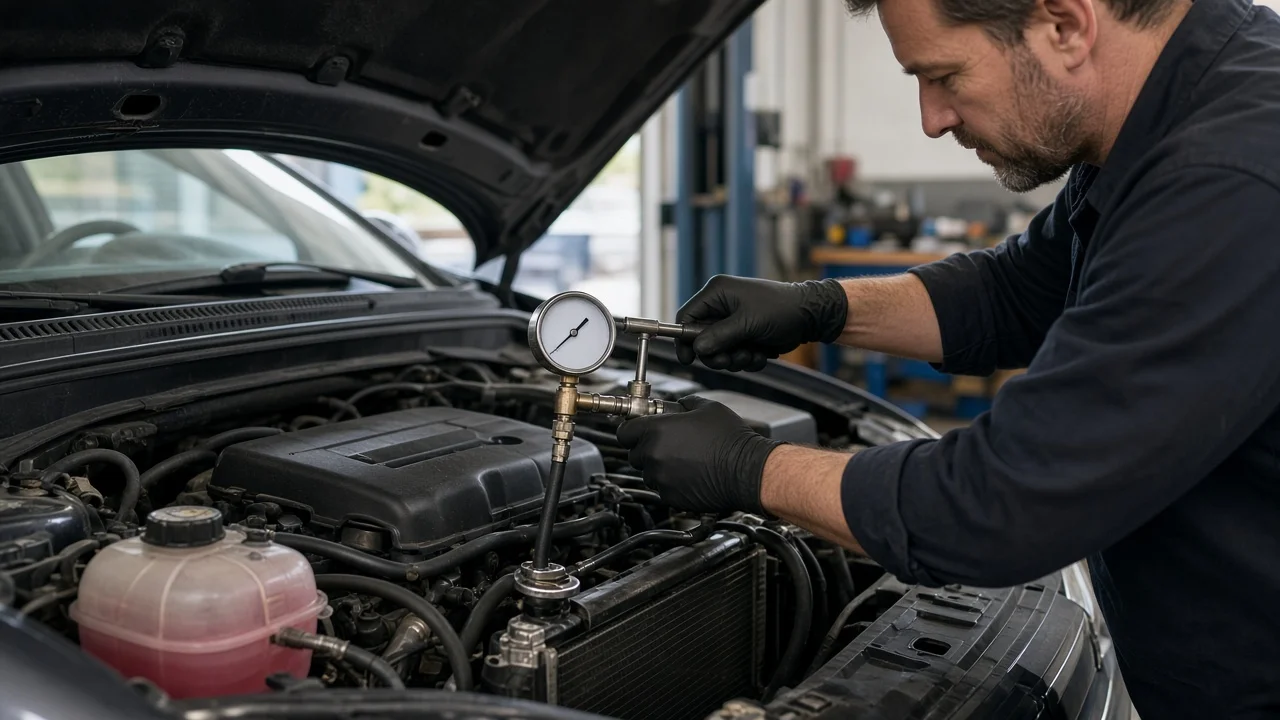
A pneumatic cooling system pressure tester uses compressed air to pressurize a cooling circuit and reveal leaks that leave little visible trace. It is especially useful before buying a used vehicle or after a hose, radiator, or thermostat repair. Instead of relying on a hot engine and coolant temperature changes, the tool applies controlled air pressure with the system cold, making small seepage and loose clamp connections easier to locate. Air pockets and coolant concentration can affect cooling performance, but a pressure test narrows the search to mechanical points in the radiator, heater core, cap, and associated plumbing.
The direct answer
The direct answer is that this equipment helps you identify external and internal cooling system leaks by substituting regulated shop air for the pressure normally created by heat and the pressure cap. It is a diagnostic aid, not a permanent fix. Because the test is performed with the engine off and typically cool, coolant does not need to be boiling and the pressure rise is controllable. A radiator, heater core, hose connection, or coolant specification mismatch may be involved, but the tool only shows where pressure cannot be held, not which component must be replaced without further inspection.
The condition that materially changes this answer is access to the cooling circuit. Most testers adapt to the pressure cap neck or an expansion tank opening, so a vehicle with a damaged or incompatible neck may need a specific adapter. Some leaks appear only under partial vacuum as the engine cools, while a cold pressure test applies positive pressure; therefore a system that holds pressure during the test can still have a small heat-cycle leak. For best interpretation, the cooling circuit should be filled to the normal level and free of obvious air pockets so pressure changes are not caused by trapped air compressing slowly. A pressure cap that vents early can also make the circuit appear to lose pressure, so cap condition and the tester’s sealing point are part of the diagnosis.