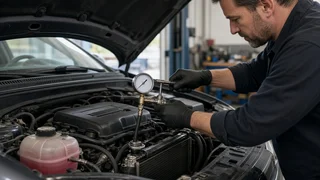
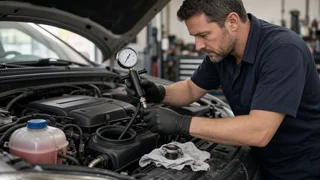
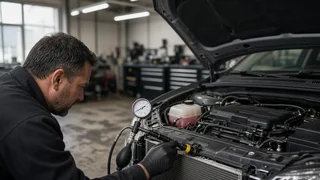
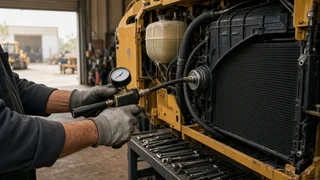
Air-Powered Cooling System Pressure Tester (Astro Pneumatic 7856)
A cooling system pressure tester turns an invisible problem into something you can observe before it strands you or damages an engine. An air-powered cooling system pressure tester, such as the Astro Pneumatic 7856 universal air powered cooling system pressure tester, uses regulated shop air instead of hand pumping. That makes repeated leak checks on radiators, hoses, thermostat housings, and pressure caps faster while reducing manual effort. The useful question is not only whether it holds pressure, but what a drop in gauge reading tells you about the cooling circuit. Knowing how the tool behaves helps you decide whether it fits your diagnostic work and how to interpret the result without misdiagnosing a sound part.
The direct answer
The immediate answer is that an Astro Pneumatic 7856 is designed as a universal air-powered cooling system pressure tester for pressurizing a cooling circuit during leak diagnosis. Instead of stroking a hand pump repeatedly, the operator supplies clean, regulated compressed air to raise system pressure. The core requirement is controlling that air supply carefully. Shop air pressure can spike far beyond normal cooling system test ranges, so an inline regulator and gradual adjustment matter more than with a manual pump. The tool is useful for detecting leaks at radiators, heater cores, hose connections, and the pressure cap seat.
General automotive reasoning supports using pressure testing only on a cooled or warm system at a test level consistent with the cap rating and the vehicle design. A drop on the gauge indicates a leak, but the location may still require visual or audible tracing. The tester proves that pressure is escaping; it does not by itself condemn a water pump, head gasket, or plastic tank. Coolant concentration and trapped air pockets can also influence how pressure behaves, so a slow loss should be checked against normal settling before a part is replaced. Manufacturer-dependent cap and system ratings require confirmation for the specific vehicle.