Perodua Maintenance Schedule: How Service Intervals Work and What They Cover
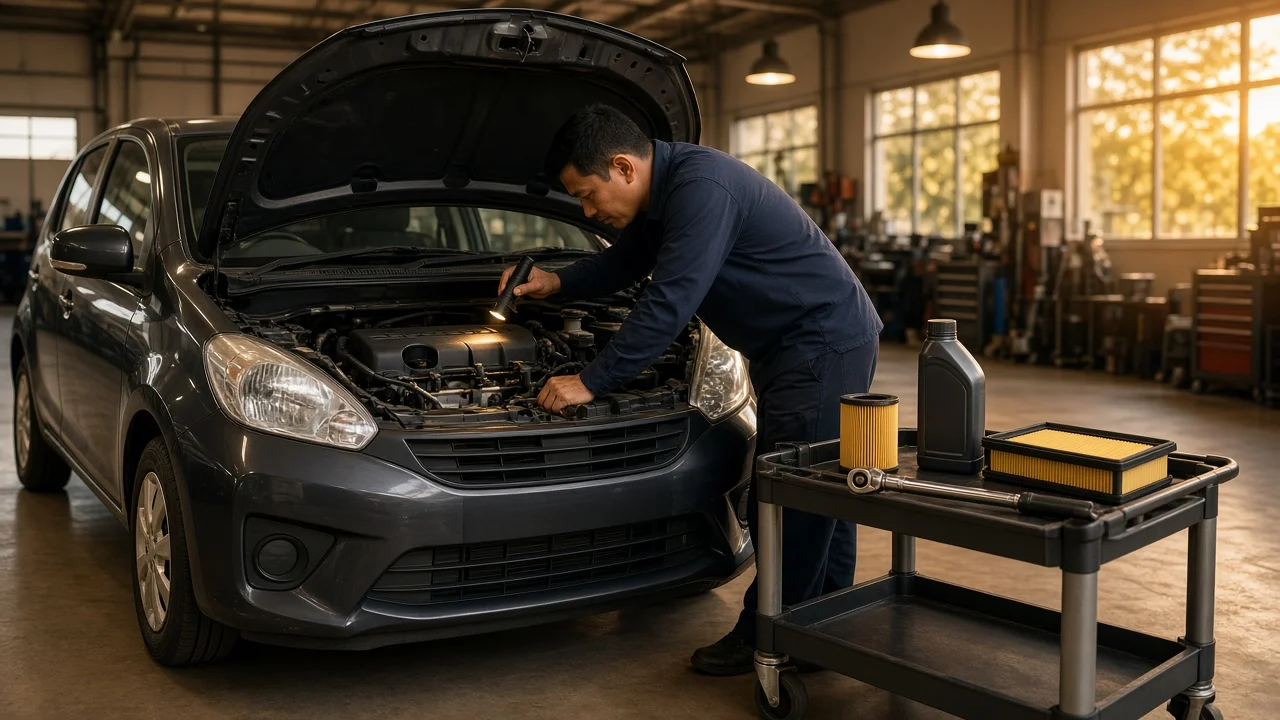
A Perodua maintenance schedule is the manufacturer's plan for when each part of your car should be inspected, adjusted or replaced. It is built around time and mileage, and it changes with the model, engine, transmission, market and model year. The exact intervals for your car are in its owner's manual or service booklet. This guide explains how the schedule is organized, what it usually covers and what can make your car need service sooner.
The Short Answer
Perodua, the Malaysian automaker behind models such as the Axia, Bezza, Myvi, Alza, Aruz and Ativa, publishes a schedule for each vehicle. It starts with an early initial service and then sets recurring service intervals. Each interval has a time limit and a distance limit, and the service is due at whichever comes first. Some visits are basic oil-and-inspection services, while others add filter, fluid and spark plug replacement.
There is no single universal schedule for every Perodua. A Myvi with a CVT, an older model with a conventional automatic and a turbocharged Ativa may have different items and intervals. Always use the manufacturer schedule printed for your exact vehicle rather than a generic chart.
How the Schedule Is Structured
Like most manufacturers, Perodua uses a time-or-distance system. Both limits matter. A car driven very little still needs service when the time limit arrives, because engine oil, brake fluid and rubber parts age even when the car sits parked. A car driven a lot reaches the distance limit well before the time limit.
Initial service: an early visit after delivery to check the new car and often to change the first engine oil. Regular interval services: recurring visits, usually built around an oil and filter change plus a multipoint inspection. Extended interval services: visits at multiples of the base interval that add replacements such as the air filter, cabin filter, spark plugs, brake fluid or coolant. Condition-based items: parts such as brake pads, tires, wiper blades and the battery, which are inspected at each visit and replaced when worn.
Because Perodua's home market uses metric units, schedules are written in kilometers. A reader converting to miles should convert the exact figures from their own booklet rather than rounding to a familiar number.
Scheduled Service Items Commonly Covered
The specific list and timing depend on the vehicle, but a Perodua schedule typically covers the following areas.
Engine oil and oil filter: the most frequent item and the core of most visits. Use the oil grade and specification shown in the manual. Engine air filter: inspected regularly and replaced at set intervals, or sooner in dusty conditions. Cabin air filter: affects air conditioning performance and cabin air quality. Spark plugs: replaced at longer intervals. The interval can depend on the plug type the engine uses. Brake fluid: absorbs moisture over time, so it is usually replaced on a time basis. Engine coolant: checked at each visit and replaced at the interval set for the coolant type used. Transmission fluid: requirements differ between manual, conventional automatic and CVT gearboxes. CVTs generally need the specific fluid the manufacturer names. Brakes, suspension and steering: inspection of pads, discs, hoses, joints and boots. Tires: checks for pressure, tread depth and wear pattern, with rotation where recommended. Battery, drive belts, lights and wipers: inspected and replaced when worn or failing.
How Operating Conditions Change the Schedule
Most manufacturers, Perodua included, assume normal driving when setting the standard intervals. Many manuals also describe harsher conditions that call for shorter intervals for certain items. Check whether your manual includes such guidance and which items it affects.
Frequent short trips where the engine rarely reaches full operating temperature. Heavy stop-and-go traffic and long idling periods. Dusty, sandy or unpaved roads, which load up air filters faster. Sustained high temperatures or high humidity. Carrying heavy loads or full passenger loads regularly, which is relevant for MPVs such as the Alza. Hilly or mountainous driving with heavy brake use.
If your driving fits several of these, shorter oil change and inspection intervals are a reasonable choice. Brakes, filters and fluids deserve closer attention under these conditions.
Differences by Model, Engine and Transmission
Perodua models share engineering with Daihatsu and, through it, Toyota. Several engines and transmissions are related to designs used by those brands. Even so, schedules are written per vehicle and per market, so shared hardware does not guarantee identical intervals.
Transmission type: manual, older conventional automatic and newer CVT units have different fluid requirements and inspection points. Turbocharged engines: a turbo engine, such as the one used in the Ativa, may have stricter oil quality requirements than a naturally aspirated engine. Model generation: a newer generation of a nameplate may have a revised schedule compared with the previous one. Market: vehicles built or sold for different countries may carry different schedules for fuel quality, climate or regulatory reasons.
Owning a Perodua Outside Malaysia, Including the US
Perodua does not sell vehicles through an official dealer network in the United States. A Perodua in the US is most likely a private import, so there may be no local authorized service center and no US-specific schedule. In that case, the original owner's manual or service booklet is the best reference.
An independent mechanic can follow that schedule using the specified fluids and parts. Because of the Daihatsu and Toyota connection, some components may have equivalents, but confirm part compatibility by part number rather than assuming it. Local factors such as fuel quality, winter conditions and road salt may also justify more frequent inspection of certain items.
Why the Maintenance Record Matters
Keep a maintenance record of every service: the date, odometer reading, work done, and the parts and fluids used. In markets where Perodua provides a warranty, following the schedule and documenting it is generally a condition for warranty claims. Check your warranty terms for the specific requirements.
A complete record also helps when you sell the car. It shows buyers how the car was maintained and helps any future mechanic see what was replaced and what is due next.
Where to Find the Schedule for Your Car
The owner's manual or service booklet supplied with the vehicle, which is the primary reference. An authorized Perodua service center in markets where the brand operates, which can look up the schedule by vehicle identification number. Perodua's own owner resources in its home market, which may provide schedule and booking information for local vehicles. The car's existing service history, which shows where it currently sits in the schedule.
Bottom Line
Follow the manufacturer schedule written for your exact model, engine, transmission and market, and service the car at whichever limit arrives first, time or distance. Shorten intervals if you drive in harsh conditions, and keep a written record of every visit. If you own a Perodua in a country without official support, such as the US, use the original service booklet as your guide and confirm parts carefully with a mechanic.