Car Maintenance Check: What It Covers and How It Fits Your Service Schedule
A car maintenance check is a routine look at the parts and fluids that wear or get used up during normal driving. It confirms that they are still within acceptable condition and flags anything due for service or replacement. It is preventive: the goal is to catch low fluids, worn parts and approaching service items before they cause a breakdown or more expensive damage. What a check includes depends on the vehicle's make, model year, powertrain and the shop or owner doing it. For any specific car, the manufacturer's maintenance schedule is the reference point.
The Short Answer
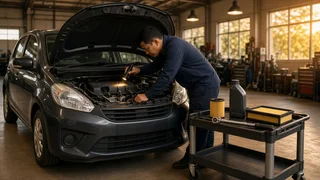
A maintenance check on a car is usually a visual and hands-on inspection of fluids, tires, brakes, belts, hoses, filters, lights, wipers and the battery, often paired with any scheduled service items that are due. It is not a single standardized procedure. A quick check at an oil change can take a few minutes, while a full scheduled service at a major interval covers much more. The useful question is less "Did the car get checked?" and more "Which items were inspected, which were serviced, and what is coming due next?"
How a Maintenance Check Differs From Related Services
Several terms get used interchangeably, but they describe different things. Knowing the difference helps you understand what you are paying for and what was actually done.
Service type | Purpose | Typical trigger; Maintenance check (multi-point inspection) | Assess the condition of wear items and fluids and report what needs attention | Routine visits, oil changes, before trips, or on the owner's own schedule; Scheduled maintenance service | Perform the specific tasks listed in the manufacturer schedule, such as fluid or filter replacement | A set service interval based on time and mileage; State safety or emissions inspection | Meet legal requirements where they apply | State or local rules, which vary by location; Diagnostic service | Find the cause of a specific symptom or warning light | A problem the driver has noticed or a dashboard alert
In practice these often overlap. A shop may do a multi-point inspection during a scheduled service, or recommend a diagnostic after a check turns up something unusual. Still, an inspection report that lists items as "checked" does not mean those items were replaced or serviced.
What a Typical Maintenance Check Covers
Exact contents vary by vehicle and provider, but most general maintenance checks include some combination of the following:
Engine oil: level and condition, and whether an oil change is due by time or mileage; Other fluids: coolant, brake fluid, transmission fluid where checkable, power steering fluid on vehicles that use it, and windshield washer fluid; Tires: tread depth, visible damage, uneven wear patterns and inflation pressure compared with the vehicle's placard; Brakes: visible pad and rotor condition, brake feel, and any noise or pulling noted by the driver; Belts and hoses: cracking, fraying, glazing, softness or leaks; Battery: terminal condition and corrosion, mounting, and often a charge or load test; Filters: engine air filter and cabin air filter condition; Lights and signals: headlights, brake lights, turn signals and hazard lights; Wipers: blade condition and washer operation; Suspension and steering: visible wear, leaks or looseness in components that can be inspected without disassembly; Leaks and underbody: signs of fluid leaks, exhaust condition and obvious damage
Electric vehicles skip engine-specific items such as oil and spark plugs, but still need attention to tires, brakes, cabin filters, coolant for battery and electronics thermal systems where applicable, the 12-volt battery and suspension. Hybrids need both sets of considerations. Because these systems differ by design, the manufacturer schedule for the specific powertrain is the best guide to what applies.
Time and Mileage: How Service Intervals Work
Most manufacturer schedules express each service interval in both time and mileage, with the service due at whichever comes first. Both matter because some components wear with use while others degrade with age. Fluids and rubber parts, for example, can deteriorate even when a car is driven little. A vehicle that sits most of the time may reach a time-based interval long before the mileage-based one.
Intervals vary widely between manufacturers, models, model years and powertrains, so a single universal schedule does not exist. General rules of thumb can be out of date for modern vehicles, which often use longer-life fluids and parts. Some vehicles also have oil-life or maintenance-reminder systems that calculate when service is due from driving data rather than a fixed number. Where such a system exists, the owner's manual explains how it relates to the printed schedule.
Why Operating Conditions Change the Schedule
Many manufacturers publish two versions of their maintenance schedule: one for normal use and one for more demanding operating conditions, often labeled severe service. The demanding category commonly covers conditions such as:
Frequent short trips where the engine does not fully warm up; Stop-and-go city traffic or extended idling; Towing or carrying heavy loads; Dusty, sandy or unpaved roads; Very hot or very cold climates; Mountainous driving
Many everyday drivers fit at least part of this description without realizing it. If your driving matches the manufacturer's definition of demanding use, following that schedule, which typically shortens certain intervals, is the more appropriate choice. Check how your manual defines it rather than assuming normal use applies.
Scheduled Service Items Versus Inspection Items
A manufacturer schedule usually mixes two kinds of tasks. Some items are listed to be replaced at a set interval regardless of how they look, such as certain fluids, filters or spark plugs. Others are listed to be inspected and replaced only if needed, such as brake pads, belts or hoses. Knowing which category an item falls into helps you judge recommendations. A shop suggesting a replacement that the schedule does not call for may have a valid reason based on condition, but it is reasonable to ask what they observed.
Keeping a Maintenance Record
A maintenance record is a log of what was done, when and at what mileage. It shows what is coming due next, prevents paying twice for the same service, and helps a technician spot recurring problems. It can also support warranty claims, since some warranty coverage may depend on showing that required maintenance was performed, and it gives a future buyer evidence that the car was cared for when you sell it.
A useful record includes the date, odometer reading, services performed, parts and fluids used, and who did the work. Keeping receipts and inspection reports together, whether on paper, in a spreadsheet or in an app, is enough. Owners who do their own work should record it with the same detail and keep receipts for parts and fluids.
Checks You Can Do Yourself Between Services
Some parts of a maintenance check are simple enough for most owners to do regularly at home, which helps catch problems between shop visits:
Check tire pressure when tires are cold and compare it to the placard on the driver's door jamb, not the maximum printed on the tire; Look over tires for uneven wear, bulges or embedded objects; Check engine oil level on vehicles with a dipstick, following the manual's procedure; Confirm coolant and washer fluid levels using the reservoir markings, and never open a hot cooling system; Walk around the car to confirm all lights work; Look under the car where it is usually parked for new fluid spots; Pay attention to new noises, vibrations, smells, warning lights or changes in braking and steering
Anything involving brakes, steering, suspension or the high-voltage system of a hybrid or electric vehicle is better left to a qualified technician unless you have the right knowledge and equipment.
How to Decide What Your Car Needs Next
To turn a general maintenance check into a clear next step, work through these points in order:
Find the manufacturer schedule for your exact model year and powertrain, usually in the owner's manual or maintenance guide; Decide whether your driving fits the normal or demanding-conditions schedule; Compare your current mileage and the time since your last service against your maintenance record; List the scheduled service items that are due or coming due soon; Handle anything urgent first, such as warning lights, brake concerns or tire damage, then schedule routine items; After each visit, add the work to your record and note what the technician flagged for later
A regular maintenance check is one of the most practical ways to keep a car reliable and avoid surprise repairs. It works best tied to the manufacturer schedule, adjusted for how the car is actually driven, and backed by a clear record of what has been done.