Electric Vehicle Maintenance Schedule: What to Service and When
An electric vehicle maintenance schedule is shorter than a gasoline car's, but it still matters. EVs have no engine oil, spark plugs, fuel filters, exhaust system or timing belt, so many routine services disappear. What remains centers on tires, brakes, fluids, filters, the battery cooling system, the 12-volt battery, suspension and software. The exact items and intervals depend on the make, model, model year and battery design, so the manufacturer schedule for your specific vehicle is the authority. This guide explains what is typically on that schedule, why, and how to read it.
The short answer
Electric vehicle maintenance mostly involves periodic inspections plus a small number of scheduled replacements. Expect regular tire rotations and inspections, cabin air filter changes, brake fluid replacement, brake and suspension checks, wiper blades, and, on many models, eventual service of the coolant that regulates battery and motor temperature. Some EVs also specify a change of the gear reduction fluid, while others treat it as filled for life. Because these items vary so much between manufacturers, any generic interval should be treated as a rough expectation rather than a rule.
How an EV service schedule differs from a gas car's
A combustion engine generates heat, combustion by-products and friction that wear down oil, filters and ignition parts on a predictable cycle. An electric motor has far fewer moving parts and no combustion, so the frequent oil-change rhythm that anchors most gas-car schedules does not exist. The result is fewer shop visits and fewer consumables, though not zero.
Item | Gasoline vehicle | Typical electric vehicle; Engine oil and oil filter | Regular replacement | Not applicable; Spark plugs and ignition parts | Periodic replacement | Not applicable; Engine air filter | Periodic replacement | Not applicable; Timing belt or chain service | Required on many engines | Not applicable; Exhaust and emissions components | Inspection and repair over time | Not applicable; Transmission fluid | Scheduled on many models | Single-speed reduction gear; fluid service varies by model; Tires | Rotation and inspection | Rotation and inspection, often with closer attention to wear; Brakes | Pads and rotors wear regularly | Less friction wear due to regenerative braking; corrosion checks matter more; Brake fluid | Periodic replacement | Periodic replacement; Coolant | Engine cooling system | Battery and power-electronics thermal management system; Cabin air filter | Periodic replacement | Periodic replacement; 12-volt battery | Periodic replacement | Periodic replacement; still powers accessories and startup systems
Scheduled service items most EVs still need
Tires and wheel alignment
Tires are usually the most frequent maintenance item on an EV. Battery packs make many electric vehicles heavier than comparable gas models, and electric motors deliver strong torque from a standstill, both of which can accelerate tread wear. Regular rotation helps the tires wear evenly, and periodic alignment checks prevent uneven wear from suspension drift. Many EVs are fitted with tires designed for low rolling resistance or reduced noise, so replacement tires that match the original specification help preserve range and ride quality. Check tire pressure regularly, since underinflation increases wear and reduces efficiency.
Brakes and brake fluid
Regenerative braking slows the car by using the motor as a generator, which recovers energy and reduces how often the friction brakes do the work. Pads and rotors therefore tend to last longer than on a comparable gas car. The tradeoff is that lightly used brakes can develop corrosion or sticking caliper slides, particularly in wet climates or where road salt is used. That is why many schedules call for regular brake inspections and cleaning or lubrication of brake hardware even when pads show little wear. Brake fluid absorbs moisture over time regardless of how much the brakes are used, so it is typically replaced on a time-based interval.
Battery thermal management coolant
Most modern EVs use a liquid cooling and heating loop to keep the high-voltage battery, motor and power electronics within their preferred temperature range. This coolant is a different job from engine coolant in a gas car, and the specified fluid type and service interval vary widely. Some manufacturers schedule a replacement after a long period, others call for inspection only. Use only the coolant type the manufacturer specifies, because the wrong fluid can affect the thermal system and potentially warranty coverage. Some older or smaller EVs use air-cooled batteries and have no battery coolant service at all.
Reduction gear fluid
Most EVs use a single-speed reduction gear rather than a multi-speed transmission. Some manufacturers specify a periodic fluid change for this gearbox; others consider it sealed for the life of the vehicle under normal use. This is one of the clearest examples of why a generic electric vehicle maintenance checklist cannot replace the schedule for your model.
Cabin air filter and climate system
The cabin air filter cleans air entering the passenger compartment and is replaced periodically, more often in dusty or polluted areas. In many EVs the air-conditioning system also cools the battery, so the climate system has a larger role than in a gas car. Some schedules include a periodic air-conditioning service, such as replacing the desiccant that removes moisture from the refrigerant circuit.
12-volt battery
Nearly every EV still has a low-voltage battery that powers door locks, lighting, infotainment and the systems that switch on the high-voltage battery. If it fails, the car may not turn on even with a fully charged main battery. It is typically tested during routine inspections and replaced when it weakens. Some newer models use a lithium-ion low-voltage battery with different service expectations than a traditional lead-acid unit.
Suspension, steering and other inspections
Added vehicle weight places load on suspension components, bushings and steering parts, so periodic inspection of these systems is common on EV schedules. Routine checks also usually cover wiper blades, lights, washer fluid, seat belts, and the condition of the underbody, including the protective shielding around the battery pack.
High-voltage battery and charging equipment
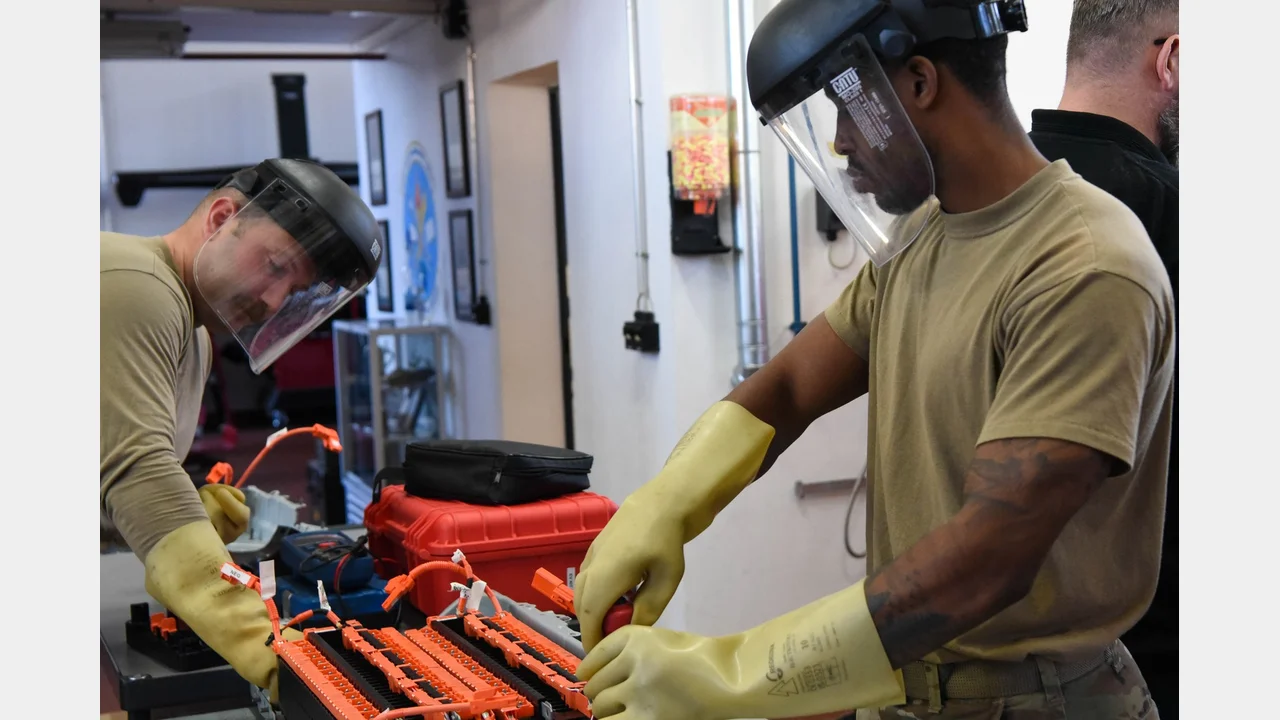
The high-voltage battery generally does not have a replacement interval on the maintenance schedule. Instead, it is covered by a separate battery warranty and monitored by the vehicle's battery management system. Some manufacturers include battery health checks or visual inspections as part of scheduled service. Charging cables and the charge port should be kept clean and inspected for damage. Any repair to high-voltage components should be left to trained technicians, since these systems carry hazardous voltage.
Software updates
Many EVs receive software updates, either over the air or at a service visit. Updates can affect charging behavior, thermal management, driver-assistance features and bug fixes. Keeping software current is not a mechanical service item, but it is part of keeping an EV operating as designed.
How to read the manufacturer schedule
Most service intervals are expressed in time and mileage, with the rule that you service the item at whichever comes first. This matters for EVs because owners who drive little may never reach the mileage threshold for items like brake fluid or cabin filters, yet those items still age. Some vehicles also use an onboard maintenance reminder that calculates timing from actual use rather than a fixed calendar.
Schedules often distinguish between normal and severe operating conditions. Conditions that can shorten intervals include:
Frequent driving on dusty, unpaved or gravel roads; Regular exposure to road salt or coastal air; Very hot or very cold climates; Towing or carrying heavy loads; Mostly short trips or extended periods of the vehicle sitting unused; Aggressive acceleration that increases tire wear
If your driving fits these descriptions, follow the shorter interval the manufacturer lists for those conditions, where one is provided.
Keeping a maintenance record
A complete maintenance record helps in several ways. It supports warranty claims by showing that required services were performed on time, it helps a future buyer judge how the car was cared for, and it gives technicians useful history when diagnosing a problem. Keep receipts or service invoices that show the date, mileage and work performed. Many manufacturers also log dealer service digitally, and some vehicle apps display maintenance history, but keeping your own copy is a sensible backup. Work done by independent shops or by the owner is generally acceptable for warranty purposes in the US as long as it follows the manufacturer's specifications and is documented, though the terms of your specific warranty govern.
What owners can check between services
Tire pressure and visible tread wear; Warning lights or service messages on the dashboard; Washer fluid level and wiper blade condition; Charge port and charging cable condition; Unusual noises from the brakes, suspension or drive unit; Any change in range or charging behavior that seems out of the ordinary
Bottom line
Electric vehicle maintenance is simpler than gas-car maintenance because the engine-related services are gone, but tires, brakes, fluids, filters, the thermal management system and the 12-volt battery still need attention. Because scheduled service items and intervals differ considerably between models and model years, use the manufacturer schedule for your exact vehicle, adjust for your operating conditions, and keep a clear maintenance record of every visit.