PACCAR MX engine oil pressure
What oil pressure should a PACCAR MX show?
There is no single oil-pressure figure that applies to every PACCAR MX. Oil pressure is a running condition of the MX-11 and MX-13, not a fixed number shared across all model years, horsepower ratings, oil grades and markets. The value you should use is the one in the operator’s or service literature for that engine’s family, serial range and calibration. On a healthy engine the pressure rises with speed, falls as the oil warms and thins, and is watched by a sensor that can warn, derate or shut the engine down if pressure is too low.
The subject of this guide is lubrication-system oil pressure on PACCAR MX diesels used in Kenworth and Peterbilt trucks in North America and in DAF applications in other markets. It covers how to read the dash indication, what changes a reading, and what to do next. It does not replace a serial-specific pressure chart, a scan-tool diagnosis or a workshop measurement at the gallery.
Scope: which MX, and which operating point
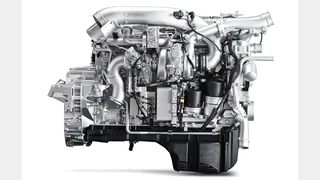
PACCAR’s current MX families in highway use are the MX-11 (about 10.8 litres) and the MX-13 (about 12.9 litres). Both are in-line six-cylinder diesels with a pressurized lubrication system: a gear-driven pump draws oil from the sump, sends it through the filter and cooler module, then into the main gallery that feeds bearings, pistons, the turbocharger and other consumers. Oil pressure is the resistance that circuit presents while oil is flowing. It is not oil level, and it is not oil condition.
Any quoted “normal” pressure is only meaningful at a stated engine speed, oil temperature and oil grade. Idle pressure on hot oil is the lowest everyday reading. Pressure at cruise or rated speed with oil at operating temperature is the figure most manuals treat as the working specification. Cold oil after a start can read much higher until the oil thins. A claim that does not name those conditions, or the MX-11 versus MX-13 and the model-year emissions calibration, is not a complete specification.
Exact minimum and maximum pressures in pounds per square inch or bar are not reproduced here. Those limits are variant-dependent and belong in the literature tied to the engine serial number. Treating a number from a different year, rating or market as gospel is a common way to chase a fault that is not there, or to ignore one that is.
How the MX reports oil pressure
The truck does not measure oil pressure at every bearing. It measures it at a sensor on the pressurized side of the lubrication circuit, typically associated with the oil filter and cooler module or the main gallery, and the instrument cluster or engine controller converts that signal into a gauge, a digital value, a warning lamp or a fault code. Some cabs show a dedicated oil-pressure gauge; others show oil pressure only in a driver information menu or as a warning. A scan tool can display the sensor value the controller is using even when the dash presentation is coarse.
Low indicated pressure is a safety path. Depending on calibration, the controller may illuminate a warning, reduce power (derate) or command a shutdown to protect bearings and the turbocharger. High indicated pressure is less often a shutdown trigger, but a stuck reading, a reading that never falls as the oil warms, or a reading that jumps with no change in speed can still point to a sensor, wiring or gauge problem rather than a mechanical over-pressure event.
What changes a healthy reading
Engine speed is the first driver. Pump output rises with rpm, so a hot MX that looks “low” at idle can sit in a normal band once it is off idle. That pattern is expected. A reading that stays very low after rpm comes up, or that collapses under load, is a different problem.
Oil temperature and viscosity come next. Thick cold oil produces a higher reading; thin hot oil produces a lower one. Ambient heat, extended idle, a cooling-system fault that overheats the oil, or the wrong viscosity grade can all move the needle without a failed pump. PACCAR publishes approved oil grades and ambient-temperature charts for MX engines; those charts, not a generic “diesel 15W-40 in every climate” habit, are what the pressure specification assumes. Using a heavier grade than specified can raise cold-start pressure and slow flow. Using a lighter grade than specified can drop hot idle pressure.
Oil level and aeration matter as well. A low sump lets the pickup draw air. Overfilling or a crankcase ventilation problem can whip air into the oil. Aerated oil compresses in the galleries and the sensor sees a lower, unstable pressure. After a filter or cooler-module service, an unprimed circuit can show a brief low-pressure event until the pump fills the module; that is a service procedure issue, not proof the pump has failed.
Wear and mechanical leaks lower pressure at a given speed and temperature: worn main or rod bearings, a worn pump, a relief valve that is stuck open, a cracked pickup, a leaking oil cooler, or an internal leak that dumps gallery pressure back to the sump. Those faults tend to show first as low hot-idle pressure that does not recover fully with rpm, sometimes with knock, metal in the filter or a drop in oil level.
When the indication is the problem
A share of “low oil pressure” complaints on MX-powered trucks are electrical or display issues. A failing oil-pressure sensor, damaged wiring, a poor ground, a connector with oil or corrosion in it, or a cluster that is not displaying the controller’s value can all look like a lubrication failure. The practical split is: if the engine is quiet, oil level is correct, temperature is normal and a scan-tool live value disagrees with the gauge, treat the indication first. If the scan-tool value is also low, the engine is noisy, or oil level is falling, treat it as a mechanical lubrication fault and do not keep running it to “see if it comes up.”
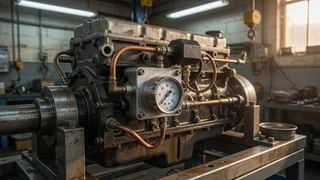
Fault codes for oil pressure, oil temperature or the sensor circuit belong in that same check. A code does not by itself prove the pump has failed; it proves the controller saw a value or a circuit condition outside its limits. Confirming with a mechanical gauge at a gallery test port, when the service literature provides one, is how a workshop separates a bad sensor from a real pressure loss. That confirmation is a shop procedure, not a roadside guess from the dash alone.
A practical check sequence
Identify the engine: MX-11 or MX-13, model year or emissions family, and serial number, then open the matching operator’s manual oil-pressure and oil-grade pages. Check oil level the way the manual specifies, including any wait after shutdown so oil can drain back from the filter and cooler module. Note engine speed, oil temperature or coolant temperature, and whether the reading is from a cold start, hot idle or cruise. Compare the dash value with a scan-tool live data parameter if one is available. Confirm the oil in the sump is an approved grade and is not overdue, fuel-diluted or heavily aerated. If pressure is low at speed as well as at idle, or the engine is noisy, stop and have gallery pressure measured rather than continuing to drive.
That sequence is enough to decide whether you are looking at a normal hot-idle reading, a wrong oil or level condition, a sensor or wiring fault, or a mechanical loss of pressure. It is not a complete repair path for a failed pump, cooler, relief valve or bearing set.
What this article cannot specify
Documented idle and rated-speed pressure limits, warning and derate thresholds, sensor voltage-to-pressure maps, oil capacities and approved viscosity charts are serial- and literature-specific. They are not restated here because a single set of numbers would be wrong for some MX-11 and MX-13 calibrations and would be presented as if it had been measured for this article. No test figures from instrumented trucks are offered. If you need a pass/fail number, use the chart for that engine and, if the indication is in doubt, a calibrated mechanical gauge at the point the service information names.
The next action that fits most readers is therefore narrow: match the engine in front of you to its manual, read oil pressure only together with rpm and oil temperature, and treat a low reading at speed, a warning or derate, or a noisy engine as a stop-and-diagnose event rather than as a gauge curiosity.