PACCAR engine oil pressure
What PACCAR engine oil pressure is
PACCAR engine oil pressure is the lubrication-system pressure created by the engine oil pump and read by the oil-pressure sensor. The engine control module (ECM) uses that signal to protect the engine and, on most Kenworth, Peterbilt and DAF applications, to drive the dash gauge or digital display. There is no single correct pressure that covers every PACCAR engine. Acceptable pressure is defined in the operator’s and service literature for that engine family, and it changes with engine speed, oil temperature, oil grade and engine condition. Pressure is typically lowest at hot idle and higher as speed rises or as oil is still cold. A sudden drop, a low-oil-pressure warning, or a derate is a stop-and-inspect event, even if a later reading looks closer to normal.
Scope: which engines this covers
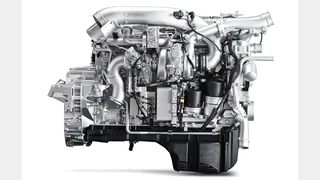
In current North American heavy-duty use, “PACCAR engine” most often means the MX-11 or MX-13. Many medium- and vocational trucks instead use PX-series engines, which are Cummins-derived (commonly PX-7 and PX-9) and follow that family’s oil-system layout and diagnostic behavior. Older PACCAR-powered trucks may use earlier MX or PX variants. European DAF applications also use MX engines. Oil-pump design, sensor location, warning thresholds and the way the cluster displays pressure all differ by family, model year, emissions generation and chassis software. A figure that is acceptable on a hot MX-13 at idle can be out of range for a PX engine, or for the same MX engine when it is cold or at rated speed.
What changes the reading
Oil pressure is not a fixed setpoint the pump holds. The pump moves volume; pressure is what remains after the oil has filled clearances and the pressure-relief valve has done its job. That is why a healthy engine can show a wide band of readings in a single day without a fault.
Engine speed: pump output rises with RPM, so cruise and rated-speed pressure sit above hot idle. Oil temperature: cold oil is thicker and raises pressure after start; fully warm oil at idle is the lowest normal reading. Viscosity and oil level: the grade specified for the climate and the correct sump level both affect the number the sensor sees. Bearing and pump wear, a restricted pickup, aeration, or a stuck relief valve change pressure independently of RPM. Sensor, wiring and cluster faults can report a low or high value when gallery pressure is actually normal.
How the truck reports it
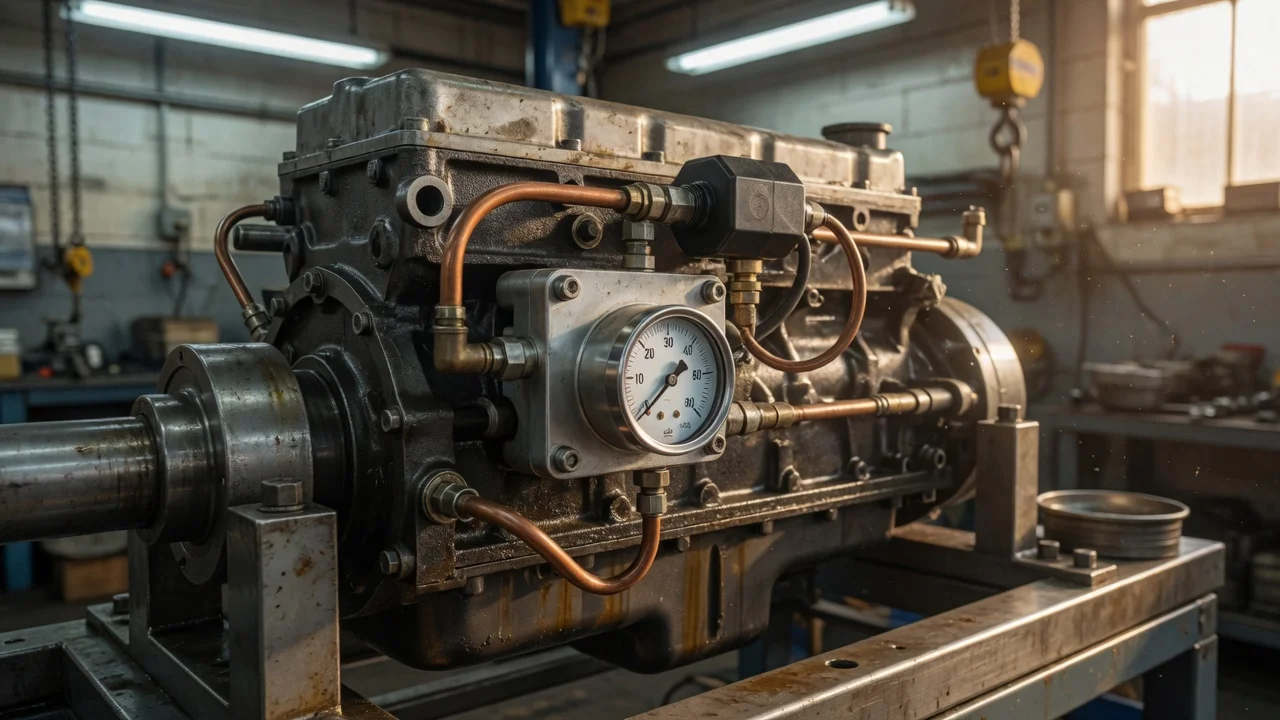
On electronically controlled MX and PX engines the oil-pressure sensor is an analog input to the ECM. The ECM compares the signal with speed- and temperature-related limits, sets a fault if the value is implausible or too low for the operating point, and may derate or shut down the engine. The dash may show pressure in psi or kPa, a bar graph, or only a warning lamp, depending on the truck’s instrument package. On J1939 data links the standard engine oil pressure parameter is SPN 100; a scan tool or telematics feed reading that parameter is looking at the same ECM value the cluster uses, not an independent mechanical gauge. A mechanical gauge teed into the gallery is the check when the displayed value and engine behavior disagree.
Low pressure, warnings and next action
Treat a low-oil-pressure lamp, message, audible alarm or unexpected derate as real until a measured gallery pressure proves otherwise. Shut the engine down as soon as it is safe, check the oil level on level ground after the oil has drained back, and look for leaks, a loose filter or cooler line, and obvious damage. Do not keep running to “see if it builds.” Continued operation with true low gallery pressure can damage bearings in a short time. If level is correct and the warning remains, the common mechanical causes are a failing pump, worn main or rod bearings, a clogged pickup screen, aerated oil, overheated thinned oil, or incorrect viscosity. The common electrical causes are a failed sensor, damaged harness, poor ground, or a cluster that is not displaying the ECM value. Exact trip points, derate maps and fault-code lists are engine- and calibration-specific; they are not interchangeable across MX and PX families or across model years. Those numbers, and the minimum hot-idle and rated-speed pressures for your serial-numbered engine, belong in the operator’s manual and the engine service literature. This article does not publish those specifications because they vary by engine family, model year, calibration and operating condition, and a single table would misstate the limit for some trucks.
High pressure
High oil pressure is most often seen on a cold start with the specified grade of oil, and it should fall as the oil warms. Persistent high pressure after the engine is at operating temperature points to oil that is too viscous for the climate, a pressure-relief valve that is stuck closed, or a restriction downstream of the pump. A failed sensor can also peg the display high. High pressure is less immediately destructive than low pressure, but it still needs diagnosis if it remains after warmup or returns with a warning.
How to get the figure that applies to your engine
Identify the engine family and displacement from the engine dataplate (MX-11, MX-13, PX-7, PX-9 or the earlier equivalent), the engine serial number, and the truck model year. Use that identity in the matching operator’s manual for the displayed units and the warning strategy, and in the engine troubleshooting manual for minimum pressure versus RPM and oil temperature. Compare a suspect dash reading with a known-good mechanical gauge at the gallery and with the ECM parameter at the same idle and off-idle points, oil fully warm. If the mechanical gauge is in spec and the dash is not, pursue the sensor and wiring. If both are low, pursue oil level, aeration, the pickup, the pump and bearing clearance. Until those engine-specific minimums are in hand, the supported next action is to treat any unexplained drop or warning as a no-run condition and to use the serial-numbered literature rather than a generic PSI rule of thumb.