P0016 Code: Diagnosing Cam-Crank Correlation Faults
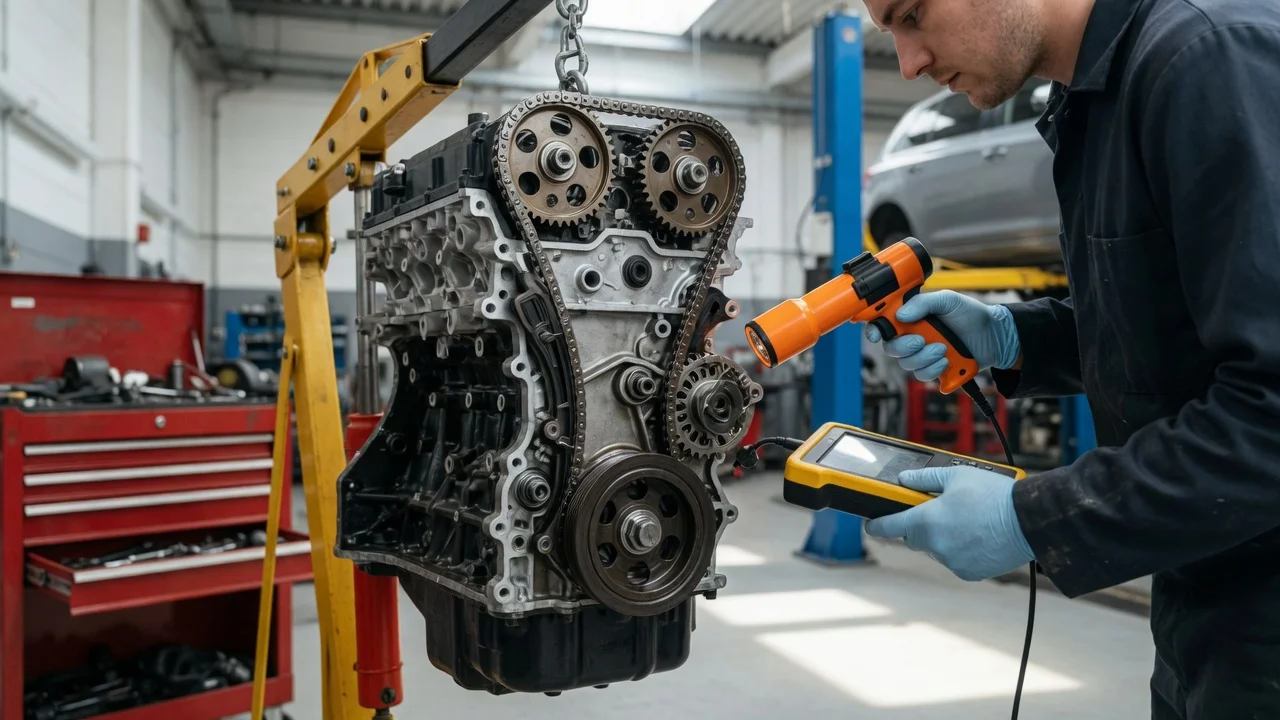
What P0016 means
P0016 is a generic OBD-II diagnostic trouble code defined as "Crankshaft Position – Camshaft Position Correlation, Bank 1 Sensor A." It means the engine control module has compared the signal from the crankshaft position sensor with the signal from a camshaft position sensor and found that their relationship is outside the range it expects. In plain terms, the computer believes the camshaft is not where it should be relative to the crankshaft.
The code reports a mismatch, not a failed part. The mismatch can come from a real mechanical timing problem, from the variable valve timing system not positioning the camshaft correctly, or from a sensor or signal fault that makes the timing look wrong when it is not. Treat P0016 as a starting point for investigation rather than an instruction to replace a specific component.
Bank 1 and Sensor A: what the labels refer to
Bank 1 is the side of the engine that contains cylinder number 1. On an inline engine there is only one bank, so Bank 1 is simply the engine. On V-type and horizontally opposed engines, the manufacturer's cylinder numbering determines which side is Bank 1.
Sensor A is often the intake camshaft sensor, but the designation is set by the manufacturer and is not universal. Confirm which sensor and camshaft the code refers to in the service information for your specific make, model year and engine before testing or replacing anything.
Common symptoms
Check engine light illuminated, sometimes with no other noticeable change; Rough idle, hesitation or reduced power; Hard starting or extended cranking; Rattling or chain noise from the front or timing end of the engine, often most noticeable at a cold start; Stalling; Reduced fuel economy; Related codes stored alongside P0016
Symptoms vary with the cause. A sensor signal fault may produce few drivability changes, while a timing chain that has stretched or jumped teeth can cause noticeable rough running and noise.
Possible causes
Cause | Why it can set P0016 | Typical clues; Low, degraded or incorrect engine oil | Variable valve timing systems use oil pressure to move the cam phaser; poor oil supply can leave the camshaft out of its commanded position | Low dipstick reading, overdue oil change, sludge, oil of a viscosity other than the one specified; Variable valve timing oil control valve (solenoid) fault | A sticking, clogged or electrically faulty valve cannot direct oil to the phaser correctly | Companion VVT codes, desired versus actual cam position mismatch in live data; Cam phaser fault | A worn or stuck phaser can hold the camshaft at the wrong angle or let it move unexpectedly | Knocking or rattling at startup, cam position that does not follow commands; Stretched timing chain, worn guides or failing tensioner | Slack in the drive changes the cam's position relative to the crank | Rattle at cold start, correlation codes on more than one bank, high mileage; Incorrect timing after previous repair | A belt or chain installed one or more teeth off produces a fixed offset | Code appears shortly after timing-related work; Jumped timing belt or chain | Lost teeth create an offset and can risk engine damage | Sudden onset, rough running, possible misfires or noise; Camshaft or crankshaft position sensor fault | A faulty or contaminated sensor may report an inaccurate signal | Intermittent code, sensor circuit codes, erratic signal; Wiring or connector problem | Damaged, chafed or corroded wiring can distort the signal | Visible damage, code that changes with engine movement or vibration; Damaged reluctor (tone) ring | A bent, loose or shifted target wheel misrepresents shaft position | Code persists after sensor replacement; confirmed on a scope pattern or by inspection
Some engine families are widely reported to have recurring timing chain or tensioner problems associated with this code, but which engines are affected depends on the manufacturer, generation and model year. No vehicle-specific data was supplied for this article, so check technical service bulletins and recall information for your exact vehicle.
When to stop driving
Stop driving and arrange professional diagnosis, by tow if needed, if P0016 appears together with any of the following:
A loud rattle, slapping or knocking noise from the engine; A flashing check engine light, which typically indicates a misfire severe enough to risk catalytic converter damage; An oil pressure warning; Severe rough running, repeated stalling or a no-start condition; A sudden onset immediately after a noise, loss of power or other abrupt change
If the timing chain or belt has jumped or is close to failing, continued driving can lead to further damage. On interference engines, where the valves and pistons share space at different points in the cycle, a significant timing error or drive failure can cause the valves to contact the pistons, which is a major repair. Whether a given engine is an interference design varies by engine, so check the specification for your vehicle.
Step-by-step checks
Work from the simplest and least invasive checks toward the more involved ones. The goal at each step is to rule causes in or out before spending money on parts.
1) Record all codes and freeze frame data
Use a scan tool to read every stored and pending code, not just P0016, and save the freeze frame data, which shows conditions such as engine speed, coolant temperature and load at the moment the code set. Companion codes often point the way. Correlation codes on Bank 1 and Bank 2 together suggest a shared cause, such as a stretched timing chain or an oil supply problem, rather than a single sensor. Camshaft or crankshaft sensor circuit codes point toward the electrical side. Variable valve timing performance codes point toward the oil control valve or phaser.
2) Check the engine oil
Check the oil level on the dipstick and look at the oil's condition. Low level, very dark or thick oil, sludge, or an overdue change all undermine variable valve timing operation. Confirm the oil in the engine matches the viscosity and specification listed for your vehicle. If the oil is low or degraded, correct it, clear the code and see whether it returns. If it does not return, oil supply was a likely contributor, though worn components can still be present.
3) Consider recent repair history
If P0016 appeared shortly after timing belt or chain work, cylinder head work or a sensor replacement, incorrect assembly or a disturbed connector is a strong possibility. Inform whoever did the work and have the timing alignment verified.
4) Listen to the engine
Listen at a cold start for rattling from the timing end of the engine. A brief rattle that fades as oil pressure builds can point to a worn tensioner, guides or a cam phaser. A persistent rattle or slapping noise is more concerning and is a reason to stop driving and have the timing components inspected.
5) Inspect sensors and wiring
Locate the relevant camshaft and crankshaft position sensors using the service information. Check connectors for corrosion, oil intrusion, bent pins or looseness, and inspect wiring for chafing, heat damage or breaks. Some sensors can be removed and checked for metallic debris or physical damage. Resolving a wiring fault and clearing the code is a valid test, but replacing a sensor without evidence that it is faulty often fails to fix correlation codes.
6) Check the variable valve timing oil control valve
On engines with variable valve timing, inspect the oil control valve connector and, where the manufacturer provides a procedure, test its electrical resistance and operation against the published specification. Some designs include a fine screen in the oil passage that can clog. A scan tool with bidirectional controls can command the valve while the camshaft position response is watched in live data.
7) Compare live data
Many scan tools display commanded versus actual camshaft position, and some display cam-crank correlation or deviation values. Actual position that tracks commands poorly suggests an oil supply, oil control valve or phaser problem. A fixed offset even when the variable valve timing system should be at its default position suggests a mechanical timing issue such as chain stretch or a jumped tooth. The acceptable ranges for these values are model-specific and were not supplied here, so compare readings with the manufacturer's specification.
8) Verify mechanical timing and signal patterns
If earlier checks do not resolve the fault, the next step is confirming actual mechanical timing. This may involve aligning timing marks or using engine-specific locking tools according to the service procedure, which often requires partial disassembly. An oscilloscope comparison of the camshaft and crankshaft sensor signals against a known-good pattern can also reveal a timing offset or a damaged reluctor ring without opening the engine. These steps generally call for professional equipment and experience.
Reading the results
Finding | What it suggests; Code clears and stays off after an oil correction | Oil supply was a likely factor; keep monitoring because worn parts may still be present; Correlation codes on both banks | Shared cause such as timing chain stretch, a shared tensioner or oil supply; Sensor circuit codes or wiring damage | Electrical fault; repair the circuit before replacing parts; Actual cam position does not follow commanded position | Oil control valve, oil passage or phaser fault; Fixed offset at default cam position | Mechanical timing error from chain stretch, a jumped tooth or incorrect installation; Cold-start rattle | Worn tensioner, guides, chain or phaser; Code returns after sensor replacement | The original sensor was probably not the cause; look at timing, the reluctor ring or wiring
Can you clear P0016 and keep driving?
Clearing the code removes the warning but does not fix the cause, and the code will usually return if the fault persists. If the engine runs normally, makes no unusual noise and shows no other warnings, a short period of careful driving to reach a diagnosis is a judgment many owners make, but it carries risk if the underlying cause is a deteriorating timing drive. If any of the warning signs listed above are present, stop driving.
Repair cost and difficulty
Repair scope ranges from an oil change or connector repair to sensor or oil control valve replacement, and at the upper end to timing chain, guide, tensioner or phaser replacement, which is labor-intensive on many engines. No pricing data was supplied for this article, and costs vary widely by engine design and labor rates, so get a quote based on a confirmed diagnosis rather than on the code alone.
Information gaps
This guide covers the generic meaning of P0016 and a general diagnostic approach. It does not include manufacturer-specific sensor designations, live data specifications, test values, known-issue lists or service bulletins for particular models, all of which vary by make, model year and engine. Consult the factory service information for your vehicle or a qualified technician for those details.