NP231 Transfer Case Linkage Identification
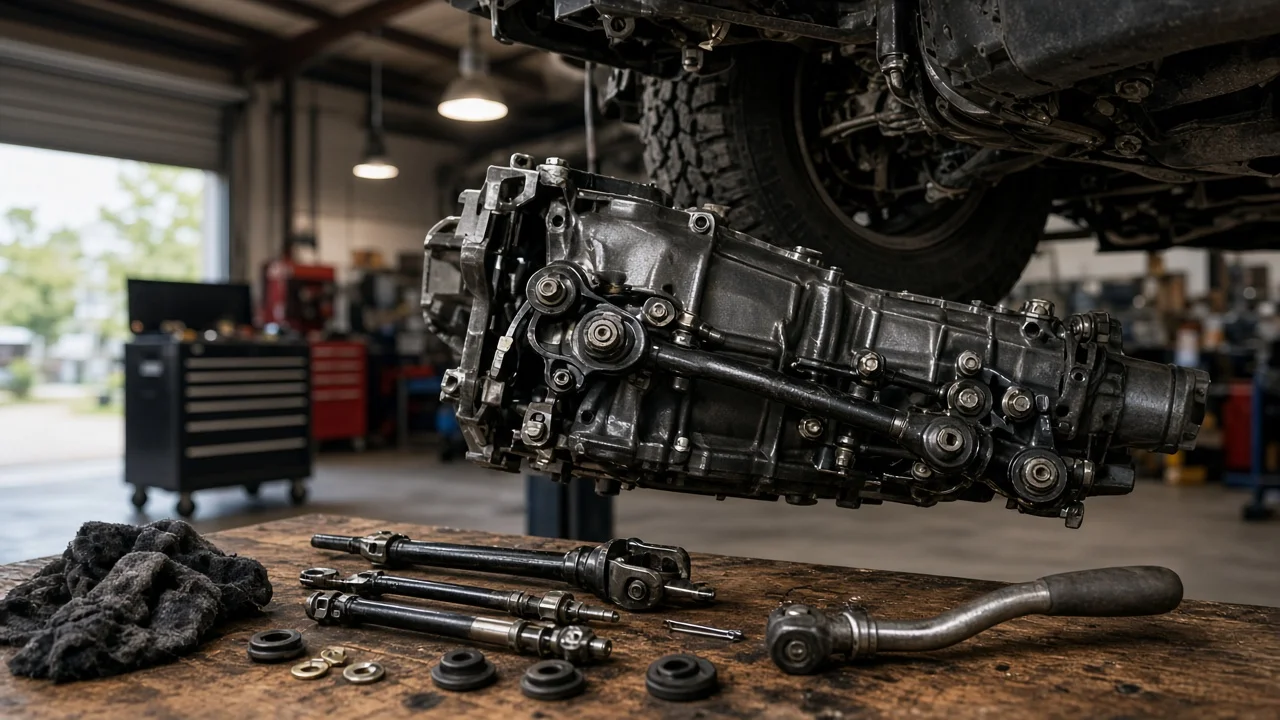
The NP231 is a part-time, chain-driven transfer case used in many Jeep, Dodge and GM four-wheel-drive vehicles. It is shifted mechanically through a floor lever and a linkage. When the NP231 transfer case linkage feels loose, binds or will not hold a range, start by identifying exactly which linkage the vehicle uses and which part is worn. This guide covers how to recognize the case, read the linkage layout and decide what to inspect.
Identifying an NP231 and its linkage
Confirm the transfer case before looking at the linkage. NP231 units carry an identification tag on the case, usually held by one of the case bolts. The tag shows the model number 231 and an assembly number. The assembly number identifies the exact version and application more reliably than the vehicle model alone. The shifter offers a single row of positions: 2H, 4H, N and 4L. A part-time NP231 has no full-time four-wheel-drive mode, so a lever with a full-time position points to a different unit, such as an NP242. If the tag is missing, unreadable or the case was swapped by a previous owner, treat the identification as unconfirmed.
The linkage is everything between the shifter in the cab and the range lever on the side of the case. It typically includes the shift handle and its bracket, a shift rod (sometimes with an intermediate link), an adjustment point such as a swivel or trunnion with a locking bolt, bushings or grommets where the rod attaches, and the clips or pins that retain each joint. Which of these parts your vehicle has depends on the platform and model year. Match replacement parts to the full vehicle configuration and the case assembly number, not to the 231 designation alone.
How the shift linkage works
Moving the floor shifter pushes or pulls the rod, which rotates the range lever on the case. Inside, that lever turns a shift sector, and the sector moves two forks. One fork selects the range, either direct drive (high) or reduction through the planetary gearset (low). The other fork moves the mode sleeve that connects the front output, through the chain, for four-wheel drive. A spring-loaded detent holds the sector in each position. The linkage has one job: to let the case lever reach each detent fully and stay there.
Slack and binding cause most linkage complaints. Worn or missing bushings let the rod move without moving the case lever, so the shifter can sit in 4H or 4L while the sleeves inside are only partly engaged. That can show up as grinding, hard shifts or the case jumping out of a range under load. A bent rod, a seized pivot or a misadjusted rod causes the opposite problem: the lever feels stiff, or the shifter runs out of travel before the case reaches the end detent.
What changes the answer
Vehicle platform and year change the rod routing, the shifter mounting and the adjustment method. Where the shifter is mounted to the body or floor rather than the transmission, the drivetrain moves on its mounts relative to the shifter, so mount condition affects linkage geometry. Body lifts, transfer case drop kits, replaced engine or transmission mounts and aftermarket shifters all change the angles the linkage was designed for. Any of them can create binding or incomplete engagement even when every linkage part is new.
The NP231 was built in several versions for different applications. Internal differences, such as input spline count or rear output design, follow the transmission and driveline, and they do not by themselves mean a different linkage. A case moved from another vehicle, however, may have a range lever whose position does not line up with the original rod. Conversions such as twin-stick setups replace the factory linkage entirely and need their own instructions.
Operating conditions matter as well. Mud, road salt and cold weather stiffen exposed pivots. On vehicles with a vacuum-actuated front axle disconnect, a switch on the case responds to the internal shift position. Incomplete range engagement can therefore also affect whether the front axle engages.
What the owner can do
Start with a visual inspection. Park on level ground with the engine off, set the parking brake and chock the wheels. Have a helper move the shifter slowly through every position while you watch the range lever on the case. Look for movement at the shifter that does not reach the case lever, cracked or missing bushings, a bent rod, a loose lock bolt at the adjustment point and missing clips or pins. Note whether the case lever clicks into a distinct detent in each position, or whether the shifter stops short or keeps travelling past it.
The usual adjustment works like this. Put the case lever in a reference detent named in the service information for your vehicle. Put the shifter in the matching position. Set the adjustment point, then tighten the lock bolt. Take the reference position and the fastener torque from the factory service manual for that vehicle, because both vary by application. After any adjustment, confirm that every range engages. Shift according to the owner's manual, which generally requires the vehicle to be stopped or barely rolling, with the transmission in neutral, when selecting 4L.
Write down the assembly number, model year, transmission and any lift or mount changes before ordering parts. Check the service history for past transfer case swaps or linkage repairs. Replace worn bushings and clips as a set rather than one at a time, and clean and lightly lubricate the pivots if the linkage is stiff but undamaged.
Limitations and next step
Linkage work only fixes external problems. If the 231 transfer case linkage is intact and correctly adjusted but the case still grinds, pops out of a range, makes chain or gear noise or refuses to engage, the cause is likely internal. Possible causes include worn fork pads, detent wear, a stretched chain, or fluid that is low or the wrong type. Use the fluid type and service intervals given in the manufacturer specifications and maintenance schedule for your vehicle. These cases call for a professional inspection with the case drained or opened.
Get professional help if you cannot confirm which case is fitted, or if the linkage does not match any parts for your vehicle configuration. A drivetrain shop can read the tag and identify swapped or modified components before parts are bought. Treat a case that slips out of gear as a safety issue. With the transfer case in neutral, the vehicle can roll even when an automatic transmission is in Park, so never leave the vehicle unattended in N.