NP203 Transfer Case Linkage Adjustment: How It Works and What to Check
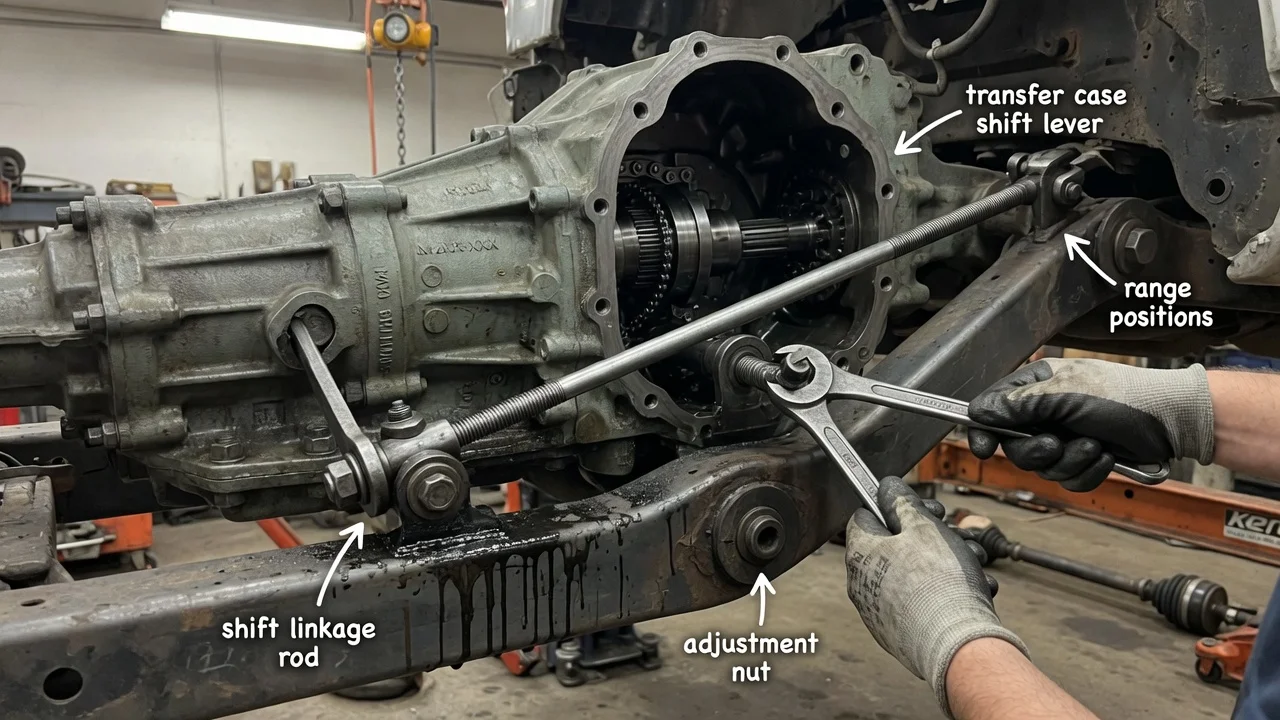
The NP203 is a full-time, chain-driven transfer case with a center differential, fitted to many full-size trucks and SUVs of the 1970s. Its floor shifter controls both range selection and the differential lock through external linkage. If that linkage is out of adjustment, the case can end up partly engaged, the lever can be hard to move, or the transfer case can slip out of position. This guide explains what adjusting the linkage does, what affects it and how an owner can approach the job safely.
The short answer on adjusting NP203 linkage
Adjusting the NP203 linkage means setting the effective length of the shift rods so that each position of the floor shifter matches the correct detent of the levers on the transfer case. The usual approach has four steps. First, place the transfer case lever in the reference position named in the service manual for your truck. Second, put the floor shifter in the matching position. Third, turn the threaded swivel or trunnion on the rod until its end drops into the lever without pushing or pulling it. Finally, tighten the lock nut and check every shifter position.
There is no universal rod length or measurement that applies to every NP203. The reference position, the hardware and the number of adjustable rods differ by manufacturer and model year. Adjustment also corrects only external misalignment. It cannot fix worn parts inside the case.
How the NP203 shift linkage works
The NP203 combines a range section (high, neutral and low) with a center differential that can be locked. Shifter positions are commonly labeled Lo Loc, Lo, N, Hi and Hi Loc, although the wording varies by brand. External levers on the case move internal shift rails, and each rail has detents that hold it in place. Rods connect these levers to the floor shifter. When the center differential is unlocked, the front and rear driveshafts can turn at different speeds, which lets the truck run in four-wheel drive on pavement. Locking the differential ties the two driveshafts together for slippery or loose surfaces.
Rod length matters because the shifter and the case must agree on where each position is. If a rod is too long or too short, the shifter can reach its stop before the internal rail settles fully into its detent. The result can be partial engagement, grinding, a lever that pops out of gear, or accelerated wear on the engagement teeth. The opposite can also happen: the shifter gate can block full travel even though the case itself would shift. On designs where the shifter and the transfer case are mounted to different structures, sagging engine or transmission mounts can change the linkage geometry over time.
What changes the answer for your truck
Vehicle configuration is the biggest variable. GM, Ford and Dodge used different shifter assemblies, brackets and rod routing with the NP203. The reference position used for adjustment can also differ between makes and years, and some setups have more adjustment points than others. Do not apply one truck's procedure to another without confirming it in the correct service information. Aftermarket shifters or units swapped from another vehicle add further uncertainty.
Many NP203 cases have been fitted with part-time conversion kits, which replace the center differential so the truck can run in two-wheel drive. After a conversion, the lock function no longer works as originally designed. The lock linkage may be removed, repurposed or left inactive, depending on the kit's instructions. Knowing the service history of the case is therefore essential before you adjust anything.
Operating conditions can also imitate a linkage fault. If the lever is hard to move out of a Loc position after driving on dry pavement, the usual cause is driveline wind-up rather than adjustment. Bent rods, worn bushings, loose shifter mounting bolts and contact with the exhaust or a crossmember all affect shift quality. Weak detent springs, worn shift forks or damaged engagement collars inside the case cannot be corrected at the linkage.
What the owner can do
Start with a careful inspection. Park on level ground with the engine off, set the parking brake and chock the wheels. If you need to raise the truck, support it on proper stands. Check the rods for bends, the swivels and lock nuts for looseness, the clips and pins for wear or absence, and the pivot bushings for play. Look for any point where the linkage rubs on the exhaust, the frame or a crossmember. Clean the pivots and lubricate them, and check the shifter mount for loose fasteners. Include this inspection in your regular maintenance schedule if the truck is used off pavement.
Before loosening anything, mark the swivel position or count the exposed threads so you can return to the original setting. Disconnect the rod at the transfer case lever, then move that lever by hand through its positions. Each detent should feel positive and distinct. Set the case lever and the floor shifter in the reference position from the service manual. Adjust the swivel until the pin enters the lever freely, reconnect it with a new clip or cotter pin, and tighten the lock nut. Repeat the procedure for the second rod if your setup has one.
Verify the adjustment with the engine off by cycling through every position. At each one, confirm that the case lever reaches full detent before the shifter hits its stop. If the truck has a lock indicator lamp, check that it lights in the Loc positions and goes out when you unlock. Next, test at low speed on a loose surface. Confirm that the lock engages and releases, listen for grinding and watch for the lever jumping out of position. Follow the owner's manual for the conditions under which range shifts may be made.
Limitations and next step
This guide does not give rod lengths, clearances or torque values, because those come from the manufacturer specifications for the exact truck. Use the factory service manual for your make and model year. Get a professional inspection if any of these symptoms remain after a correct linkage adjustment: the case pops out of gear, makes noise, fails to drive the front driveshaft, or leaks fluid at the shift rail seals. These usually point to internal wear. If the truck has an unknown history, such as a conversion kit, a swapped shifter or a replacement case, have a drivetrain specialist identify the components before you adjust or reassemble anything.