Muffler and Repair Cost
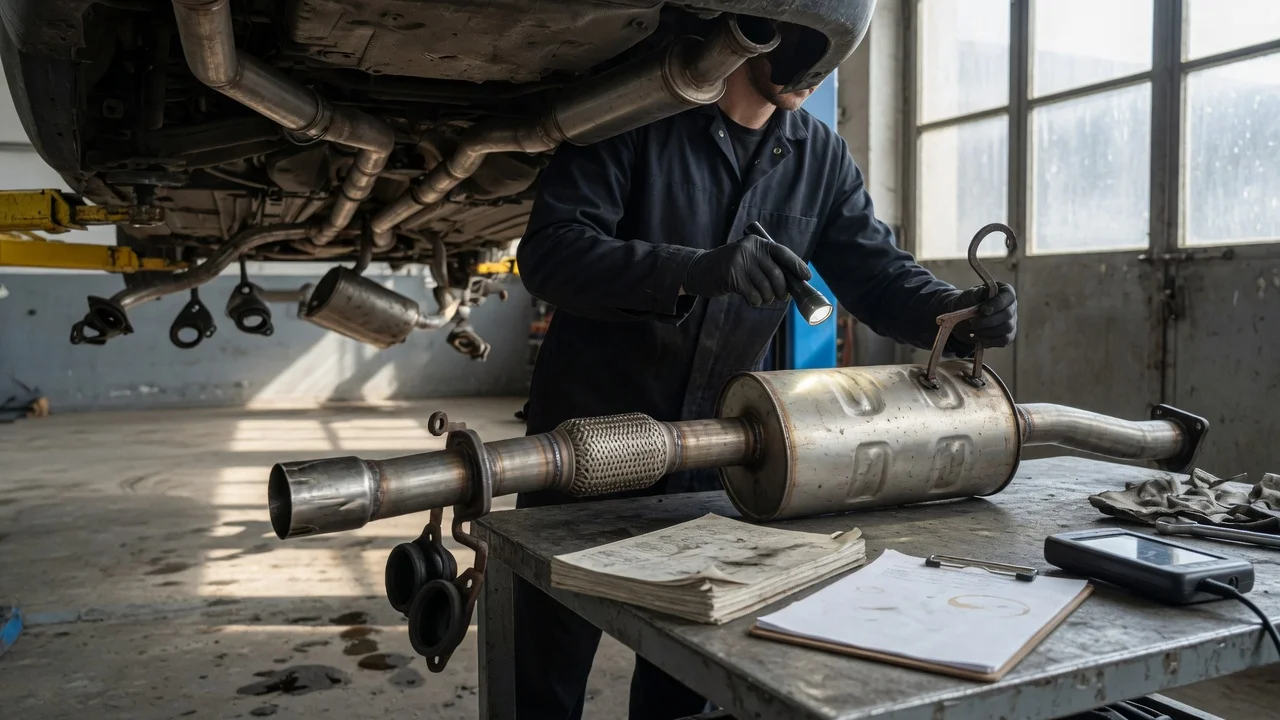
What muffler work typically costs
Muffler repair cost is not a single figure. The total depends on whether the muffler can be sealed or sectioned, whether the whole muffler (or a longer exhaust assembly) must be replaced, the vehicle’s make, model year, trim and exhaust layout, and whether the job is done at an independent shop, a muffler specialist or a dealer. Labor and parts both move the bill. Specific dollar amounts are not given here because they change with local labor rates, parts brand and the exact damage found on the vehicle.
Two conditions change the answer in a material way. First, a small hole, rust perforation or failed joint limited to the muffler body or nearby clamps can sometimes be repaired; a collapsed core, split seams, heavy rust-through or a muffler welded into a larger assembly often means replacement. Second, damage that also involves the exhaust pipes, hangers, heat shields, oxygen sensors or catalytic converter is no longer a muffler-only job and the quote will be higher because those parts are diagnosed and billed separately.
What you are paying for
A muffler is the chamber in the exhaust system that reduces engine noise by routing exhaust gas through baffles or packing. It sits downstream of the catalytic converter on most gasoline vehicles. Repair cost is a mix of diagnosis, parts and labor, not a catalog price for one part.
Parts: a replacement muffler (original-equipment or aftermarket), clamps, hangers, gaskets or a short section of pipe if the inlet or outlet is rusted. Labor: inspection, lifting the vehicle, cutting or unbolting the old unit, welding or clamping the new one, and checking for leaks. Related work found on the same inspection: rusted pipes, broken hangers, damaged heat shields or a failing resonator if the vehicle has one. Shop type: a muffler shop often stocks common aftermarket units and can weld on the spot; a dealer is more likely to quote an original-equipment assembly matched to that model year and powertrain.
Repair versus replacement
A patch, clamp or welded patch can be reasonable when the muffler shell is otherwise sound, the internal baffles are intact and the leak is small and accessible. That path is less suitable when the metal is thin, the muffler is packed with rust, the core is rattling or the unit is integrated into a one-piece exhaust from the catalytic converter back. In those cases replacement is the durable fix, and a cheap patch can fail again after a short time on the road.
Original-equipment mufflers are specified to that vehicle’s model year, market, trim and engine. Aftermarket mufflers are built to fit a range of vehicles and may differ in noise, fitment and corrosion resistance. Stainless construction typically lasts longer than aluminized steel in wet or salted climates, which affects how often you pay for the same job again. Compatibility claims should be tied to the VIN or to the exact year, engine and exhaust configuration; unresolved differences between trims (single versus dual exhaust, diesel versus gasoline, factory tow package) should be confirmed before parts are ordered.
What moves the quote up or down
Access: rusted bolts, seized slip joints or a muffler welded to the pipe add cutting and welding time. Layout: dual exhaust, a transverse muffler or a unit tucked above the rear axle takes more labor than a simple clamp-on canister. Emissions and inspection rules: a leaking exhaust can fail a safety or emissions inspection even if the engine runs normally; some regions treat exhaust leaks as a required repair. Warranty and recalls: remaining powertrain or emissions warranty, or a campaign that covers exhaust parts, can shift the cost off the owner. Coverage is vehicle- and date-specific and should be checked against the VIN rather than assumed. Used versus new: a used muffler can lower parts cost if it matches the vehicle and is structurally sound; it carries more uncertainty on remaining life.
How to get a useful estimate
Ask the shop to inspect the full exhaust path, not only the muffler, and to write the quote as parts, labor and any related items found. Request that they state whether they plan to repair, replace the muffler only or replace a larger welded section. If two quotes differ, compare the part brand, whether welding is included, and whether hangers and clamps are new. A lower parts line can still cost more if the old hardware is reused and fails later.
Have the year, make, model, engine and any known exhaust modifications ready. Photos of the leak location, a description of the noise (hiss, rumble, rattle) and whether the sound changes with cold start or under load help the shop decide if a muffler job is even the right repair. Do not treat a noisy exhaust as proof that the muffler itself has failed; a broken hanger, a leaking flex pipe or a damaged catalytic converter can produce a similar sound.
Gaps in this guidance
No current parts prices, labor hours or shop quotes are included. No measurements, test results or model-year cost tables are supplied. If you need a number you can budget against, obtain a written estimate for your specific vehicle after an in-person inspection. If the exhaust is loud enough to suggest a large leak, or if fumes enter the cabin, treat that as a reason to stop extended driving and have the system inspected rather than waiting on a price comparison.