Choosing a Tap Water Filter for a Motorhome

The short answer
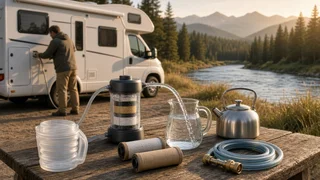
For most motorhome owners, the most practical tap water filter is a point-of-use filter at the galley (kitchen) tap. It treats only the water you drink and cook with, so the cartridge lasts longer and has less effect on flow to the rest of the habitation system. A point-of-use filter is installed where the water comes out, rather than at the water inlet. Many owners pair it with an inline hose filter that treats water at the fill point before it reaches the fresh water tank or city water connection. The inline filter reduces sediment and chlorine taste throughout the system, and the tap filter handles drinking water.
Three conditions change this answer. If you regularly fill from water of unknown or untreated origin, an ordinary carbon filter is not enough because carbon is not designed to remove bacteria, viruses or cysts. You would need a system certified for microbiological reduction, such as a certified purifier, a UV unit or a reverse osmosis system with suitable pre-treatment. If you use the vehicle in freezing conditions, the filter's ability to be drained or removed matters as much as its filtration. If your galley tap is a compact or pull-out RV-style tap, a filter designed to screw onto a household faucet may not fit, and an under-sink or countertop unit is usually the safer choice.
Where the filter goes changes what it does
A motorhome's water can reach the tap by two routes. When you are hooked up, mains or campground water enters through the city water inlet under supply pressure. Off-grid, a 12-volt pump draws water from the fresh tank. A filter's location decides which of these routes it treats.
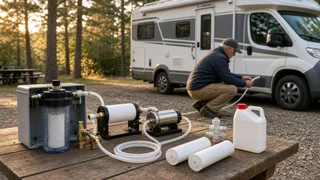
Inline hose filter at the fill point: treats water entering the tank or city inlet. It protects the whole system from sediment and reduces chlorine taste, but it does nothing for water already in the tank or for contamination inside the tank and pipework. Under-sink filter on the galley cold line: treats water from either route just before it reaches the tap. It usually needs a dedicated drinking water tap or a connection that suits the existing tap. Tap-mounted or countertop filter: needs the least installation, but fit depends on the tap's outlet thread and shape. It also takes up worktop space and can move about while the vehicle is driving. Whole-system filter after the pump: treats every outlet, including the shower and toilet. It uses up cartridge capacity on water you do not drink and can reduce flow at every tap.
What to check before you buy
1) Certification for the contaminants you care about
In the US, filter performance claims are commonly certified against NSF/ANSI standards. Check which standard a product is certified to and which specific contaminants are listed, rather than relying on general wording such as "removes impurities." NSF/ANSI 42 covers aesthetic effects such as chlorine taste and odor. NSF/ANSI 53 covers specific health-related contaminants, for example lead, where listed. NSF/ANSI 401 covers certain emerging contaminants. NSF/ANSI 58 applies to reverse osmosis systems, and NSF/ANSI 55 applies to UV systems. Certification applies to the tested model and cartridge. A housing sold with a different or third-party cartridge may not carry the same certification.
2) Whether it treats microbiological risk
Most compact tap and hose filters are carbon or sediment filters. They improve taste and clarity, and some reduce listed chemicals, but they are not disinfection devices. If your travel includes water sources you cannot verify, check for a specific microbiological reduction claim backed by certification. Regular cleaning and sanitizing of the fresh tank is also important. A filter at the tap does not stop bacterial growth in the tank or lines, and a carbon cartridge left in place too long can itself become a place where bacteria grow.
3) Fit with your motorhome's plumbing and tap
Habitation plumbing differs by manufacturer, model and model year. Pipe material, pipe diameter, fitting type and the galley tap itself can all change between versions of the same vehicle. Before buying, confirm the following on your actual vehicle rather than from a brochure or a forum post about a similar model.
The galley tap's outlet thread and shape, if you are considering a tap-mounted filter. The pipe type and connector system under the sink, if you are considering an under-sink unit, and whether the filter kit includes adapters for it. Space under the sink for the housing, plus room to unscrew it and change the cartridge. A safe mounting point so the housing cannot move or strain its connections while driving. Whether a separate drinking water tap would need a new hole in the worktop or sink, and whether you are willing to make that change. For inline hose filters, that the thread matches your fill hose and inlet. Standard US garden hose thread is common, but check it.
4) Flow and pressure
Every filter reduces water flow to some degree, and finer or multi-stage filtration usually reduces it more. On city water this is rarely a problem. On the 12-volt pump, a restrictive filter can reduce flow at the tap and may cause some pumps to cycle on and off. Check the manufacturer's rated flow and maximum operating pressure against your pump's specifications. Campground supply pressure varies, so also confirm whether the filter or your setup needs a pressure regulator at the city inlet. Reverse osmosis systems are a special case. They typically need adequate inlet pressure, produce wastewater, and often need a storage reservoir. These are significant drawbacks in a vehicle with limited tank capacity and space.
5) Freezing and winterizing
Water left in a filter housing can freeze and crack it. If the vehicle will see sub-freezing temperatures, check whether the housing drains easily and whether the cartridge can be removed without tools. When winterizing with RV antifreeze, the filter cartridge is normally removed or bypassed so antifreeze does not pass through it. Check the filter maker's instructions. A bypass valve around an under-sink unit makes this easier.
6) Running costs, not just purchase price
Prices and product specifications were not available for this guide, so no figures are given here. When you compare products, account for the total cost of ownership:
Replacement cartridge price and the manufacturer's stated replacement interval, by time and by volume. How easily you can buy the cartridge while traveling, and whether it is a proprietary design. Adapters, mounting hardware, a separate tap or a bypass valve, if needed. Installation labor, if you are not fitting it yourself. For advertised prices, the date, the currency, and whether the listed price includes the housing, the first cartridge and the fittings.
7) Warranty and habitation system implications
If the motorhome is still under a manufacturer or dealer warranty, check whether cutting into the habitation water system or drilling the worktop could affect coverage of the plumbing. A hose filter or a filter attached to the existing tap avoids this question. An under-sink installation may not.
Choosing a sensible next step
First, decide where you get your water. Mostly treated municipal or campground supplies point toward a certified carbon point-of-use filter at the galley tap, ideally paired with an inline hose filter at the fill point. Regular use of untreated or unverified sources points toward a system with a certified microbiological claim. Next, inspect your galley tap and the space beneath the sink, and record the thread and pipe types before you shortlist anything. Finally, compare shortlisted filters by certification for your target contaminants, fit, rated flow and long-term cartridge cost.