Motorcycles for Heavier Riders: Fit, Load Capacity and Comfort
The Short Answer
A heavier or larger person can ride a motorcycle. There is no universal body-weight cutoff for riding. What decides whether a particular bike suits a particular rider is that model's rated load capacity, whether its suspension can be set up for the load, and whether its ergonomics fit the rider's body. These factors vary by make, model, model year and trim, so the right choice depends on checking figures for the specific motorcycle rather than on a general category or a rule of thumb.
This guide covers rider fit and passenger accommodation for heavier riders in the US market. It does not recommend specific models, because no verified model-specific load ratings, prices or measurements were available for this article. Confirm any figure you rely on through the motorcycle's labels, the owner's manual or the manufacturer.
Load Capacity: The Number That Matters Most
Motorcycles sold in the US carry a federal certification label, usually on the frame near the steering head. It lists the gross vehicle weight rating (GVWR), the maximum the fully loaded motorcycle is designed to weigh. Many owner's manuals also state a maximum load or carrying capacity directly. When only GVWR and curb weight are available, subtracting curb weight from GVWR gives an estimate of how much weight the bike can carry. Manufacturers do not all define curb weight the same way: some quote a wet weight with fluids and fuel, others a dry weight. Using a dry weight overstates the remaining capacity, so check which figure you have.
That capacity has to cover everything added to the bike: the rider in full riding gear, any passenger, luggage, and accessories such as racks, cases, crash bars or upgraded seats. A heavy rider may be within a bike's rating when riding alone and over it once a passenger or touring luggage is added.
Riding above the rated load can lengthen braking distances, reduce cornering clearance, cause the suspension to bottom out over bumps, and put tires beyond their designed load. Those effects reduce safety margins even when the bike still feels manageable at low speed.
Suspension Setup for a Heavier Rider
Factory suspension is usually tuned for a rider of average weight. Many motorcycles have adjustable spring preload, which changes how far the suspension compresses under a static load (called sag). Increasing preload can bring sag back toward the manufacturer's recommended range for a heavier rider. Some bikes also offer damping adjustment, and some offer little or no adjustment at all. That varies by model and trim.
If preload adjustment cannot bring sag into range, the stock springs may be too soft for the load. Aftermarket springs or shocks rated for the rider's weight are a common solution. Suspension specialists typically set them up from the combined weight of the rider and their usual load.
Tires and Inflation
Each tire has a load index on its sidewall that indicates how much weight it can carry at its rated pressure. Owner's manuals often list separate tire pressures for solo riding and for riding with a passenger or heavy load. A heavier rider should use the loaded-condition pressure where the manual provides one. Replacement tires should meet or exceed the load rating the manufacturer specifies.
Ergonomic Fit and Comfort
Load capacity tells you whether a bike can carry you. Ergonomics tell you whether you can control it comfortably. Body size and shape affect fit in ways that a spec sheet's seat height figure alone does not capture.
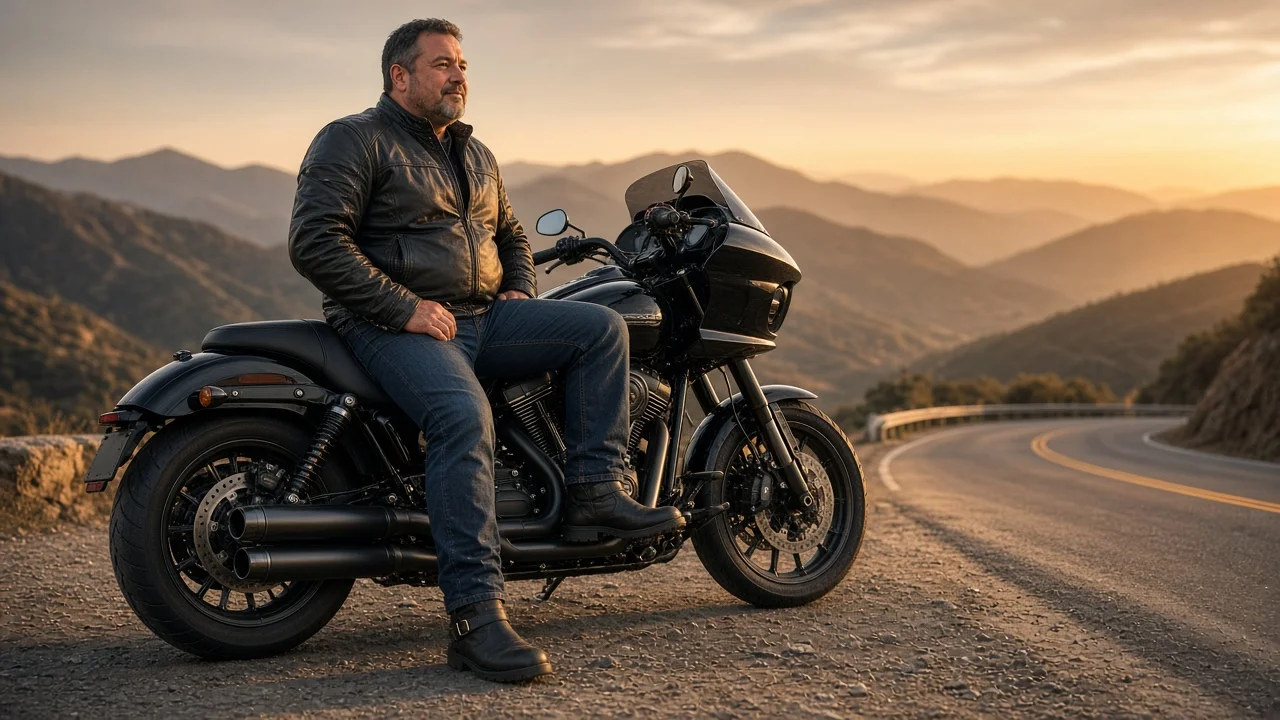
Seat width and shape: A wider seat spreads weight over more area and can improve comfort on longer rides. It also pushes the legs outward, which can make reaching the ground harder than the listed seat height suggests. Torso-to-tank and handlebar clearance: The rider needs enough room to turn the bars fully from lock to lock without the arms or bars contacting the body. Reach to the handlebars: The rider should hold the grips with relaxed, slightly bent arms rather than locked elbows or a forward stretch. Footpeg or floorboard position: Forward controls, mid-mounted controls and floorboards produce different knee and hip angles. Which suits a rider depends on leg length and hip flexibility. Ground reach and stability at a stop: The rider should be able to hold the bike upright and balance its weight at a standstill and when maneuvering slowly.
Touring motorcycles, cruisers and adventure-touring models often combine roomier riding positions with higher load ratings, which makes them common starting points for larger riders. This is a general tendency, not a rule. Some bikes in those categories have modest capacity, and some lighter or smaller-displacement bikes carry more than you might expect. Compare the documented figures for each model you are considering.
Carrying a Passenger
A passenger's weight counts against the same load capacity as the rider's, so two-up riding is where a heavier rider is most likely to exceed a bike's rating. For passenger comfort and security, look at the size and padding of the rear seat, whether a backrest or grab handles are fitted or available, and where the passenger footpegs sit. Suspension preload usually needs to increase for two-up riding, and the manual's passenger tire pressure applies.
What to Check Before Choosing a Bike
What to check | Where to find it | Why it matters; GVWR | Certification label on the frame; owner's manual | Sets the maximum total loaded weight; Maximum load or carrying capacity | Owner's manual; manufacturer specifications | States directly how much rider, passenger and cargo weight is allowed; Curb weight and how it is defined | Manufacturer specifications | Needed to estimate capacity from GVWR; wet and dry figures differ; Suspension adjustability | Owner's manual; dealer | Shows whether sag can be set for a heavier load; Tire load index and loaded pressures | Tire sidewall; owner's manual | Keeps tires within their designed load; Ergonomic fit | A seated fitting on the actual bike | Confirms reach, clearance and ground contact for your body
Protective Gear
Riding gear only protects you if it fits. Jackets and pants that are too tight can restrict movement, and armor that shifts out of position may not cover the joints it is meant to protect in a crash. Many gear makers offer extended sizes. Try gear on in a riding posture, not just standing, to check that armor stays where it should.
Gaps in This Guide
No verified load ratings, seat measurements, prices or test results for specific motorcycles were available when this guide was written, so it does not name particular models as suitable for a given rider weight. Before buying, confirm the rated capacity of the exact model year and trim, sit on the bike in your riding gear, and ask the dealer or a suspension specialist whether the stock setup can be adjusted for your weight.