Best Beginner Motorcycles for Tall Riders
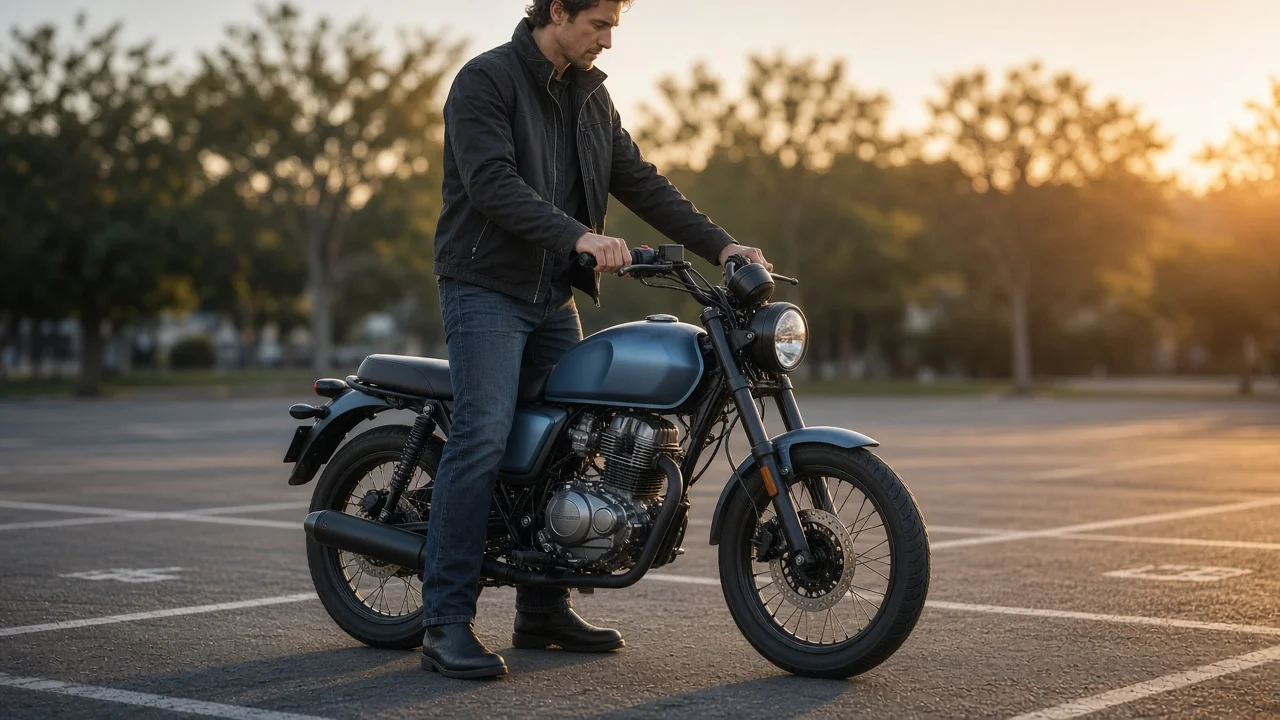
Tall riders starting out face a different problem from most beginners. Many entry-level motorcycles are built low and compact to reassure shorter riders, which can leave a taller person with cramped knees, a hunched back and handlebars that sit too close. This guide gathers beginner-appropriate models whose design generally gives a taller rider more room, explains why each one is on the list, and shows how to confirm fit before buying.
How This Selection Was Built
To be included, a motorcycle has to meet two conditions. First, it must be reasonable for a new rider: manageable power delivery, predictable handling and a design commonly used by people learning to ride. Second, its basic layout must tend to suit a taller body, usually through a higher seat, longer suspension travel and upright riding posture. Dual-sport, small adventure and adventure-touring designs dominate because those categories are built with more vertical space between seat, footpegs and bars.
This is a curated selection, not a complete inventory of every suitable motorcycle, and it is not a ranking. No comparable measurements were available to place the models in a defensible order, so they are grouped by type instead. Specifications, trims and availability change between model years and markets, so treat each entry as a starting point and check current US manufacturer data for the exact model year you are considering.
Fit Terms Worth Knowing
Seat height: the distance from the ground to the lowest point of the seat. A higher figure usually means more legroom for a tall rider, but it does not tell the whole story. Rider triangle: the relationship between the seat, footpegs and handlebar grips. It decides whether your knees are sharply bent, your back is upright and your arms are relaxed. Seat-to-peg distance: how far the footpegs sit below the seat. Too short and a tall rider's knees rise uncomfortably high. Suspension travel: how far the wheels can move up and down. Longer travel usually raises the motorcycle and is typical of dual-sport and adventure models. Sag: how much the suspension compresses under the rider's weight. Heavier riders sink further, which changes effective seat height and handling, so suspension setup matters. Upright ergonomics: a seating position with the back roughly vertical, as opposed to the forward lean of a sport bike. Generally easier on a beginner and on a tall frame.
Lightweight Dual-Sport Models
Dual-sport motorcycles are street-legal machines built to handle dirt roads as well as pavement. Their long suspension and tall seats make them a natural fit for tall beginners, and their simple engines and light weight make mistakes less costly while you learn.
Honda CRF300L
Honda's small single-cylinder dual-sport is a frequent recommendation for new riders thanks to gentle power and a light chassis. Its off-road-derived layout gives more legroom than a typical small street bike. Note the naming: the CRF300L replaced the earlier CRF250L, so older listings and advice may refer to the 250 version, which is a related but different model. Honda has also offered a Rally variant with bodywork and a larger fuel tank; confirm which version a dealer or seller is describing.
Kawasaki KLX300
Kawasaki's comparable lightweight dual-sport offers a similar combination of approachable power and off-road proportions. Kawasaki has sold more than one KLX variant, including supermoto-style versions with street wheels and different suspension, which can change seat height and feel. Check which version and model year you are looking at, since the off-road-oriented model is the one most likely to suit a tall rider.
Larger Single-Cylinder Dual-Sports
These step up in engine size and weight. They remain simple, upright and roomy, but a true beginner should be honest about whether a heavier machine is manageable at walking pace and when stopped.
Suzuki DR650S
A long-running air- and oil-cooled single with a reputation for simplicity and durability. Its tall, upright stance suits long legs, and its torque delivery is broad rather than abrupt. Because the design has stayed largely consistent for many years, used examples are common, but parts and details can still differ across model years.
Kawasaki KLR650
A liquid-cooled single built for long-distance dual-sport riding, with a roomy riding position and a large fuel tank. The model was updated and reintroduced with fuel injection, so the current generation differs from earlier carbureted bikes. The KLR has been sold in several trims over time, which can affect equipment and weight. It is heavier than the lightweight dual-sports above, so new riders should test low-speed handling before committing.
Small Adventure Motorcycles
Small adventure bikes sit between dual-sports and full-size touring machines. They typically add wind protection and more road comfort while keeping an upright, tall posture.
Royal Enfield Himalayan
Royal Enfield's adventure model is known for relaxed power and a comfortable upright position. Be careful with naming: the original Himalayan used a smaller air-cooled engine, while the newer Himalayan 450 is a substantially redesigned, liquid-cooled motorcycle. Ergonomics, weight and seat options differ between the two, so confirm which generation you are trying.
BMW G 310 GS
The smallest model in BMW's GS adventure family, built around a single-cylinder engine. It offers the brand's adventure-style riding position in a light, approachable package. It shares a platform with the G 310 R roadster, which has a lower, more street-focused layout, so the GS is the version better suited to a tall rider.
KTM 390 Adventure
A single-cylinder small adventure bike with a tall stance and generally sharper engine character than most entries here. That makes it appealing to beginners who want room to grow, but it is livelier than options such as the Himalayan. KTM has revised the model and offered more than one variant, and suspension and seat height can differ between them, so verify the exact version and model year.
Middleweight Adventure-Touring Models
These offer the most road comfort and highway capability on the list, with twin-cylinder engines that are smooth and tractable. They are heavier, so they suit tall beginners who have completed basic training and plan to ride mostly on pavement.
Honda NX500 (formerly CB500X)
Honda's parallel-twin adventure-styled model has long been a popular first larger bike because of its predictable power. In the US, the CB500X name was replaced by NX500, so used listings may use either name for related models from different years. Its upright position and adventure styling give more room than Honda's lower 500-class street models.
Kawasaki Versys 650
A road-focused adventure-touring bike with a parallel-twin engine, an upright seating position and adjustable wind protection on recent versions. It favors pavement over dirt, making it a comfortable commuter and touring option for a tall rider. Kawasaki has also sold a smaller Versys-X 300 in some years; availability varies, so check whether it is offered for the model year you want.
Suzuki V-Strom 650
A V-twin adventure-tourer with a long reputation for comfort and smooth power. It has been sold in standard and XT trims, the latter with different wheels and equipment. Suzuki has also introduced larger V-Strom models, and V-Strom 650 availability in the US can vary by year, so confirm what is currently offered or look at the used market.
Quick Comparison by Category
Category | Models in this guide | Typical strengths for tall beginners | Main trade-off; Lightweight dual-sport | Honda CRF300L, Kawasaki KLX300 | Light, forgiving, roomy for size | Limited highway comfort and wind protection; Larger single dual-sport | Suzuki DR650S, Kawasaki KLR650 | Roomy, simple, capable on mixed surfaces | Heavier; more effort at low speed; Small adventure | Royal Enfield Himalayan, BMW G 310 GS, KTM 390 Adventure | Upright posture with some road comfort | Character and weight vary widely by model and version; Middleweight adventure-touring | Honda NX500, Kawasaki Versys 650, Suzuki V-Strom 650 | Highway comfort, smooth twin-cylinder power | Heavier; better after basic training
Confirming Fit Before You Buy
No list can replace sitting on the motorcycle. Body proportions matter as much as overall height: a rider with long legs and a short torso needs different space than one with a long torso and long arms. When trying a bike, sit in your normal riding gear, put your feet on the pegs and check that your knees are not jammed against the tank, your hips are not sharply flexed, and your arms reach the bars with a slight bend at the elbow.
Ask whether the bike you are sitting on has a factory low seat or lowered suspension, which some models offer and which can mislead a tall rider. If a model is close but not quite right, accessory tall seats, handlebar risers and footpeg lowering kits are commonly available for many popular models. Have the suspension sag set for your weight, since a heavier rider can make a tall bike feel lower and handle differently. If you plan to carry a passenger, check the pillion seat and passenger pegs separately; a layout that fits the rider does not guarantee comfort or space for two.
Gaps in This Guide
No verified specifications, prices or measurements were available for this selection, so seat heights, weights, power figures and costs are deliberately not quoted. Those numbers differ by model year, trim and market, and the current US manufacturer specifications or a dealer test ride are the reliable way to compare them. Model availability also changes; some entries may be easier to find used than new in a given year.