Motorcycle turbo intercooler
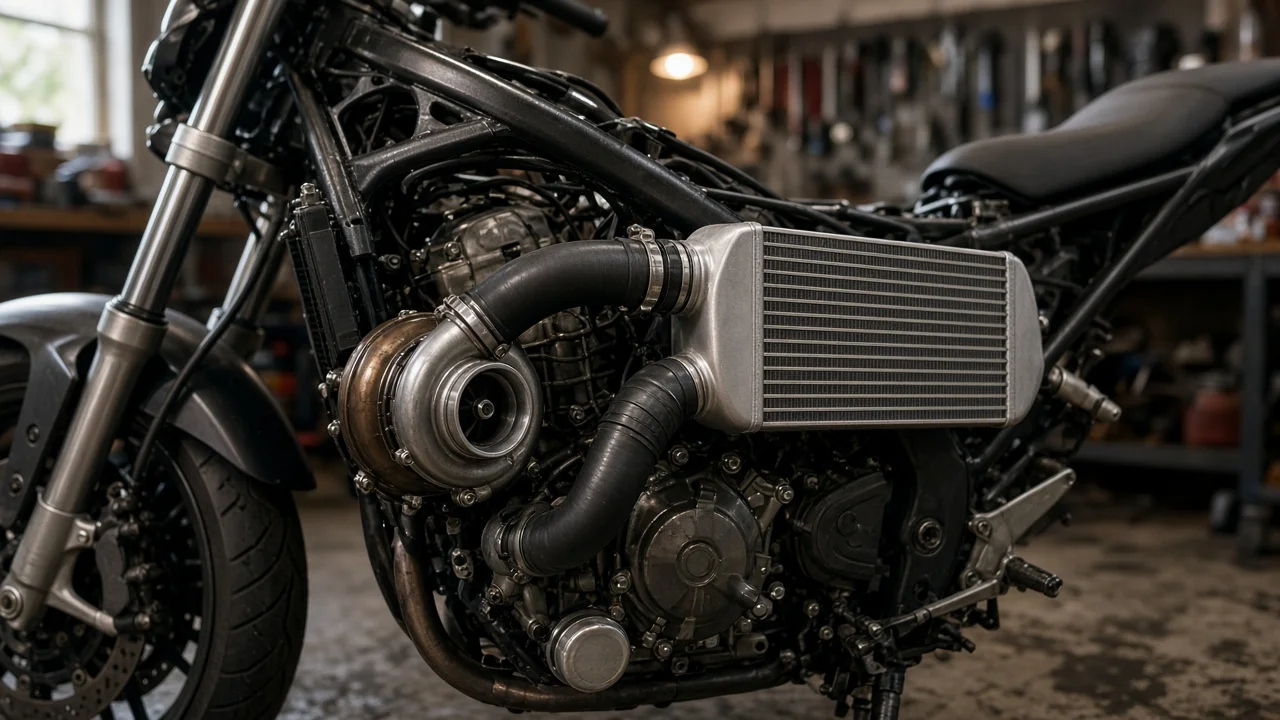
A turbocharged motorcycle can make impressive power, but heat and packaging create real challenges. A motorcycle turbo intercooler addresses one of those challenges by cooling the compressed intake charge before it reaches the cylinders. On a bike, there is far less room than in a car, so the installation must respect the engine configuration, drive system, and riding controls while preserving equipment compatibility. The right setup can reduce heat-related power loss and improve consistency during sustained boost.
Essential answer
A motorcycle turbo intercooler is a heat exchanger placed between the turbocharger compressor outlet and the engine intake. Its job is to remove heat added when the turbo compresses air. Because compressed air rises in temperature, it becomes less dense and more prone to cause detonation. Cooling that charge restores some density, helping the engine use the boost more effectively and reducing thermal stress on internal parts.
The scope of a motorcycle installation depends heavily on model identification and engine configuration. Some bikes use an air-to-air core mounted ahead of the engine, while others route liquid through a compact water-to-air unit. Each approach must fit within the chassis and clear the drive system, fairings, and riding controls. Service specification and equipment compatibility vary, so a setup that fits one bike may require substantial modification on another.