Motorcycle Tire Cupping
Motorcycle tire cupping is a distinctive, uneven wear pattern that can make a front or rear tire feel unstable and produce rhythmic noise while riding. Riders often notice alternating high and low spots across the tread surface, sometimes described as scalloped or wavy wear. This condition is not always a sign of a defective tire; suspension behavior, inflation pressure, and riding conditions can all contribute. Understanding the appearance and likely causes helps a rider judge whether a tire is still serviceable or should be replaced. A cupping motorcycle tire may still hold air, yet its altered contact shape can reduce predictable grip, especially during cornering or braking.
Essential answer
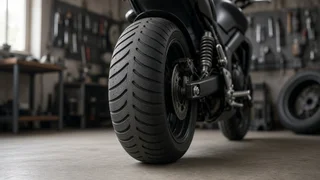
Cupping on a motorcycle tire appears as repeating dips around the circumference, often more visible near the tread grooves or shoulder. The pattern develops when the tire does not roll with a uniform load across its contact patch, so certain areas scrub more heavily than others. Front motorcycle tire cupping is commonly linked to worn or underdamped suspension, low inflation pressure, or aggressive braking that compresses the fork repeatedly. Rear motorcycle tire cupping can occur when shock damping is inadequate or when drive forces and road irregularities create uneven deflection. The condition is best identified by running a hand lightly over the tread and feeling a series of soft scoops.
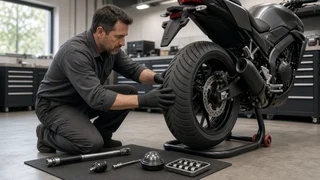
There is no single motorcycle tire cupping fix that restores already deformed rubber; once the uneven surface is established, the tread shape cannot be made smooth again. Riders may reduce further damage by correcting tire pressure to the vehicle placard value and inspecting suspension components for leaks, excessive free play, or harshness. A motorcycle tire cupping wear chart can illustrate how different inflation and damping problems create distinct wear signatures, but charts are guides rather than diagnostics. Determining whether the front or rear tire is dangerously affected depends on the depth of the cups and any loss of stability. Any tire with deep scalloping, exposed cord, or persistent vibration should be evaluated for replacement before continued use.