How to Clean Piano Black Car Interior Trim
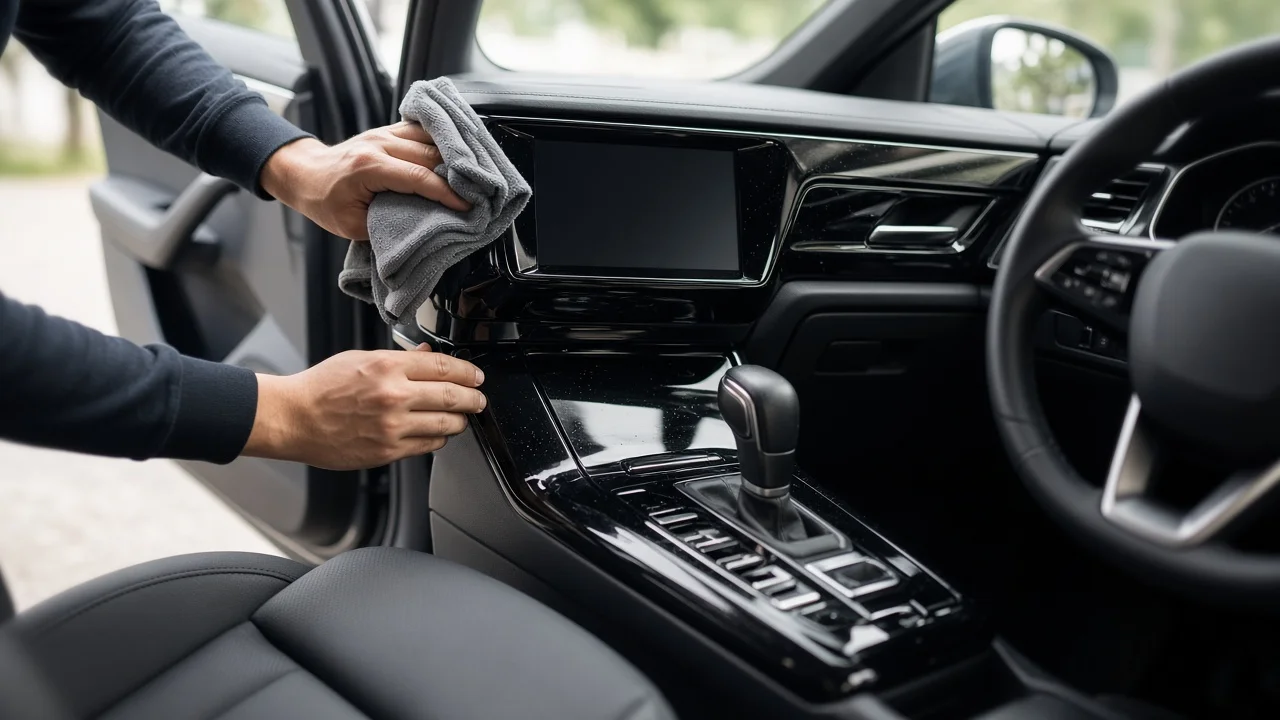
Piano black interior trim looks dramatic in showrooms, but it attracts dust, fingerprints, and fine scratches faster than almost any other cabin surface. The glossy, mirror-like plastic is actually a coated or polished trim material that requires a different approach than matte vinyl or leather. Cleaning piano black car interior safely comes down to lifting debris without grinding it into the finish, then using non-abrasive products that preserve the deep gloss. The wrong towel or cleaner can haze the surface permanently, so method matters more than effort.
Direct answer
The essential answer is to treat this glossy trim as a delicate clear plastic finish, not as painted bodywork or textured dashboard plastic. Remove loose dust first with a soft detailing brush or a gentle blast of air. Then use a plush microfiber towel lightly dampened with water or a mild, plastic-safe interior cleaner. Work in straight, low-pressure passes, and immediately follow with a dry microfiber cloth to prevent water spots. High-gloss areas amplify every leftover streak, so the final buffing step is as important as the washing step.
The reason this works is material compatibility. Piano black trim is often a clear acrylic or polycarbonate layer over a dark backing, and its mirror shine exposes micro-marring from ordinary paper towels or stiff cloth. Surface preparation therefore prioritizes particle removal before any wiping. A dusting brush lifts abrasive grit that would otherwise be dragged across the finish. Cleaner choice also matters because strong solvents, ammonia-based glass sprays, or all-purpose degreasers can dull or craze the plastic. Gentle lubrication and a clean, soft towel preserve the original depth of the finish.
How to proceed
Begin by inspecting the trim and surrounding attachment points. Piano black panels are often clipped into the dash, console, or door switches, so avoid letting excess liquid run into seams or buttons. Have two clean microfiber towels ready, plus a soft-bristle detailing brush. Lightly dust the surface first, brushing away from gaps. If the trim is only dusty, a dry or barely damp towel may be enough. For fingerprints or light smudges, mist a small amount of plastic-safe cleaner onto the towel rather than spraying the panel directly. This limits overspray on adjacent screens, vents, and switchgear.
Wipe the glossy surface in one direction with a folded, plush microfiber cloth. Do not scrub or use round motions, because embedded dust can create fine circular scratches that are highly visible under direct light. Turn or refold the towel as soon as one side becomes soiled. Immediately follow with a dry microfiber towel to remove any remaining moisture and to produce an even, streak-free finish. Check the result from several angles, especially near sunlight or overhead lights. If hazing appears, repeat the wipe with a fresh dry towel and lighter pressure, and confirm that the product is labeled safe for clear automotive plastics and interior trim material.