How to Clean Sand From a Car Interior
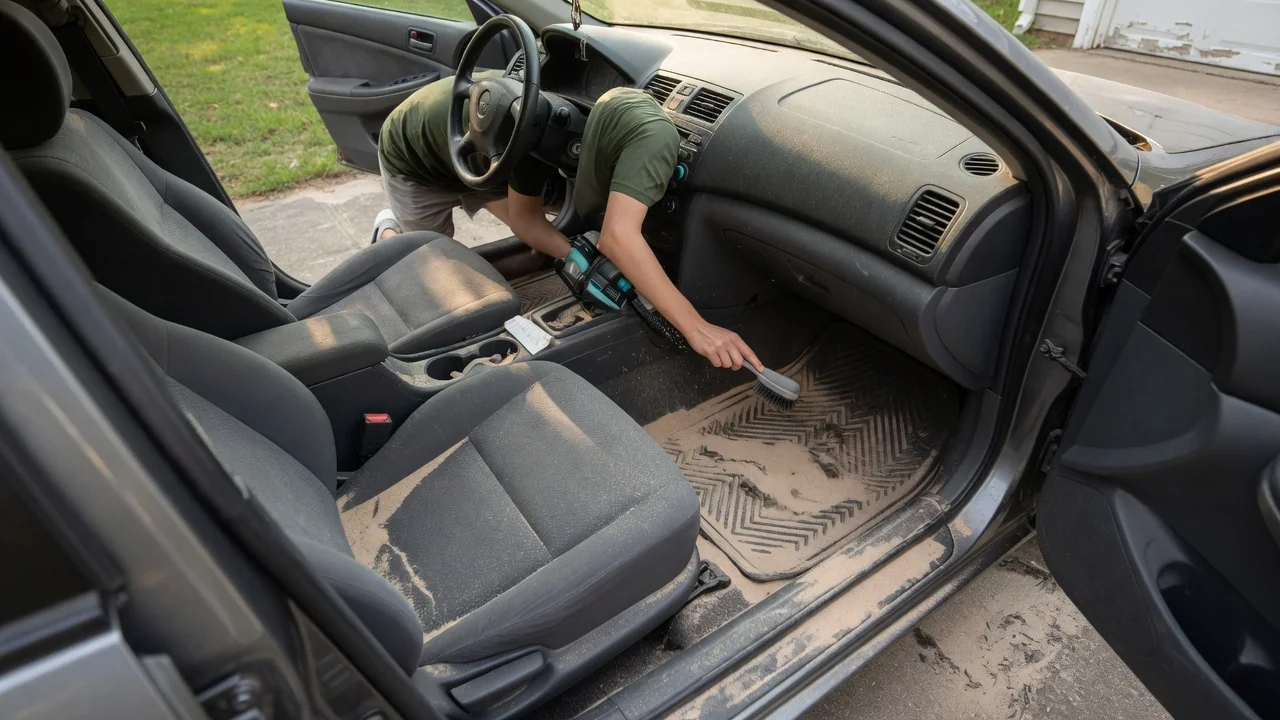
Sand is one of the most damaging things a car cabin collects, because each grain is a hard, sharp-edged particle that scratches plastics, wears carpet fibers and grinds into seat fabric under foot pressure. Knowing how to clean sand from a car interior in the right order, dry and loose material first, keeps that abrasion from spreading to other surfaces.
Shake removable mats
Floor mats catch most of the sand that arrives on shoes, so taking them out before anything else removes the largest share of grit in one step. Lift each mat by its edges and keep it level until it is clear of the door sill, otherwise the load slides off onto the carpet and seat rails. Many vehicles hold the driver's mat with hooks, twist clips or posts, and these need to be released rather than pulled against, since torn retention eyelets let the mat creep toward the pedals.
Away from the car, hold the mat by one end and strike the back against a hard surface or shake it firmly so the grains fall out of the pile. Carpet mats trap sand deep at the base of the fibers, where it cuts them a little with every step, so a stiff brush worked in one direction helps before a final shake. Rubber and molded liners release sand more easily and can be rinsed, but they should be fully dry before going back in to avoid trapping moisture.
Vacuum crevices
With the mats out, the fixed carpet shows where sand has actually settled, usually in the heel area, along the door sills, beside the seat rails and under the front seats. A vacuum with a narrow crevice nozzle reaches those channels better than a wide floor head. Slow passes matter more than raw suction, because grains sit below the surface pile and need time to lift. Tapping or brushing the carpet just ahead of the nozzle shakes buried sand upward so it can be drawn away instead of staying packed.
Seats deserve the same patience. Sand collects in the seam between the cushion and backrest, in stitching lines and around seat belt buckles, and sliding the seat fully forward and back exposes the tracks where grit can interfere with smooth adjustment. A soft brush attachment is the safer choice on leather, vinyl and perforated upholstery, since a hard plastic nozzle dragged across a gritty surface can leave marks. Cup holders, door pockets and the console storage bin often hold a surprising amount, and layouts differ enough between vehicles that each is worth checking.
Wipe trim
Hard surfaces should be handled only after loose sand has been vacuumed or brushed off, because wiping a gritty panel turns the cloth into sandpaper. Glossy black trim, clear instrument cluster lenses and touchscreens are the most vulnerable, and fine scratches on them show plainly in sunlight. A soft detailing brush or a light pass with the vacuum's brush head lifts grains from air vents, switch surrounds and the gaps around the shifter before any cloth touches the surface.
Once the grit is gone, a clean microfiber cloth lightly dampened with water or an interior cleaner suited to the material picks up the remaining dust. Folding the cloth and turning to a fresh side often prevents trapped particles from being dragged along door panels, sill plates and the dashboard. Light pressure and straight strokes are kinder than scrubbing in circles. Screens and coated surfaces vary by manufacturer, so the owner's manual is the right guide to which cleaners are acceptable, and door seals merit a gentle wipe because sand caught there abrades the rubber.
Everyday Use and Observations
Sand tends to reappear for days after a beach trip, which does not mean the first cleaning failed. Grains hidden in clothing, bags, child seats and pet bedding keep dropping out, and vibration from driving works buried sand up through the carpet pile. A gritty feel underfoot, a faint crunch when a seat slides, or pale dust lines along the sill are signs that another quick vacuum is due. Catching it early matters because the wear comes from repeated movement over the grains, not from their presence alone.
A few habits reduce how much gets in. Knocking shoes together and brushing off feet, towels and gear before loading keeps the bulk outside, and a tray or blanket in the cargo area contains wet, sandy items. Shaking mats out every few days during a sandy season is easier than a deep clean later. Vehicles with deep-pile carpet, light-colored upholstery or large areas of piano-black trim show the effects sooner, while those with rubber flooring and molded liners are more forgiving and quicker to clear.
Limits and Next Steps
Home methods have limits. Fine sand worked deep into carpet backing or the padding beneath can resist an ordinary vacuum, and some will remain however carefully the job is done. Sand that arrived wet may also carry salt, which leaves pale residue and holds moisture against the floor, so damp carpet should be dried thoroughly with doors open or with airflow from the climate system. A professional detailer with extraction equipment and compressed air is a reasonable step when grit keeps surfacing or a musty smell develops.
Certain areas are better left alone or handled gently. Blowing compressed air indiscriminately can drive grains deeper into vents, switches and seat mechanisms, and wiring or connectors under the seats should not be disturbed during cleaning. If a seat track, seat belt retractor or window switch feels rough or sticks after sand exposure, a repair shop can inspect it rather than forcing the part. Scratches already present in trim or lenses will not vacuum out, so prevention through prompt, dry removal remains the most effective protection.