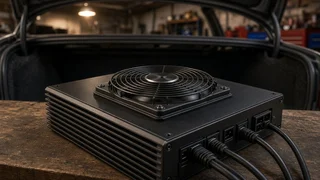
Car audio amplifier cooling fans

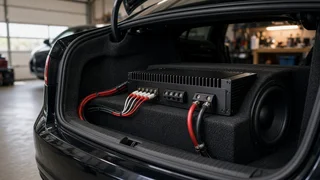
An amplifier converts electrical energy into sound power, but that conversion also produces heat. When a car audio system is pushed hard, the amplifier’s heatsink can become overwhelmed, especially in confined install locations. A cooling fan addresses this by moving air across the amplifier’s surface. This article explains how car audio amplifier cooling fans work, when they help, and what practical differences matter for a typical install.
Essential answer
Car audio amplifier cooling fans are auxiliary devices that force air over an amplifier’s heat-dissipation surfaces. Most amplifiers already rely on passive convection through finned metal heatsinks. A fan supplements that process when natural airflow is weak, such as under a seat, behind a trim panel, or in a closed trunk area. The fan does not change the amplifier’s output; it helps the internal protection circuit avoid thermal shutdown during sustained high-volume or low-impedance operation.
The basic function is thermal management. Amplifier output stages generate waste heat as they drive speaker wiring and voice coils. If that heat cannot escape, internal temperatures rise and the unit may reduce power or shut down temporarily. A cooling fan can stabilize the environment around the heatsink. For many daily systems at moderate volume, the factory heatsink is enough. The fan becomes meaningful when the install location traps heat or the amplifier runs near its continuous power limit.