Car audio amplifier cooling fan
An overheating amplifier can turn a strong aftermarket stereo into a frustrating shutdown, distorted output, or damaged electronics. Choosing a 12V car audio amplifier cooling fan is often a practical way to stabilize thermal performance in a tight install space, especially when the head unit stays on and the audio source plays for long periods. The right fan should match the amplifier’s mounting layout, available power wiring, and airflow direction. This guide explains what to check before buying, so the cooling solution supports dependable sound without creating new noise or installation problems.
The direct answer
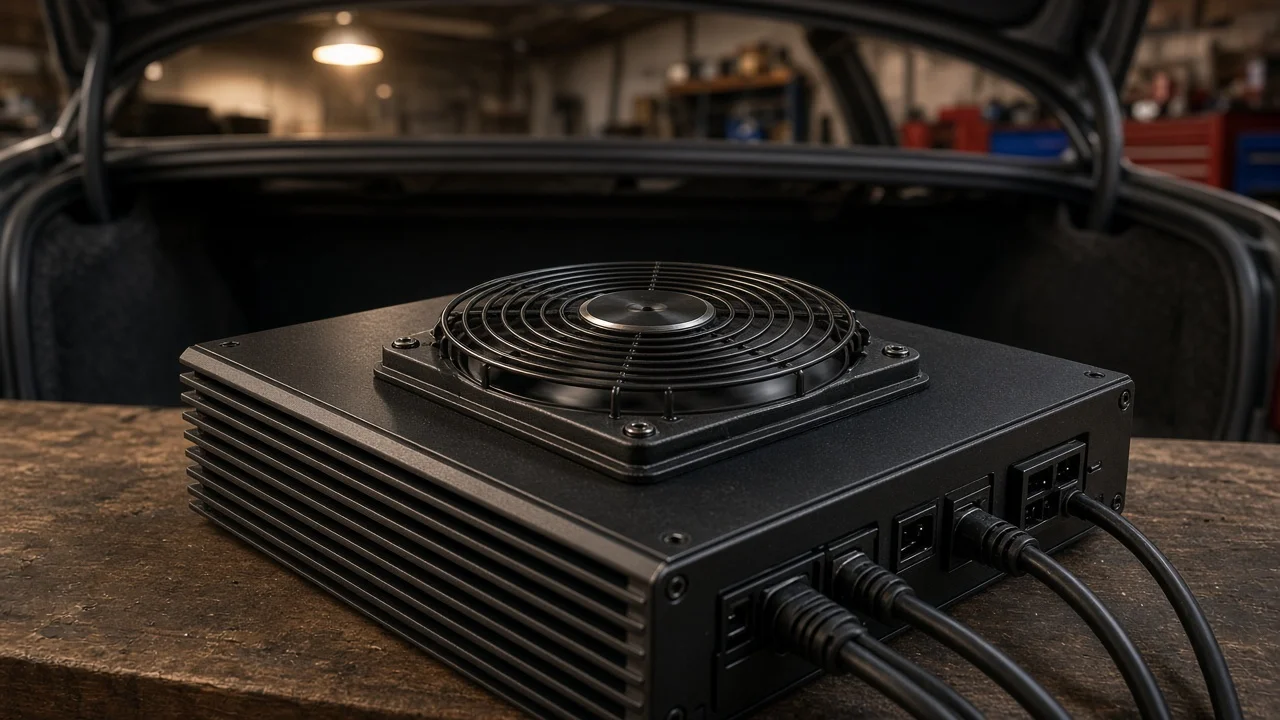
A 12V car audio amplifier cooling fan is worth considering when the amp runs hot enough to enter thermal protection, clip early, or feel excessively warm near its heat sink during normal listening. The immediate answer is that a fan can help, but only if it moves air across the amplifier’s fins rather than just recirculating trapped air. Small fans work best in enclosed under-seat or trunk spaces where natural convection is limited. If the amplifier already stays reasonably cool, adding a fan may contribute more mechanical noise than benefit.
Before buying, confirm where the fan will connect and how it will be controlled. Most 12V car audio fans can be powered from a remote turn-on lead, a fused accessory circuit, or a relay triggered by the amplifier’s remote terminal, so the fan runs only when the audio system is active. A fan that runs constantly can add an unnecessary current draw during vehicle-off conditions. Match the fan’s physical size and mounting pattern to the amplifier’s cooling surface or the available bracket location. Airflow direction matters: it should push or pull air along the heat sink channels rather than against a solid panel.