Low Oil Pressure on a Duramax: What It Means and What to Do First
The short answer
Treat a low oil pressure warning or a falling gauge reading on a Duramax as a reason to stop and investigate, not something to drive through. The cause can be minor, such as a failing pressure sensor or a low oil level. It can also be serious, such as a restricted oil supply or worn internal parts. Running a diesel engine without adequate oil pressure can damage bearings, the crankshaft and the turbocharger quickly. The safest first step is to shut the engine off, check the oil level and condition, and then confirm the actual pressure with a mechanical gauge before replacing parts.
Which engines this covers
Duramax is General Motors' name for several diesel engine families. These include the 6.6-liter V8 used in heavy-duty Silverado and Sierra pickups and related vans and trucks, across generations commonly identified by engine codes such as LB7, LLY, LBZ, LMM, LML and L5P. They also include the smaller 3.0-liter inline-six used in light-duty pickups and SUVs. The basic diagnostic logic below applies to all of them. Oil pressure specifications, sensor locations, oil pump designs and known weak points differ by engine, model year and application, however, so any specific value or procedure should come from the service information for your exact engine.
What to do first
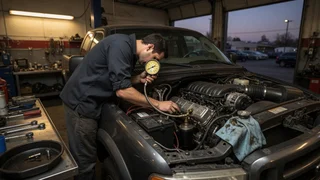
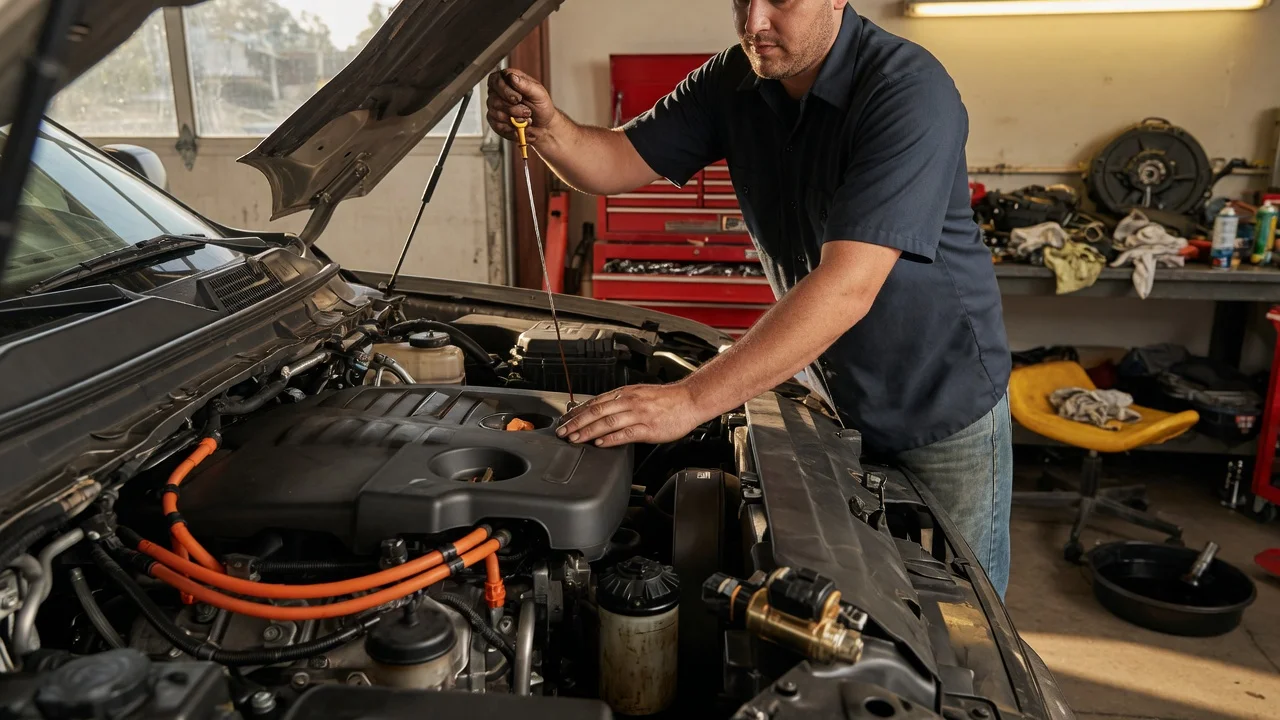
1) Stop the engine as soon as it is safe, especially if the warning came with knocking, ticking or other new noises. 2) Let the oil drain back to the pan, then check the level on the dipstick with the truck on level ground. 3) Look at and smell the oil. Oil that is overfull, thin or smells of diesel may be diluted with fuel. Milky oil may indicate coolant contamination. 4) Look for active leaks under the engine and around the oil filter. 5) Before driving further, have the actual oil pressure measured with a calibrated mechanical gauge connected in place of the sensor or at a test port. This shows whether the problem is real or only on the dashboard. 6) Read any stored diagnostic trouble codes with a scan tool. Sensor-circuit codes point in a different direction than a genuine low-pressure condition.
Common causes to rule out
Low oil pressure readings generally fall into two groups: the measurement is wrong, or oil is not reaching the engine at the required pressure. These are the usual areas to check, roughly from simplest to most involved.
Low oil level: Leaks, oil consumption or a missed change can leave too little oil for the pump to pick up reliably, especially on grades or during hard braking and cornering. Wrong or degraded oil: Oil that is thinner than specified, overdue for a change or diluted by fuel produces less pressure, most noticeably at hot idle. On diesels with particulate filter regeneration, fuel dilution is worth checking if the oil level appears to rise between changes. Oil filter problems: A restricted, incorrect or poorly sealed filter can affect pressure. An incorrect filter can also cause problems if its bypass behavior does not match the engine's requirements. Faulty sensor or wiring: A failing oil pressure sensor, damaged connector or wiring fault can produce low, erratic or zero readings while actual pressure is normal. A mechanical gauge test separates this from a real problem. Pickup tube or seal leaks: If the pickup tube or its seal leaks, the pump can draw in air along with oil. A restriction in the pickup screen has a similar effect. Either can cause pressure to drop, often worst at idle when the engine is hot. Confirming this usually requires removing the oil pan. Oil pump, drive or relief valve faults: A worn pump, a sticking pressure relief valve or a problem with the pump's drive can reduce output. The drive arrangement varies by Duramax engine. Internal wear: Worn crankshaft, connecting-rod or camshaft bearings let oil escape faster than the pump can supply it. This is typically the most expensive cause and is often accompanied by noise.
When a low reading may be normal
Oil pressure naturally varies with engine speed and temperature. It is typically highest on a cold start and at higher rpm, and lowest at hot idle. A reading that dips at idle after a long, hard drive and recovers immediately with throttle may be within specification, but that can only be confirmed against the published value for your engine at the same temperature and rpm. A sudden change from what the truck normally shows, a warning message, or a reading that does not recover with rpm should be treated as abnormal until proven otherwise.
Sensor fault or real problem: how to decide
The decision comes down to the mechanical gauge test. If a mechanical gauge shows pressure within specification while the dashboard reads low, the sensor, its wiring or the instrument display is the likely culprit. If the mechanical gauge also reads low, the oil supply problem is real. In that case, continue with oil and filter checks, then inspect the pickup tube and pump, and evaluate bearing wear if those are ruled out. Replacing the sensor without that test risks missing a genuine pressure loss that is actively damaging the engine.
Gaps and limitations
This guide does not include model-year-specific oil pressure specifications, factory service bulletins, recall information, or documented failure rates for any particular Duramax generation, because none were provided as source material. The causes listed are general diagnostic possibilities, not test findings or statistics for a specific engine. For exact pressure values, approved oil grades, sensor part numbers and repair procedures, use the GM service information for your engine code and model year, or consult a qualified diesel technician.