Low Engine Oil Pressure Light Going On and Off: What It Means and What to Do
The short answer
An oil pressure warning light that flickers or comes on intermittently means the engine's oil pressure is dropping, at least briefly, below the point where the warning switch triggers, or that the warning circuit itself is giving a false signal. Treat it as a real warning until proven otherwise. The safest response is to pull over when it is safe, switch the engine off, let the oil settle for a few minutes and check the level on the dipstick before driving further.
The light is not a routine service reminder. Engine oil lubricates and cools moving parts such as crankshaft and camshaft bearings, and running an engine with too little pressure can cause rapid and expensive wear. An intermittent light can be an early sign of a problem that later becomes constant.
Scope: which warning light this is
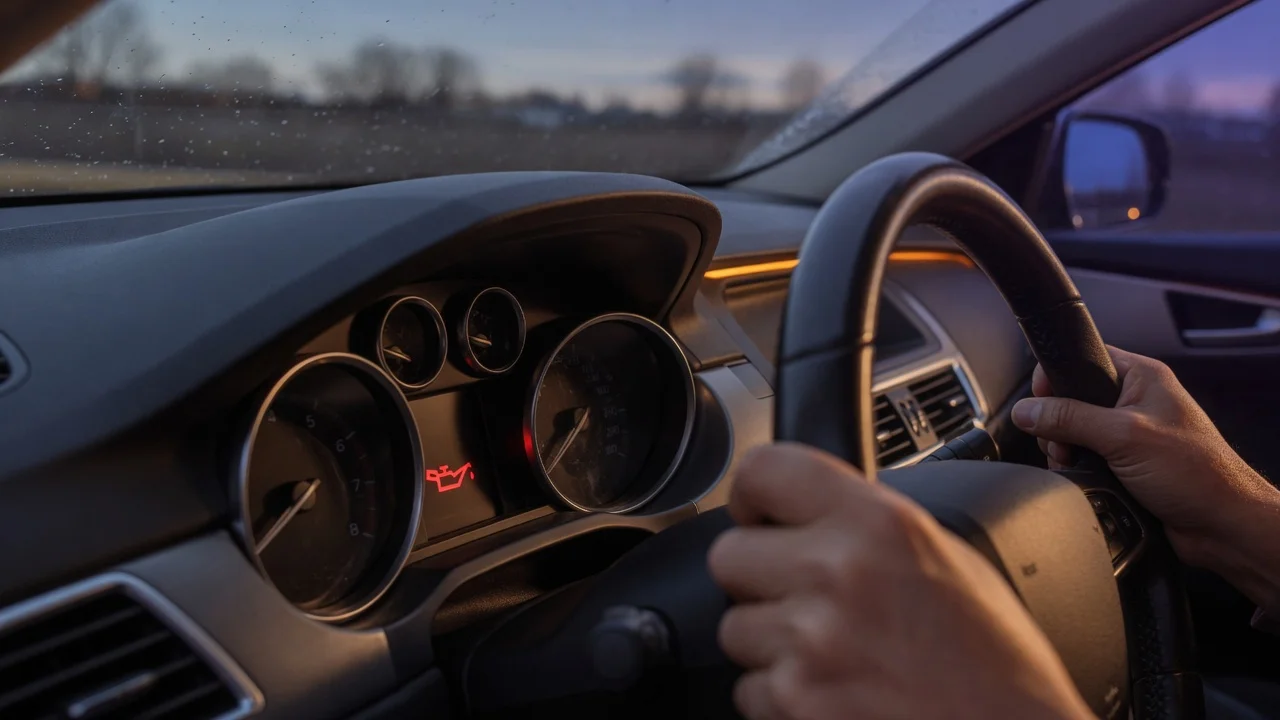
This guide covers the red oil pressure warning, usually shown as an oil can symbol, sometimes with a drip. Some vehicles also have a separate amber or yellow oil level warning or an oil change reminder, which carries a different and generally less urgent meaning. Symbols, colours and whether a vehicle has a separate level sensor vary by manufacturer, model, model year and market, so the owner's manual for the specific vehicle is the authority on what each light indicates.
Common reasons the light flickers
Low oil level: the most frequent and easiest cause to check. When the level is low, oil can slosh away from the pickup during braking, cornering or on slopes, causing brief pressure drops. Faulty oil pressure switch or sender: the sensor that triggers the light can fail and send erratic signals even when actual pressure is adequate. Wiring or connector problems: a damaged, corroded or loose connection at the sensor can make the light flicker, sometimes in response to vibration. Oil that is too thin or degraded: oil of the wrong viscosity for the engine, or old oil that has thinned, can reduce pressure, especially when hot. Restricted oil pickup or filter: sludge or debris blocking the pickup screen, or a clogged or incorrect filter, can limit oil flow. Worn oil pump or engine bearings: internal wear increases clearances and lowers pressure; this is more likely on high-mileage engines and usually needs professional diagnosis.
What the timing of the flicker can suggest
When the light appears can help narrow down the cause, although these patterns are indicators rather than a diagnosis. A light that flickers mainly when braking, cornering or accelerating hard often points to a low oil level. A light that shows at hot idle but goes out with engine speed can suggest oil that is too thin, a worn pump or worn bearings, since pressure normally rises with engine speed. A light that flickers randomly, including at steady cruising speed or over bumps, may indicate a sensor or wiring fault.
What to do next
Stop safely and turn the engine off if the light comes on while driving, particularly if it stays on or is accompanied by knocking, ticking or other unusual engine noises. Wait a few minutes, then check the oil level on the dipstick with the vehicle on level ground. If the level is low, top up with the oil grade specified in the owner's manual, then check for visible leaks. If the level is correct and the light continues, avoid driving the vehicle and have the oil pressure verified. If the oil is very old or the wrong grade may have been used, an oil and filter change to the manufacturer's specification is a reasonable step, but it does not rule out other faults.
How a technician confirms the cause
Because a failing sensor and genuine low pressure can produce the same symptom, the usual way to separate them is to temporarily fit a mechanical pressure gauge in place of the sensor and compare the readings with the manufacturer's specification for that engine. If actual pressure is within specification, the sensor or wiring is the likely culprit. If pressure is low, the investigation moves to the pump, pickup, filter or internal wear. The correct pressure values differ between engines and depend on engine speed and temperature, so they should be taken from the service information for the specific vehicle.
Is it safe to keep driving?
Driving with an oil pressure warning, even an intermittent one, risks engine damage, and the cost of a sensor or a top-up is small compared with the cost of repairing or replacing a damaged engine. If the oil level is correct and the light has stopped, a short, gentle drive to a workshop may be acceptable, but if the light stays on or the engine makes unusual noises, having the vehicle towed is the more cautious choice. This is a general judgment; the owner's manual's guidance for the specific vehicle should take precedence.
Information gaps
No vehicle-specific data were supplied for this guide, so it does not state oil pressure specifications, switch trigger points, recommended oil grades or known faults for particular models, generations or engines. Those details vary widely and should be confirmed from the owner's manual, official service information or a qualified technician familiar with the vehicle.