How to Locate a Coolant Hose Leak
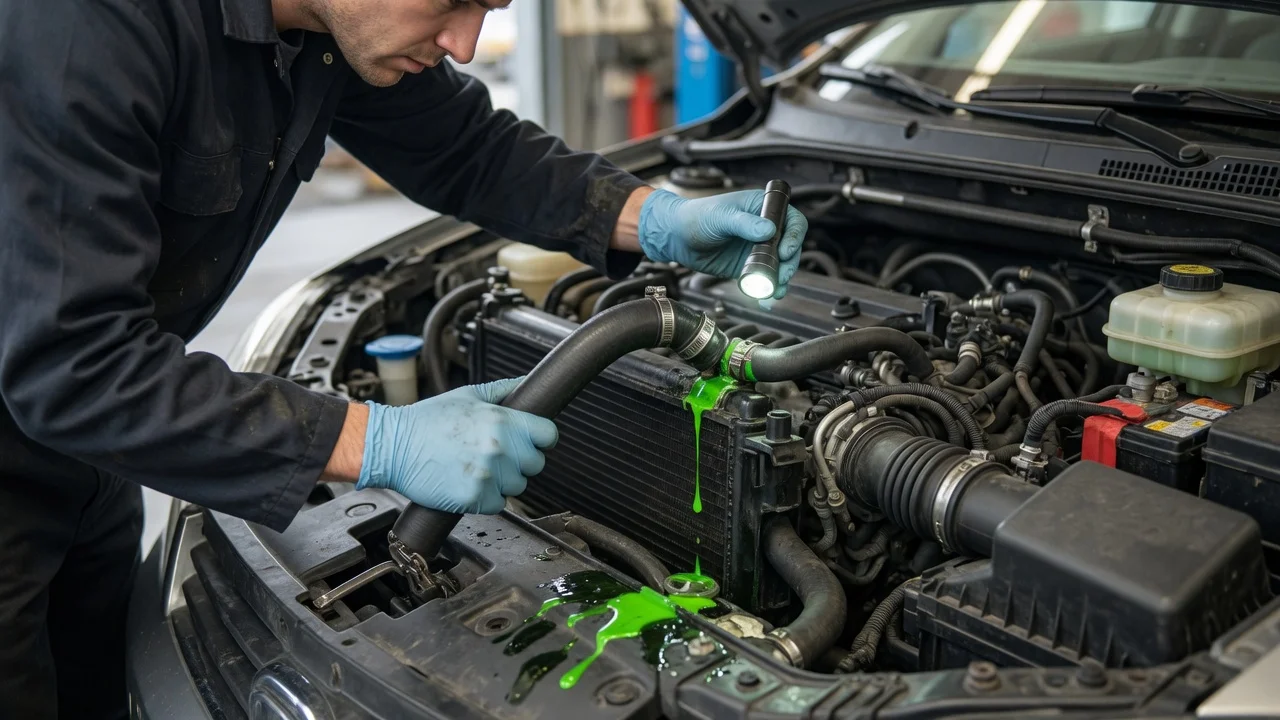
Before you start
Let the engine cool before opening the hood or touching any hose. A hot cooling system is under pressure, and removing a cap or squeezing a warm hose can release hot coolant. Work on a level, well-lit surface and keep a flashlight, clean cloth, shallow drain tray, and coolant-rated gloves nearby. A coolant hose leak can be checked by visual inspection without removing parts in most cases, but a pressure tester may help confirm the source once the system is cool.
Step-by-step instructions
Start by identifying the main coolant hoses: the upper and lower radiator hoses, heater hoses, and any smaller bypass or overflow hoses. Look at the entire length of each hose rather than only the visible front section. A coolant hose leak often appears first near a clamp, at a bend, or where the hose meets a metal fitting.
Inspect the outside of each hose for wetness, dried coolant residue, white or green crust, swelling, soft spots, cracks, or a loose clamp. Coolant colors vary by vehicle, so dry residue may be green, orange, pink, blue, or yellow. If the engine has cooled, gently squeeze the hose along its length to check for splits or weak areas that feel softer than the surrounding rubber.
Trace the hose fittings and the area beneath them. Dried spray marks may point backward from the source of the leak toward surrounding parts. Use the flashlight to look at the underside of hoses and the lower radiator connection, where a small leak can leave only a wet line or a thin deposit.
If no obvious wetness is visible, check the coolant level in the reservoir using the mark on the tank. A repeatedly low level after topping up can indicate a slow coolant hose leak, but it can also come from other cooling system parts. Do not open the radiator cap unless the engine is cold and you have confirmed the recommended procedure for your vehicle.
Check the output
The expected result is a clear visual source of moisture, residue, or damage on one or more hoses. A confident location means you can see wetness or dried coolant directly on the hose surface, at its fitting, or directly below a damaged section. A pressure test can help reveal a leak that does not show when the engine is cold, but follow the tool and vehicle instructions and do not exceed the specified test pressure.
Common problems and next steps
A low coolant level with no visible hose damage may mean the leak is intermittent, hidden under a shield, or coming from another component such as the radiator, water pump, heater core, or coolant reservoir. Check the cabin for a sweet smell or damp carpet, which can indicate a heater core or heater hose leak. If you cannot find the source safely, avoid adding stop-leak products as a first step and have the system pressure-tested.
If the hose is confirmed faulty, the usual repair is to replace the hose and its clamps, then refill and bleed the cooling system according to the vehicle procedure. Do not drive with a known coolant hose leak if the level is dropping quickly. Recheck the area after repair when the engine is warm, watching for new wetness at the same fitting or clamp.