How to Locate a Leak in Coolant Lines
Before you start
This procedure uses a camera or phone as an inspection aid after the engine has cooled. Work only when the engine is off and the key is removed. Coolant can remain under pressure even when the engine feels cool, so do not open the radiator cap or expansion tank while the system is warm. Keep hands, clothing, and camera straps away from moving parts. Coolant is toxic to people and animals, so avoid direct contact and clean up any spilled fluid. Park on a level surface, set the parking brake, and have a flashlight or work light available. A phone camera can help you see and record areas that are difficult to reach, but it does not replace mechanical diagnosis or physical inspection.
Step-by-step instructions
Start by looking for visible coolant on the ground under the front of the vehicle. Fresh coolant may appear green, orange, pink, blue, or yellow depending on the product, but older residue can look dull or brownish. The position of the drip does not always point directly at the source because coolant can run along hoses, splash guards, and engine surfaces before it falls.
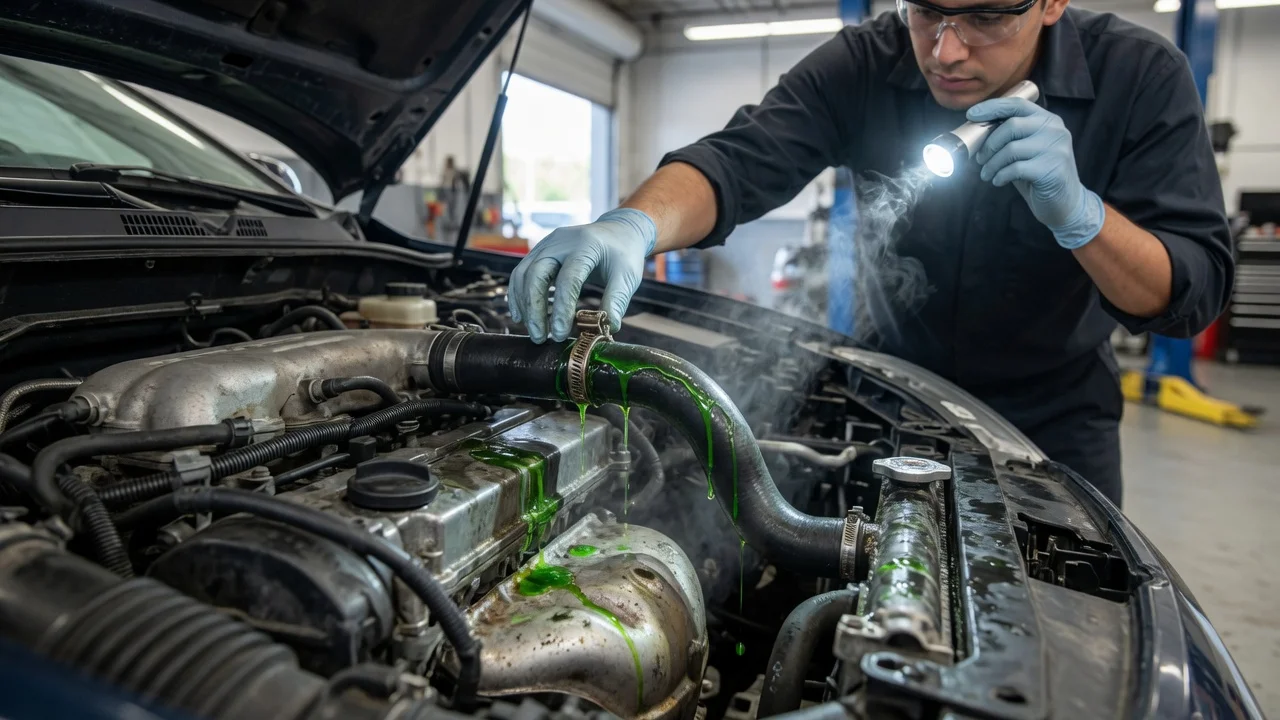
With the engine off and cool, use a flashlight to inspect the coolant hoses. Trace the upper and lower radiator hoses and any heater hoses, looking for wetness, dried crust, white or colored residue, soft spots, cracks, or swollen areas. Pay attention to the ends where hoses meet metal or plastic fittings, because leaks often appear near clamps.
Use your phone camera or another camera to inspect areas that are hard to see. Aim the camera slowly across fittings, hose connections, the radiator side tanks, the water pump area, and the underside of hoses. Record a video while moving the camera so you can review the footage later and zoom in on possible staining. If the camera has trouble focusing in a dark area, use a secondary light rather than assuming the hose is dry.
If a leak is not visible with the engine off, run the engine only if it is safe to do so. Keep clear of the fan and belts. Watch for coolant seeping, bubbling, or misting around hose connections while the system builds pressure. Steam and small leaks may appear before the engine becomes fully hot. If you see an active leak, stop the inspection and allow the engine to cool before touching anything.
Record what you find. Take clear photos or video of the suspected area before cleaning it, showing the wet trail and a wider view for reference. A short recording can help a mechanic see which hose or fitting is affected. Do not rely on image filters or color adjustments that could hide the leak.
Check the output
Check that the evidence you captured is sharp enough to identify the part. The photo or video should show a visible boundary between the wet area and the surrounding dry material. If the liquid is smeared across a large section, clean the area carefully, allow it to dry, and inspect again after a short run or pressure test only when it is safe. Keep in mind that camera detail is limited; a brightly lit still image may miss a slow seep that appears later as a colored stain.
Common problems and next steps
A common issue is finding coolant under the vehicle but no obvious leak on a hose. The source may be the radiator, water pump, thermostat housing, heater core, expansion tank, or a connection hidden behind a cover. A small amount of dried coolant around a fitting can be old spillage, but fresh wetness with a sweet smell or a slowly dropping coolant level points to an active leak.
If the area is too tight for a phone camera, use a longer focal length from several angles instead of pushing the lens into fluids or moving parts. For a suspected pressure leak that does not appear when the engine is idling, a cooling system pressure test may be needed. That test uses specialized tools and should be performed by someone familiar with the vehicle. Do not overtighten clamps or hose fittings as a guess, since this can crack plastic parts or distort a seal.
Watch the coolant level after the inspection. A hidden leak can continue while the vehicle is parked, so check the reservoir again later and look for fresh residue in the same location. If coolant is leaking quickly, the engine overheats, or you smell a strong sweet odor inside the cabin, stop using the vehicle and have the cooling system inspected before driving further.