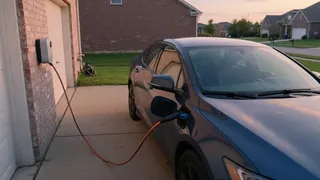
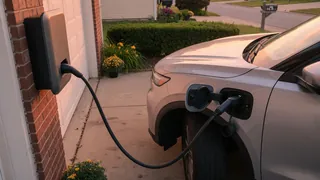
Is Home EV Charging AC or DC?
Understanding whether home EV charging uses alternating current or direct current shapes how owners plan equipment, set power expectations, and diagnose charge times. Most residential installations supply AC to the vehicle, where an onboard charger converts it into DC for the battery. This distinction affects connector choice, vehicle compatibility, and the charging power a household circuit can support. For drivers asking “Is home EV charging AC or DC?”, the practical answer lies in how a Level 2 wall unit behaves compared with public high-power stations. Home charging is best understood as a transfer of grid energy through a safety-interlocked interface. The wall unit communicates with the car through a charging protocol before energizing the connector. Once current flows, the vehicle’s internal power electronics manage the final conversion. Knowing that difference helps owners evaluate supply capacity, interpret slower or faster sessions, and avoid mismatched expectations when comparing a garage charger with a commercial DC fast charger.
Essential answer
Home EV charging is AC, not DC. A residential wall connector or portable cord feeds alternating current from the household panel into the car, where an onboard charger converts that AC input into the direct current the battery stores. The wall unit is primarily a smart contactor and communication device, not the rectifier that produces DC. Because the conversion happens inside the vehicle, charging power is limited by the onboard charger’s rating and the circuit’s available supply capacity.
The reason DC fast chargers are different is that they perform the AC-to-DC conversion outside the vehicle, delivering high-voltage direct current straight to the battery through a different connector standard and vehicle compatibility path. For home sessions, the slower but battery-friendly AC approach works well because cars sit parked for hours. The charging protocol still manages current ramp-up, temperature limits, and state-of-charge targets, but the essential conversion remains onboard rather than in the garage equipment.