Installing an EV charger away from the house
The short answer
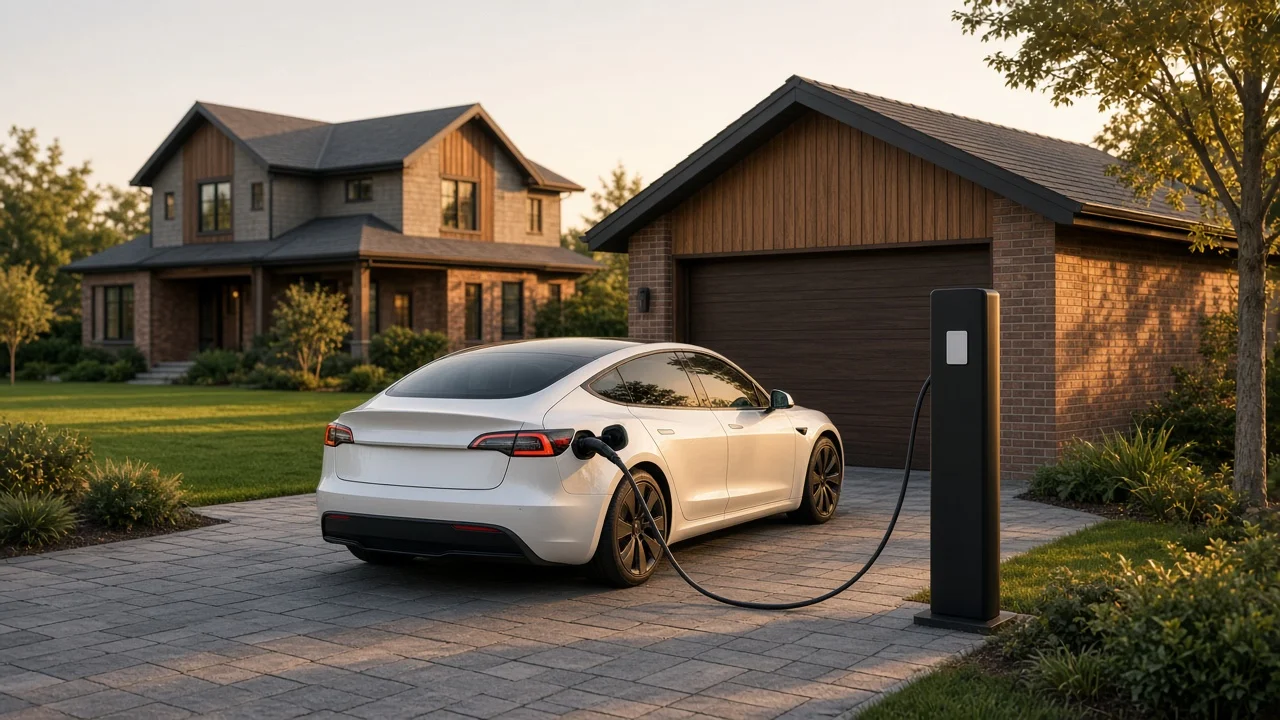
An EV charger can usually be installed somewhere other than the house wall. Common locations include a detached garage, a carport, a post beside the driveway, or an assigned space in a shared lot. It is an electrical project rather than a simple purchase. Power has to reach the spot through a properly designed circuit, and the equipment must be rated for where it will sit. In shared settings, you also need permission from whoever controls the property and the electrical supply.
One factor changes the answer more than any other: who controls the parking spot and the electrical panel. On a single-family property you own, the questions are mostly technical and about permits. On a shared driveway, or at a condominium, apartment or HOA-governed community, the deciding issues are often approval, metering and cost sharing rather than the wiring itself.
What counts as away from the house
A detached garage, shed or other outbuilding; A pedestal or post at a parking pad or the end of a driveway; An assigned or shared space in a condominium or apartment parking lot or garage; A spot on a driveway shared with a neighbor
How it differs from a charger mounted on the house
Distance: The wire from the panel to the charger is longer. Longer runs increase voltage drop, which is the loss of voltage along the conductor. An electrician offsets it by choosing an appropriate wire size. That choice is a calculation for each specific circuit, not a fixed rule.
Route: The circuit may need to run underground in conduit, overhead, or through existing conduit to an outbuilding. Any digging requires locating buried utilities first. Burial methods and depths are set by the applicable electrical code.
Power source: The circuit might come from the main house panel or from a subpanel in a detached garage. In multi-unit properties, it might come from a building or common-area electrical system with its own meter. Each option affects capacity, billing and who must approve the work.
Exposure: A freestanding or outdoor location needs charging equipment and enclosures rated for outdoor use. It also needs ground-fault protection where code requires it, and often physical protection so vehicles cannot strike the unit.
Access: A charger in a shared or publicly visible space may need a way to control who uses it. Options include a lockable unit, a charger that requires authentication, or secure cable storage.
Level 1 versus Level 2 at a remote spot
Level 1 charging uses a standard 120-volt household outlet and is the slowest option. It only suits a remote location if a suitable outlet already exists there and is in good condition. A dedicated circuit is preferable to one shared with other loads.
Level 2 charging uses a 240-volt circuit and typically requires a new dedicated circuit. This is where distance, routing and panel capacity matter most.
The actual charging speed depends on two things: the vehicle's onboard charger and the capacity of the circuit and equipment. The two vary by model and installation, so no specific figures are given here.
Shared residential access: what to settle first
Permission: Get written approval from the landlord, HOA, condominium board or co-owner of the shared driveway before any work begins. Electricity billing: Decide whose meter supplies the charger. It could be a separate meter, a submeter, or a charger that records energy use for reimbursement. Costs and upkeep: Agree on who pays for installation, repairs and any later upgrades. Ownership and removal: Agree on who owns the equipment, and what happens if you move or the property changes hands. Property rights: On a shared driveway, check whether easements or other agreements cover installing equipment or trenching across shared ground. Local law: Some US states have right-to-charge laws that limit how far HOAs or landlords can restrict charger installations. Coverage and conditions vary by state and were not confirmed for this overview.
Permits, code and who does the work
In the US, new circuits for EV charging fall under the National Electrical Code as adopted and amended by local jurisdictions. Most localities require a permit and an inspection for this kind of work.
A licensed electrician can do a load calculation to confirm the panel can support the added circuit. They can also design the run to the remote location and handle the permit. For multi-unit buildings, the property's own electrical contractor or management may need to be involved.
Gaps in this overview
No confirmed figures were available for installation costs, wire sizes, burial depths, maximum practical distances, charging rates or specific products. These depend on the jurisdiction, the property layout, the electrical service and the vehicle. Treat a licensed electrician's site assessment, the local permitting office and the property's governing documents as the sources for those specifics.
Practical next steps
Confirm who controls the parking spot and the electrical supply, and get written permission if it is not solely yours. Decide whether Level 1 at an existing outlet is enough, or whether a Level 2 circuit is needed. Have a licensed electrician assess panel capacity, the route to the charging spot and the equipment needed for that location. Settle billing, maintenance and ownership terms in writing for any shared arrangement. Confirm permit and inspection requirements with the local building department before work starts.