Lost Car and House Keys Together? What to Do Next
Losing your car and house keys together is more than an inconvenience, because one lost ring can give someone access to both your home and your vehicle. The short answer is to work in this order: confirm the keys are really gone, judge whether anything on the ring or nearby could lead a finder to your address or car, secure your home first, then arrange car access and a replacement key. If you can, have the lost car keys erased from the vehicle's memory. How much work the car side involves depends on the key type. A plain mechanical key is usually simple to replace. A key with an immobilizer chip, remote transmitter or keyless proximity function needs programming to the specific vehicle and often proof that you own it.
Step 1: Confirm the Keys Are Actually Lost
Before you spend money on locksmiths or dealer appointments, do a structured search. Retrace your movements from the last time you definitely had the keys. Call or visit places you stopped, such as stores, restaurants, your gym or your workplace, and ask about lost and found. Check coat pockets, bags, car door pockets if the car is unlocked, and the area around your front door. If you attached a Bluetooth tracker to the ring, check its app for a last-known location. A short, focused search often settles the matter, and it also helps you work out whether the keys were misplaced or possibly taken.
Step 2: Assess the Security Risk
The urgency of the next steps depends on whether someone who finds the keys could connect them to your home or vehicle. Lost keys alone are a lower risk. Lost keys together with anything identifying are a higher risk. Ask yourself whether any of the following were with the keys or lost at the same time:
A wallet, driver's license or other ID showing your address; Vehicle registration or insurance cards, which often show your name and address; Mail, receipts or parcels with your address on them; A key tag or fob with your name, address, phone number or a dealer label; A garage door opener or gate remote clipped to the ring; A keyless entry fob for a car parked near your home, where a finder could test it by pressing the lock button
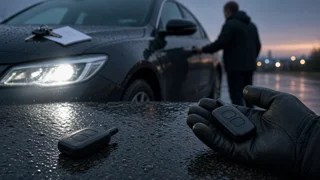
If the keys may have been stolen, for example from a gym locker, bag or unlocked car, or if identifying items went missing with them, treat the situation as a security problem rather than a lost-property problem. Act on your home locks the same day if possible. Consider filing a police report. It may help with insurance claims and documents the loss if the car is later misused.
Step 3: Secure Your Home First
Your home is usually the bigger priority, because a house key gives direct access to people and belongings, and residential locks are cheaper and faster to deal with than modern car keys. Your main options are:
Rekeying: a locksmith changes the internal pins of your existing locks so old keys no longer work and new keys do. This is typically less expensive than replacing hardware and keeps your current locks. Replacing locks: worth considering if your locks are old, worn or low security, or if you want to upgrade anyway. Smart or keypad locks: change or delete access codes and remove any lost digital credentials through the lock's app or settings. Garage door and gate remotes: if a remote was on the ring, clear the opener's stored remotes and reprogram the ones you still have. Many openers have a learn or clear button for this; check the opener's instructions. Renters: contact your landlord or property manager, who may need to approve or arrange lock changes. Lease terms usually cover who pays.
If you are locked out and no one has a spare, a residential locksmith can usually let you in. Expect to show ID or other evidence that you live there. Reputable locksmiths ask for this, so keep a document with your address available, or be ready to show one once you are inside.
Step 4: Identify What Kind of Car Key You Had
Car keys have changed a lot over the years, and the replacement route depends on which type you lost. If you are unsure, your owner's manual, your dealer or an automotive locksmith can tell you from the vehicle's year, make and model. Features vary by model year, trim and market, so the same model may have used different key systems over time.
Key type | How it works | What replacement typically involves; Mechanical key only | A metal blade cut to match the ignition and door lock cylinders. No electronics. | Cutting a new key by key code or from the lock. Usually the simplest case, mostly found on older vehicles. Transponder key (immobilizer) | A chip in the key head sends a coded signal to the car's immobilizer. If the code is not recognized, the engine will not start or keep running, even if the blade turns the ignition. | Cutting the blade and programming the chip to the vehicle with suitable equipment. Key with remote transmitter | Buttons send a radio signal to lock and unlock doors and sometimes open the trunk. Usually combined with a transponder chip. | Programming both the remote functions and the immobilizer chip. Depending on the vehicle, these may be separate procedures. Smart key or proximity fob | The car detects the fob nearby, allowing keyless entry and push-button start. Usually contains a hidden mechanical emergency blade. | Programming the fob to the vehicle, often with brand-specific equipment, plus cutting the emergency blade.
The immobilizer is the main reason replacement keys cost more and take longer than they used to. It is an anti-theft system that only lets the engine run when it recognizes an authorized key. A copied metal blade may open the door, but without a programmed chip the car will not start. This protects you, but it also means you cannot simply get a duplicate cut at a hardware store for most modern vehicles.
Step 5: Get Access to Your Car
If you have a spare key at home or with a family member, using it is the quickest solution. You still need to replace the lost key, but without the time pressure. If you have no spare, consider these options:
Roadside assistance: check whether you have coverage through your auto insurer, an auto club membership, the vehicle manufacturer's program, which is often included for a period on newer vehicles, or a credit card benefit. These services commonly handle lockouts and towing. A lockout service can open the car, but it cannot make it start without a valid key. Towing to a dealer: if a dealer will make the replacement key, the car may need to be there for programming. Ask your roadside assistance provider whether a tow is covered. Mobile automotive locksmith: many can come to the car's location, cut and program a key on site, and save you a tow, provided they support your vehicle. Connected-car apps: some newer vehicles can be unlocked remotely through a manufacturer app or service if you set it up beforehand. This may get you into the car, but usually does not replace a key for driving.
Step 6: Gather Proof of Ownership
Dealers and reputable locksmiths will not make a key for a vehicle without evidence that you own it or are authorized to have it. This protects owners against theft. Before you call, gather:
Government-issued photo ID; Vehicle registration or title in your name; The vehicle identification number (VIN), visible through the windshield on the driver's side of the dashboard and shown on registration and insurance documents; If the car is financed or leased: the registration and your loan or lease paperwork, since the lender may hold the title; If the car is registered to someone else, such as a spouse, family member or business: that person may need to be present, or you may need written authorization, depending on the provider's policy
If your registration was in the car's glove box, a locksmith or roadside service may be able to open the car first so you can retrieve it, and then make the key. If your ID was lost with the keys, sort that out first or ask the provider what alternative documents they accept.
Step 7: Choose Between a Dealer and an Automotive Locksmith
Both can usually replace a modern car key, but they differ in convenience, availability and vehicle coverage. Prices vary widely by vehicle, key type and region, so get quotes from both if time allows.
Factor | Dealer | Automotive locksmith; Vehicle coverage | Supports its own brand, including recent models and complex smart keys | Varies by locksmith and equipment; some very new or specialized systems may only be supported by dealers; Keys used | Typically genuine manufacturer keys | May offer genuine or aftermarket keys; ask which and whether a warranty applies; Location | Car usually needs to be at the dealership | Many offer mobile service at your location; Timing | May need to order a key blank or fob, which can add days | Often faster if the key is in stock; When it suits | Newer or premium vehicles, warranty concerns, complex systems | Lockouts away from home, older vehicles, when speed and avoiding a tow matter
Step 8: Have the Lost Key Erased During Programming
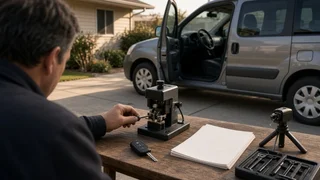
Key programming is the process of registering a key's transponder chip and, where relevant, its remote or smart functions in the vehicle's computer so the car accepts it. When keys have been lost, especially alongside anything identifying, ask the dealer or locksmith to delete all previously stored keys and program only the new key and any spares you still have. This means the lost key can no longer start the car, and on many vehicles can no longer unlock it with the remote.
Bring every remaining key for the vehicle so it can be reprogrammed in the same session. Keys not present may stop working once old keys are erased. Ask specifically whether both the immobilizer chip and the remote or proximity function will be cleared. On some vehicles these are handled separately. Understand that erasing keys does not change the physical door or ignition locks. On vehicles with a mechanical blade, the lost key may still turn the door lock. If that concerns you, ask whether rekeying the cylinders is practical for your vehicle. Not every vehicle or every locksmith can do key deletion. If one provider cannot, ask another or the dealer.
To confirm the job is complete, test each key before the technician leaves. Check that it locks and unlocks the doors with the remote, opens the trunk if equipped, starts the engine and keeps it running, and that the mechanical blade works in the door lock. On a smart key system, check that keyless entry and push-button start both recognize the fob.
Step 9: Check Insurance and Other Coverage
Some costs may be covered, depending on your policies and the circumstances. Review your documents or call your providers before paying, if the situation allows.
Auto insurance: some policies offer key replacement coverage as an add-on, and comprehensive coverage may apply in some theft situations. Coverage and deductibles vary by insurer and state. Homeowners or renters insurance: may cover lock changes or rekeying after theft of keys. Some policies cover only theft, not simple loss. Roadside assistance plans: may cover lockout service and towing, and some include limited key replacement benefits. Extended warranties and vehicle service contracts: occasionally include key or fob replacement; check the terms. Police report: if the keys were stolen, insurers may ask for a report number.
Quick Checklist
1) Search systematically and call places you visited. 2) Note whether ID, registration, mail, a garage remote or labeled tags were lost with the keys. 3) If theft is possible, consider a police report. 4) Rekey or replace home locks, change smart lock codes and clear garage remotes. 5) Retrieve a spare car key, or arrange access through roadside assistance or a locksmith. 6) Gather photo ID, registration or title, and the VIN. 7) Get quotes from a dealer and an automotive locksmith. 8) Have all old car keys erased and the new key and existing spares programmed. 9) Test every key and function before the technician leaves. 10) Check insurance and roadside coverage for reimbursement.
How to Make the Next Loss Less Disruptive
Keep at least one programmed spare car key, stored at home or with someone you trust, not in the car. Consider keeping the car key separate from house keys so a single loss does not expose both. Never put your name, address or license plate on a key tag. Keep the garage door remote separate from your key ring, or use a keypad or app instead. Attach a Bluetooth tracker to your key ring. Store a photo of your registration and a note of your VIN somewhere secure and accessible, such as a password manager. Leave a spare house key with a trusted neighbor or family member rather than hiding it outside.
With a spare car key and a plan for your home locks, losing both sets of keys becomes a manageable errand. Without them, the order of priorities stays the same: secure the house, prove ownership, then get the car keys replaced and the lost ones erased.