Importing a car from the UK into Ireland
The short answer
You can bring a car from the UK into Ireland and register it there, but it is no longer the simple intra-EU transfer it was before Brexit. The biggest factor is where in the UK the car comes from. A car from Great Britain (England, Scotland or Wales) is treated as an import from outside the EU, so customs duty and import VAT may apply in addition to Vehicle Registration Tax (VRT). A car from Northern Ireland is generally handled more like a vehicle moving within the EU single market for goods, so customs charges usually do not arise, but VRT still does. In either case the car must be presented for registration, have VRT assessed and paid, and get Irish plates before it can be taxed and driven on Irish roads long term.
No specific rates, prices, deadlines or fees were available for this guide. Where those figures matter, check the current position with Revenue, the Irish tax and customs authority, before you buy or ship a car.
Why Great Britain and Northern Ireland differ
Since the end of the Brexit transition period, Great Britain has been outside the EU customs union and single market. Under the post-Brexit arrangements for Northern Ireland, now known as the Windsor Framework, Northern Ireland continues to follow EU rules for goods. In practice, a car shipped from a port in Great Britain enters Ireland as an import from a third country. A car driven across the land border from Northern Ireland usually does not.
The seller's address matters less than where the vehicle physically moves from and how its customs status is documented. A car that was itself recently brought into Northern Ireland from Great Britain may not qualify for the simpler treatment. Treat that as a point to confirm rather than assume.
The charges that can apply
Charge | What it is | When it typically applies; Customs duty | A tax on goods entering the EU from outside it | Cars arriving from Great Britain, unless the car qualifies for zero-tariff treatment under the EU-UK trade agreement or another relief applies; Import VAT | VAT charged when goods are imported into the EU | Cars arriving from Great Britain; the treatment of new vehicles differs from used ones; Vehicle Registration Tax (VRT) | An Irish tax charged when a vehicle is first registered in Ireland | Almost all cars being registered in Ireland for the first time, whatever their origin, unless an exemption applies
Zero-tariff treatment depends on rules of origin. Under the EU-UK Trade and Cooperation Agreement, a car avoids customs duty only if it meets the agreement's origin requirements and this can be shown. Being bought in the UK is not enough. Many cars sold in Great Britain were built elsewhere, often in Japan or other non-EU countries. These cars generally do not qualify for preferential origin and may attract full customs duty. Even a car built in the UK or EU may need supporting evidence before the preference can be claimed.
VRT is calculated from the car's open market selling price (OMSP) in Ireland, which is Revenue's assessment of what the car would sell for in the Irish market. The applicable rate depends on the car's emissions. Because the OMSP is set by Revenue and not by the price you paid, the VRT bill can differ from what you expect. Revenue provides an online VRT calculator for estimating it before you commit.
The import and registration process
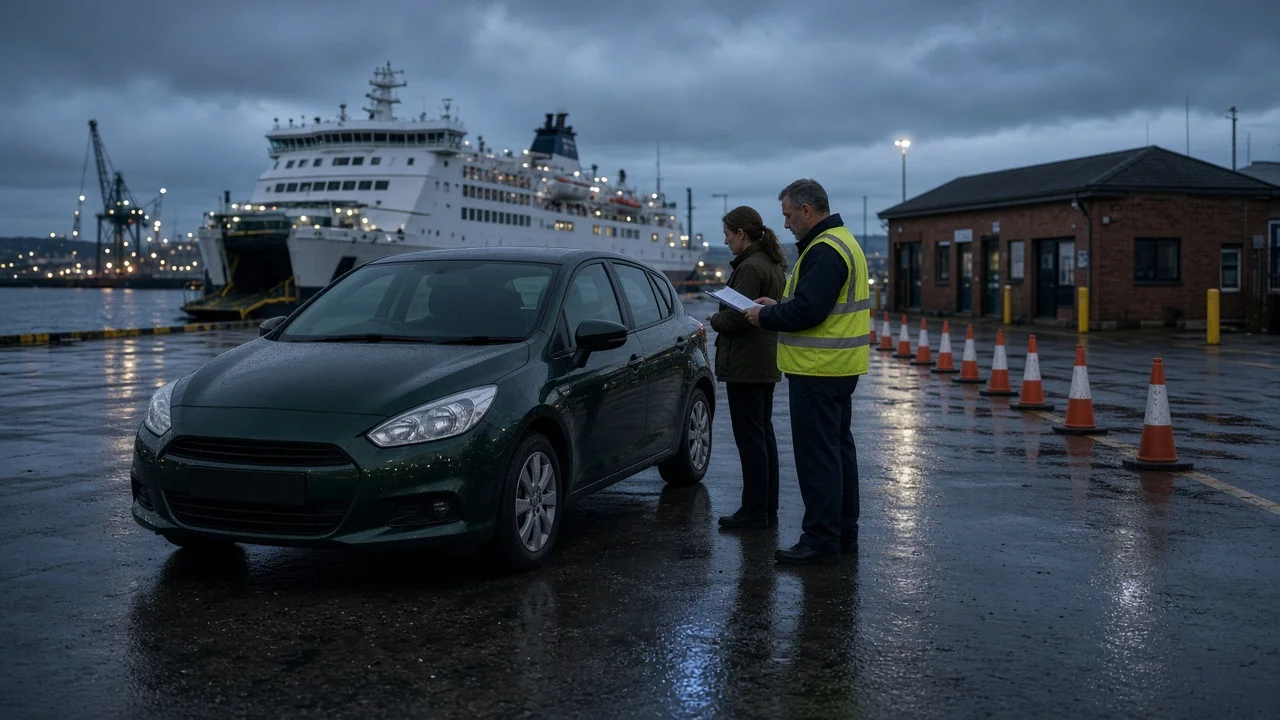
1) Before buying, check the car's origin, emissions figures and likely Irish market value so you can estimate customs duty, VAT and VRT. 2) For a car from Great Britain, complete the customs import declaration and pay any customs duty and import VAT due. Many buyers use a customs agent or shipping company for this. 3) Book an appointment at a National Car Testing Service (NCTS) centre. NCTS centres carry out VRT inspections on behalf of Revenue. This must be done within a short deadline after the car arrives in Ireland, so confirm the current time limit in advance. 4) Present the car with its registration and ownership documents, such as the UK V5C logbook, proof of identity and address, and customs paperwork where relevant. 5) Pay the VRT assessed. Once paid, the car is given an Irish registration number and you fit Irish number plates. 6) Arrange motor tax and Irish insurance. Depending on the car's age, it may also need a National Car Test (NCT), the Irish roadworthiness test. 7) On the UK side, tell the DVLA that the car has been permanently exported, using the relevant section of the V5C.
Moving to Ireland with your own car
If you are moving your normal residence to Ireland and bringing a car you already own and have used abroad, you may qualify for transfer of residence relief. This can exempt the car from VRT and, for imports from Great Britain, from customs duty and VAT. The relief has conditions on how long you have owned and used the car and on your residence history, and you must apply for it. It is not automatic, so check whether you meet the conditions before shipping the car.
Points to confirm before you commit
Current customs duty and VAT treatment for the specific car, including whether it can claim preferential origin. The likely VRT, using Revenue's calculator and the car's Irish open market selling price. The current deadline for presenting the car at an NCTS centre after it arrives. Whether transfer of residence relief or another exemption applies to you. For cars from Northern Ireland, whether the vehicle's history allows it to move without customs charges.
The UK price advantage that once made importing popular can be reduced or wiped out by customs duty, VAT and VRT, especially for cars from Great Britain that were built outside the UK and EU. Estimating the full landed cost before buying is the most reliable way to decide whether an import makes sense.