Importing a Car from Ireland to the UK: What the Process Involves
The short answer
You can bring a car from Ireland into the UK and register it there. Because the UK is no longer in the EU, moving a car from the Republic of Ireland usually counts as an import rather than a simple move. That generally means telling the UK tax authority (HMRC) that the vehicle has arrived, settling any tax or duty due, showing that the car meets UK vehicle standards, and registering it with the DVLA so it gets UK number plates.
The biggest factor that changes this answer is where in the UK the car is going. Great Britain (England, Scotland and Wales) and Northern Ireland follow different customs arrangements for goods arriving from the EU, so the paperwork for one does not automatically apply to the other.
Great Britain or Northern Ireland: why the destination matters
Under the post-Brexit arrangements for Northern Ireland, now known as the Windsor Framework, Northern Ireland stays aligned with EU customs rules for goods. In practice, a car crossing the land border from the Republic into Northern Ireland normally does not go through the customs import process that applies when a car is shipped to Great Britain. VAT treatment, vehicle notification and DVLA registration can still apply, so confirm the current requirements with HMRC before you move the car.
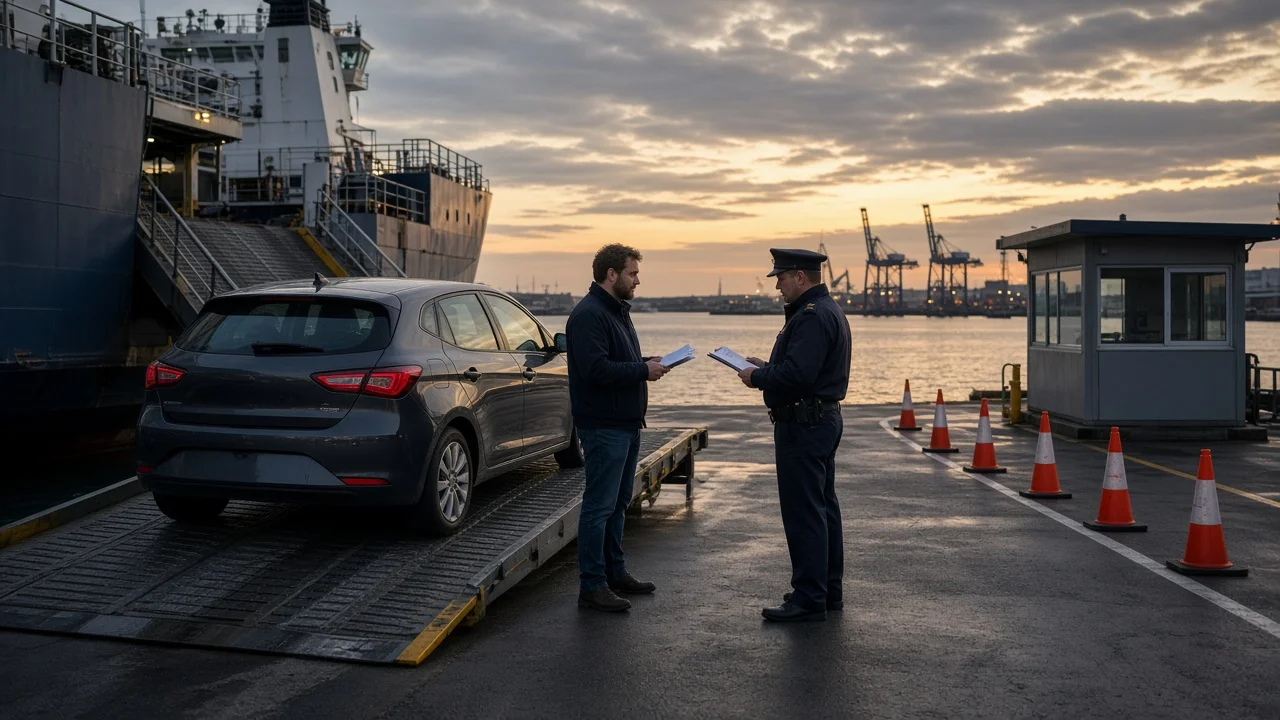
A car going from Ireland to Great Britain, usually by ferry, is treated as an import from the EU. That brings customs formalities and possible import charges with it. The rest of this guide mainly covers that route, with notes where Northern Ireland differs.
Visiting versus importing
Driving an Irish-registered car in the UK for a short visit is not the same as importing it. Visitors can generally use a car registered abroad for a limited period without registering it in the UK. If you become UK resident, or the car is meant to stay, it has to be formally imported and registered. The Common Travel Area lets people move freely between Ireland and the UK, but it does not exempt goods, including vehicles, from customs and tax rules.
Main steps when importing into Great Britain
1) Customs declaration: the car must be declared to customs when it enters Great Britain. Many owners use a customs agent or the ferry operator's arrangements for this. 2) Vehicle arrival notification: HMRC must be told that the vehicle has arrived, normally through its online Notification of Vehicle Arrivals (NOVA) service, within a set time after arrival. 3) Import VAT and customs duty: VAT is generally charged on vehicles imported into Great Britain. Whether customs duty applies depends partly on where the car was made, under the rules of origin in the UK–EU trade agreement. 4) Vehicle approval: you need to show the car meets GB construction and safety standards, for example through approval documents or a GB approval scheme. 5) Roadworthiness test: a used car old enough to need an MOT must pass one before it can be registered. 6) Insurance: the car must be insured to be driven in the UK. This needs arranging around the registration process. 7) DVLA registration: apply to the DVLA for first registration in the UK and pay vehicle tax. Once approved, the car gets a UK registration number and UK plates can be fitted.
Tax and duty: what affects the bill
Several factors usually decide what you pay:
Where the car was built: under the UK–EU trade agreement, cars that meet the rules of origin may be eligible for zero customs duty. Cars that don't qualify may be charged duty. Whether the car is new or used, and its value: these affect how import VAT is calculated. Your reason for importing: people moving their main home to the UK may qualify for relief on goods they bring with them, which can include a car they have owned and used abroad. Conditions apply. Irish Vehicle Registration Tax (VRT): Ireland has had a scheme that repays part of the VRT when certain vehicles are permanently exported. Check with the Irish authorities whether your car qualifies before it leaves.
The source material gave no duty rates, VAT rates, fees or worked examples, so this guide doesn't give figures. Get current rates and eligibility from HMRC, or from a customs agent for your specific vehicle, before you commit to the move.
Technical points specific to Irish cars
Ireland and the UK both drive on the left, so Irish cars are normally right-hand drive. Headlamp beam patterns are already set up for left-hand traffic. That avoids the headlamp adjustments that cars from continental Europe often need.
The speedometer is the change most likely to be needed. Irish cars are set up to show speed mainly in kilometres per hour, and UK rules require a speed display in miles per hour. Depending on the model, a dual-scale instrument cluster or a digital display setting may already meet this, or the speedometer may need changing. The answer varies by make, model year and trim, so check your car's instruments against UK requirements during the approval stage.
Documents to keep together
Proof of ownership, such as the Irish vehicle registration certificate and purchase invoice. Evidence of customs clearance and HMRC's vehicle arrival confirmation. Proof of VAT and any duty paid, or of relief granted. Vehicle approval evidence, such as a certificate of conformity or GB approval documents. A valid MOT certificate, if the car's age requires one. UK insurance details. Identity and UK address documents for the DVLA application.
Gaps in this guide
The source material for this article contained no confirmed specifics. That means no fees, tax or duty rates, processing times, form deadlines or contact details, and none are given here. Procedures and forms for Great Britain and Northern Ireland have changed several times since Brexit and may change again. Treat the steps above as a framework and confirm current requirements with HMRC, the DVLA and, where relevant, the Irish Revenue before shipping the car.
Next step
First, decide whether the car is going to Great Britain or Northern Ireland, and whether you are moving home or bringing in a car to keep. Those two answers set your customs route and any tax relief. After that, the order of work is usually: customs and HMRC notification, approval and MOT, insurance, then DVLA registration.