Hybrid Battery Cooling System: How It Works and Its Parts
A hybrid battery pack generates real heat during charging, regenerative braking, and sustained electric assist. That heat shortens cell life and reduces power if it is not managed, so the hybrid battery cooling system is not an accessory; it is a protective thermal circuit integrated into the pack. The parts are familiar-looking pieces such as a blower, ducts, filters, and sometimes coolant passages, but they are arranged to hold battery temperature in a narrow range rather than to cool an engine. Understanding those parts and the airflow or liquid path helps explain many cabin noises, warning messages, and service needs.
Essential answer
A hybrid battery cooling system is the set of components that removes waste heat from the high-voltage traction battery. Some designs are air cooled, using a small electric blower to pull cabin air through the pack. Others use a cooling circuit with coolant, a heat exchanger, and a dedicated radiator. The correct answer for a given vehicle depends on platform: Toyota hybrid battery cooling parts for many Prius models center on a filter and intake duct, while a Ford Escape hybrid battery cooling system may route conditioned cabin air or use a separate thermal path, so the phrase does not describe one single layout.
The essential point is that these parts exist to protect chemistry, not to add horsepower. A temperature rise increases internal resistance and accelerates degradation inside the cells, especially during long climbs, fast charging events, or hot weather. By moving air or coolant across the pack, the system evens out hot spots and keeps the battery within the range where the controller can safely allow electric assist. When someone searches for hybrid battery cooling parts, they are usually looking at the intake, filter, ducts, blower fan, controller signal, or the related Toyota and Ford service items.
How it works
An air-cooled arrangement begins inside the cabin. The blower draws conditioned interior air through an inlet grille and filter, then pushes it through ducts across the battery cells. A temperature sensor reports battery condition to the hybrid controller, which adjusts blower speed. In lower-temperature operation, little airflow may be requested; when the pack works hard, the fan spins faster and the sound may become noticeable. This is why a blocked intake or dirty filter affects hybrid battery cooling system performance before any electrical fault appears.
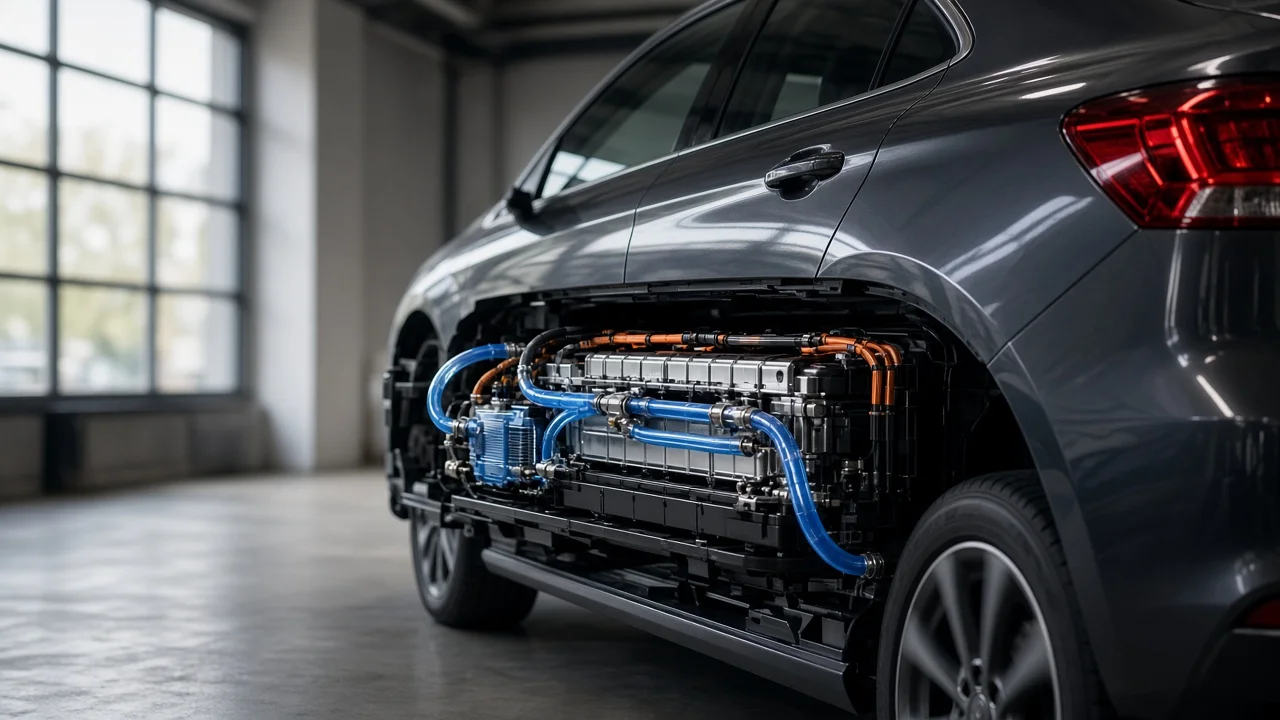
Liquid cooling follows principles borrowed from engine thermal management but at lower temperatures. A small cooling circuit circulates a manufacturer-specified coolant mixture through a cold plate or coolant channels in contact with cells. The warmed fluid passes to a heat exchanger or dedicated radiator, where airflow removes the heat. The coolant concentration matters because the fluid also protects against corrosion and freezing without making the coolant too viscous for the electric pump. Air pockets anywhere in the circuit can create hot spots, so service work must follow the bleed procedure for the specific vehicle.
Strengths, limitations and suitability
Air-cooled hybrid battery systems are lightweight, simple, and inexpensive to service, but their effectiveness depends on cabin temperature and airflow. On very hot days, warm cabin air has less ability to remove battery heat, so the fan must work harder. A clogged filter or covered vent directly restricts that airflow. Because this design uses no radiator or coolant pump, pressure cap and engine cooling components are not part of the battery loop, but the driver still has a key role: keep the intake clear and avoid trapping heat near the inlet.
Liquid-cooled systems generally maintain tighter temperature control under heavy loads and high ambient temperatures. They add weight, pumps, hoses, coolant specification requirements, and more failure points, yet they recover thermal performance more quickly. A Toyota hybrid battery cooling system is typically simpler and quieter in normal use, while some newer or high-output platforms use liquid cooling. The right choice is not automatically the most elaborate one; suitability depends on battery size, electric-motor usage, regional climate, and how often the vehicle operates near the edges of its thermal envelope.
Procedure
The routine procedure for an air-cooled system is primarily inspection and airflow preservation. Locate the battery cooling intake, usually under a seat side trim, behind a rear-seat bolster, or near the cargo area. Switch the vehicle off, remove any loose items covering the grille, and inspect the filter. If the filter is visibly matted with dust, pet hair, or debris, replace it with the correct part for that model. Listen for the blower during a brief high-load event after reassembly to confirm that the fan responds and that the intake is not blocked.
Any deeper service involving coolant passages, electric pumps, thermistors, or battery case components must remain within the vehicle-specific workshop process. A cooling circuit needs the right coolant concentration and a pressure-tight system before it can move heat evenly, and air pockets near the pump can cause noisy or ineffective circulation. Because high-voltage components are near many of these parts, service boundaries matter. The practical owner-level step is filter and intake care; a dealer or hybrid-trained technician should handle anything that opens the pack or disconnects cooling lines.
Diagnosing a problem
A warning message related to hybrid battery cooling often points to blocked airflow, not a failed battery. Start by checking whether a seat cover, bag, blanket, or child-seat accessory is covering the intake. In a Prius family vehicle, including the Prius v, the intake is commonly hidden at the base of the rear seat area where a passenger or cargo item can easily obstruct it. Remove the obstruction and drive with the climate system active to see whether normal electric operation returns. A missing or heavily clogged filter can also cause the controller to restrict power because temperatures climb faster than expected.
If a controller requests high fan speed all the time, or the blower is unusually loud, look for restricted airflow rather than assuming the fan is bad. A clean path may still have a failing fan, a damaged duct, an inaccurate temperature reading, or a refrigerant issue if the cabin itself is not cooling adequately. In a liquid system, low coolant or trapped air can produce rising battery temperatures without a leak on the ground. Stop using the vehicle if there is a coolant warning, overheating indication, or sharp loss of electric assist combined with persistent warnings, and have the specific platform diagnosed before continuing to drive.