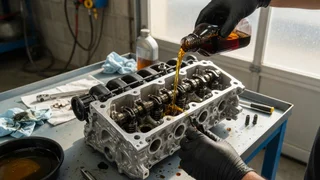
How to use MoS2 anti-friction engine treatment
Applying MoS2 anti-friction engine treatment is a straightforward way to reduce metal-to-metal contact inside an engine. The product contains molybdenum disulfide, a solid lubricant that fills microscopic surface irregularities and can lower friction under boundary conditions. The essential method is to warm the engine, pour the specified dose into the oil filler, and run the engine briefly to distribute the additive. Correct use depends on matching the product to the existing oil, the engine configuration, service history, and the manufacturer specifications for the vehicle.
Direct answer
MoS2 anti-friction treatment is added to engine oil so molybdenum disulfide plates onto loaded surfaces such as cam lobes, followers, and bearing shells. Engine oil provides hydrodynamic lubrication under normal operation, but start-up, hot shutdown, and high load can squeeze that film thin. In those boundary conditions, the layered structure of MoS2 shears easily and helps prevent direct metal contact. The treatment is not a repair for worn parts or a substitute for correct oil viscosity.
The benefit depends on the existing lubricant and the condition of the engine. Many modern oils already contain friction modifiers, so adding a concentrated MoS2 product can alter the additive balance. In engines with very fine oil filters or wet clutches sharing engine oil, the treatment may be unsuitable. Because some systems use the same oil supply for different components, vehicle-specific confirmation is important before use.
How to proceed
Start by checking the product label and the vehicle owner's manual. The engine should be at operating temperature so the oil is warm and flows readily. Shut the engine off, remove the oil filler cap, and pour in the amount specified by the treatment manufacturer for the engine's oil capacity. Avoid overdosing, because a concentrated additive can change oil behavior. Replace the cap and let the engine idle for several minutes.
After idling, drive normally or allow the engine to reach full operating temperature while observing oil pressure and unusual noise. The completion check is not a warning light but consistent operation without new knocking or tapping. Record the date, mileage, and product used in the service history. If the vehicle has a shared crankcase or an oil-bathed clutch, confirm compatibility before applying the treatment. Symptom conditions that persist after use indicate a mechanical issue requiring inspection and diagnostic codes rather than another additive.