How to tune a car subwoofer (crossover frequency, gain)
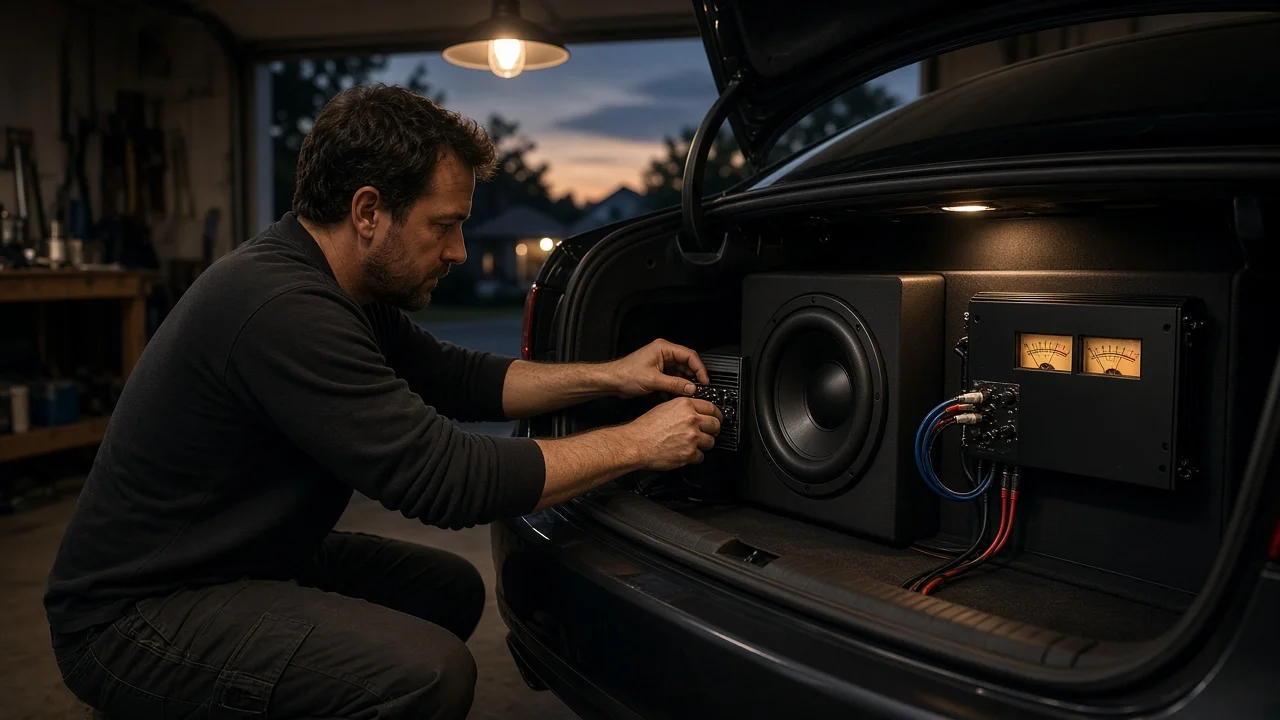
Tuning a car subwoofer means setting the low-pass crossover point and amplifier gain so deep bass sounds controlled rather than boomy or weak. The best car subwoofer tuning treats the crossover frequency as the ceiling for sub-bass output, while gain matches that output to the rest of the system. Because head unit voltage, bass boost settings, and enclosure type all change the result, the same numbers may not work in every vehicle. A systematic approach prevents distortion, protects voice coils, and makes music sound fuller without overwhelming midbass and vocals.
Direct answer
Tuning a car subwoofer is primarily about two adjustments: crossover frequency and gain. The car subwoofer crossover frequency limits the upper range sent to the sub, usually so it blends with door speakers instead of overlapping them. Gain is not a volume knob but a sensitivity control that matches amplifier input to the audio source level. When both are set correctly, sub-bass supports kick drums and low synth lines without creating a muddy peak or forcing the amplifier into clipping. A common starting point is setting the subwoofer frequency setting in the car near 80 Hz, then listening for a smooth transition between the sub and midrange drivers.
Subwoofer frequency setting in a car depends on speaker size, door-speaker low-end capability, and musical taste. If the cabin speakers already produce solid midbass, a lower crossover near 60 Hz may reduce overlap and keep sound tight. If they are small or factory, a higher setting may be needed so no information disappears. Car subwoofer tuning also requires checking polarity and bass boost before chasing gain. Reversed speaker wiring can cancel output at the crossover point, making the sub seem weak. Make one adjustment at a time and use familiar music to expose changes.
How to proceed
Begin with the head unit and amplifier tone controls flat, bass boost off, and loudness defeated. Set the amplifier low-pass filter to a moderate car subwoofer crossover frequency near 80 Hz. Turn the gain to minimum and play a track with consistent bass at roughly three-quarter head unit volume. Raise the gain slowly until the sub clearly fills in the low end, then stop at the first sign of popping, chuffing, or a hard mechanical edge. Those sounds often indicate the woofer is being driven beyond clean excursion, so back the gain down slightly and avoid radical bass boost afterward.
After initial adjustment, verify the blend using a range of music, not just bass-heavy test tones. Listen for a seamless handoff where male vocals and midbass punch remain clear while kick drums gain weight. If the sub calls attention to itself on normal material, lower the crossover or reduce gain. If bass disappears during quieter recordings, source output voltage may be low and a small upward gain adjustment can help. Confirm all speaker wiring stays secure during the process, because a loose terminal can imitate a tuning problem by causing intermittent output or distortion.