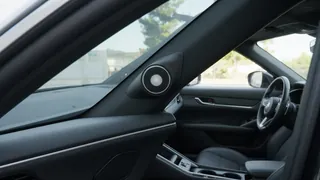
Car Tweeter Crossover Frequency
A car audio tweeter crossover frequency defines where a high-pass filter begins directing treble to the tweeter instead of letting it struggle with lower notes. Unlike a fixed setting baked into every speaker, this transition can be shaped by passive components or an active processor. The right point balances clarity, power handling, and how naturally the sound stage blends with midrange drivers in a vehicle’s cramped acoustic space.
Essential answer
The crossover frequency is the hinge where music energy above that point goes to the tweeter and energy below it is reduced or blocked. In most car installations the value sits well above the vocal range, commonly in the lower thousands of hertz, but the exact figure depends on the tweeter’s physical size, its suspension, the slope of the crossover network, and the output capability of the midrange or woofer playing beneath it. Choosing too low a point pushes a small dome into excursion it cannot handle, while too high a point leaves a gap or forces the midrange to beam.
Active systems set the frequency in the head unit or external processor before amplification, so each driver receives only its intended passband. Passive setups instead place capacitors, inductors, and sometimes resistors after the amplifier, dividing power inside the speaker wiring path. Both approaches answer the same car audio tweeter crossover question: where should the tiny driver take over? Because a vehicle’s reflective glass and hard trim alter treble perception, the selected point also interacts with mounting angle and listener distance rather than being a standalone specification.